
Infantry · Colonial Age
Mansabdar Rajput
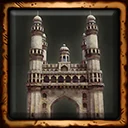
Mansabdar Rajput (proto ID ypRajputMansabdar) is an infantry unit in AoE3: Definitive Edition 100.19.18309 from the Colonial Age: 300 hit points, melee 12 every 1.25 s (×3 vs Cavalry, ×2.3 vs Light Infantry), 20% melee resist. It costs 180 food, 70 wood and takes 30 s to train at the Charminar Gate. 1 civilization has it.
Quick answers (3)
- How much does Mansabdar Rajput cost in AoE3?
- 180 food, 70 wood; 30 s to train; 1 population (AoE3: Definitive Edition 100.19.18309).
- Which civilizations have Mansabdar Rajput?
- Indians.
- What is the proto ID of Mansabdar Rajput?
- ypRajputMansabdar — the name scenario triggers, AI scripts and mods use.
 180
180 70
70Inspires all nearby Rajputs. Fast-moving sword gauntlet infantry. Good against cavalry and buildings.
- Population
- 1
- Line of sight
- 12
- Melee resist
- 20%
- Build limit
- 1
- Available from
- IIColonial
- XP when killed
- 25
- Game ID
ypRajputMansabdar
In the game's words
How to use it
The Mansabdar Rajput is an Elite Indian unit that can be trained at the Charminar Gate Wonder. It has an inspiring affect on all nearby non-Mansabdar units of the same type, increasing their attack and hitpoints. The Rajput is a heavy Indian infantry unit that is extremely effective at countering cavalry. It wields a pair of pata blades in battle.
History
During his rule over the Mughal Empire of India, Akbar the Great brought the whole of his military organization under a new system of administration called the mansabdari. The title was taken from the term “mansab,” which means rank. Officers in the Mughal army were given a mansab and then expected to be servants of the state, with their dismissal or suspension resting directly in the hands of the emperor. There were thirty-three grades of mansabdars, differentiated by the Zat and the Sawar. The Zat referred to the number of troops that the mansabdar maintained, while the Sawar referred to the number of horses that he maintained. The number of soldiers under a man’s command could start at ten and rise into the ten thousands. Of course, the highest rank that any common officer could hold only offered a command of 5,000 men. Larger forces were always first allotted to royal princes. Yet, after the death of Akbar at the beginning of the seventeenth century, the grades were increased. Common officers could reach the mansabdar grade corresponding to a command of over 20,000 men. The Rajput was a primarily Hindu warrior caste located in the northwestern region of India once known as Rajputana, now Rajasthan. Taking great pride in their ancestry and its emphasis on military virtues, the Rajput grew in power until 1616, when all the major clans had no choice but to submit to the might of Akbar and his Mughal Empire. The Rajput warriors were known for using the unique and deadly pata, a sword-like weapon where the blade and the gauntlet were integrated into a single piece that was held by the wielder. Earlier iterations of the pata were said to have started at 10 inches in length, with later variations reaching a length of nearly 44 inches. This sturdy blade was effective at repelling armored cavalry, but could also be used in assaults against infantrymen, swung and slashed like a traditional sword. Supposedly, Emperor Akbar himself used the pata in battle, most notably during the siege of Gujarat in 1576.
From the game's History encyclopedia (Special).

Attacks
| Attack | Damage | Every | Range | Multipliers |
|---|---|---|---|---|
| Melee | 12 melee | 1.3 s | — | ×3 vs Cavalry×2.3 vs Light Infantry |
| Siege | 35 siege | 3 s | — | — |
| Melee (cover) | 6 melee | 1.3 s | — | ×3 vs Cavalry×2.3 vs Light Infantry |
Trained at
Civilizations

Cards and technologies that change it
 Foreign Trading CompaniesFood cost +2%, Wood cost +2%
 Akan FontomfromInfantry: speed +5%, train time −20%
 BastimentoInfantry: train time −25%
 Conservative TacticsInfantry: damage +10%, hit points +10%
 CouriersInfantry: train time −45%
 Dueling SchoolInfantry: train time −25%
 Fencing SchoolInfantry: train time −40%Fencing SchoolInfantry: train time −40%Fencing SchoolInfantry: train time −40%
 HualcanaInfantry: resist +0.05
 Infantry CombatInfantry: damage +15%, hit points +15%
 Infantry HitpointsInfantry: hit points +15%
 Liberation MarchInfantry: train time −35%, speed +5%Liberation MarchInfantry: train time −35%, speed +5%
 Matrakci SchoolInfantry: train time −30%
 Military DrummersInfantry: speed +10%
 Piechota WybranieckaInfantry: train time −20%
 Pok Ta PokInfantry: speed +10%, train time −10%
 Quechuan DietInfantry: train time −15%
 Quechuan MountaineeringInfantry: speed +10%
 RansackInfantry: damage (Siege) +50%, damage (Mortar Building) +50%
 Royal Fencing SchoolInfantry: train time −40%Royal Fencing SchoolInfantry: train time −40%
 Standing ArmyInfantry: train time −25%Standing ArmyInfantry: train time −25%
 TEAM Inca BridgesInfantry: speed +5%
 TEAM Infantry HitpointsInfantry: hit points +10%
 TEAM Yongle InfrastructureInfantry: speed +5%
 Tilly's DisciplineInfantry: speed +20%, Coin cost +10%, Food cost +10%, Wood cost +10%
 ZamindarsInfantry: train time −20%
 CorseletHeavy Infantry: hit points +25%, speed −15%
 TEAM House of BernadotteHeavy Infantry: hit points +15%
 United States ArmyHeavy Infantry: hit points +15%, damage +15%
 AcupunctureUnit: train time −25%
 Cult of the Supreme BeingUnit: XP for building +10%, XP for kills −10%
 Feudal ArmiesUnit: train time −15%
 Gadaa SystemUnit: hit points +5%, damage +5%
 Golden LibertyUnit: Coin cost −5%
…and 28 more that change every Infantry.
Source: protoy.xml and techtreey.xml, AoE3: DE 100.19.18309 (build 25040513).