Random map · AoE3: DE 100.19.18309
Deccan
Deccan is a random map in AoE3: Definitive Edition 100.19.18309, in the Treaty Maps, Asian Maps, All Competitive Maps, Standard Maps, Land Maps, All Maps and 1 more. Its script can place Udasi and Bhakti settlements.
This section as JSON: /raw/maps.json
Quick answers (2)
- Which natives are on Deccan in AoE3?
- Udasi and Bhakti.
- Is Deccan a competitive map?
- Yes: it is in the game's Competitive map set (AoE3: Definitive Edition 100.19.18309).

Deccan: A central, forested plateau overlooking a series of strategically placed trade sites.
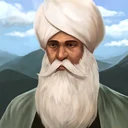
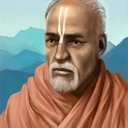
Settlements: Udasi, Sufi, Bhakti
Outlaws: Marathan Dacoit, Marathan Thuggee
Players start on opposite sides of a central plateau that contains thick forests and abundant wildlife. Resources are plentiful, as Mines, small herds, and sparse forests ring the surrounding lowlands. Trade sites are situated at the edge of the map, while natives inhabit the plateau. The plateau is not present in free-for-all games.
In the game's map sets
Has a large version for more players (deccanLarge).
History
The Deccan, also called The Great Country, is the central portion of the Indian peninsula south of the Narmada River. Bordered by the Western and Eastern Ghats mountain ranges, the Deccan encompasses eight states and a range of ecosystems. The name “Deccan” is an anglicized form of the Prakit word “dakkhin,” derived from the Sanskrit “daksina,” meaning “south.” The Deccan is a plateau with an average elevation of 2,000 feet. Its central rivers - the Godavari, Krishna, and Kaveri - flow east from the Western Ghats Mountains and empty into to the Bay of Bengal. Despite its rocky appearance, the underlying soil is volcanic and therefore extremely rich, ideal for the production of cotton and other crops. The height of the Western Ghats Mountains prevents regular rainfall, resulting in arid scrub forests in the west; the moist highlands to the east contain deciduous forests, home to wolves, sloth bears, gaurs, and Asian elephants. Largely untouched by early Aryan invasions of the second century BCE, the Deccan was ruled by Mauryan and Gupta dynasties for centuries until it became an independent Muslim nation in 1347. It was later split into five sultanates. Although the Mughals largely conquered the Deccan in the seventeenth century, the Mughal Emperor Aurangzeb exhausted his resources and military power in his attempts to absorb the region. In the following years the region fell under the power of the Maratha confederacy. Much later, the plateau hosted a rivalry between France and Britain until the British won control of the Deccan, which they eventually relinquished in the Indian independence of 1947.