Random map · AoE3: DE 100.19.18309
Hispaniola
Hispaniola is a random map in AoE3: Definitive Edition 100.19.18309, in the American Maps, Standard Maps, All Maps and Water Maps. Its script can place Caribs settlements.
This section as JSON: /raw/maps.json
Quick answers (2)
- Which natives are on Hispaniola in AoE3?
- Caribs.
- Is Hispaniola a competitive map?
- It is not in the game's Competitive map set; it is in the American Maps, Standard Maps, All Maps and Water Maps (AoE3: Definitive Edition 100.19.18309).
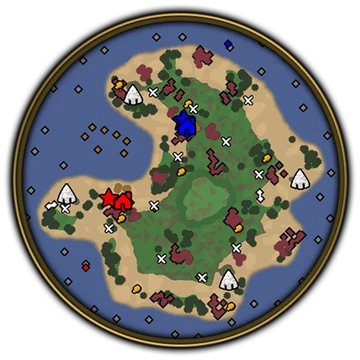
Hispaniola: a large island surrounded by warm tropical seas.
Settlements: Caribs
Outlaws: Pirate
Surrounded by sea, Hispaniola promises conflict on both land and water. Inland, Carib tribes live in the jungles, around the base of an impassable mountain. Extra starting crates of Food will help you jump start your early economy. Whales in the western bay are a strategic secondary source of Coin.

In the game's map sets
Has a large version for more players (hispaniolaLarge).
History
Hispaniola is the second-biggest island of the West Indies, with the nations of Haiti located on the western third of the island and the Dominican Republic to the east. Its humid, tropical climate offers a nourishing environment to a wide array of plants and animals. With its rugged mountain ranges, coastal beaches, grassland savannas, and pine forests, Hispaniola provides an ever-changing panoply of environments and scenic backdrops. For thousands of years, Native peoples thrived on Hispaniola. When Christopher Columbus arrived in 1492, he was welcomed by the Taino Indians. Peaceful and generous, they were quite cooperative with the first Europeans - much to their eventual regret. Subsequent waves of Europeans repaid the Taino’s generosity with slavery and exploitation. In 1493, the Spanish founded the first European settlement on Hispaniola: Isabella. It was but a short distance from the Cibao Valley and its much-desired deposits of gold. More gold was discovered on the south of the island, and the city of Santo Domingo was built nearby soon afterwards in 1496. It is estimated that within twenty-five years of the Spanish arrival, the Taino population had fallen from several million to approximately 50,000, from disease, warfare, and the slave trade.