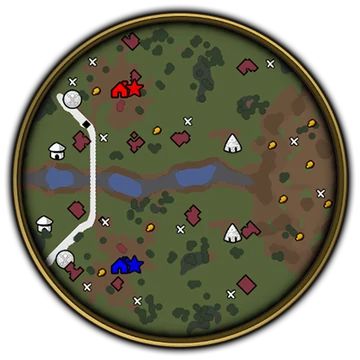
Native settlement · AoE3: DE 100.19.18309
Tupi
The Tupi are a native settlement in AoE3: Definitive Edition 100.19.18309: a Trading Post on their site brings Canoe and Tupi Blackwood Archer and 5 improvements (Tupi Animal Lore, Tupi Poison Arrow Frogs, Champion Tupi, Tupi Forest Burning and Tupi Warrior Societies). 7 random maps can place them, among them Amazonia, Gran Chaco, Guianas and Minas Gerais.
This section as JSON: /raw/natives.json
Quick answers (3)
- What units do the Tupi give in AoE3?
- Canoe and Tupi Blackwood Archer.
- What can you research at the Tupi Trading Post?
- Tupi Animal Lore, Tupi Poison Arrow Frogs, Champion Tupi, Tupi Forest Burning and Tupi Warrior Societies.
- Which maps have the Tupi?
- Amazonia, Gran Chaco, Guianas, Minas Gerais, Pampas Sierras, Unknown and Unknown - LOST.
Units
| Unit | HP | Cost | Fights won | Beaten hardest by |
|---|---|---|---|---|
 CanoeShip CanoeShip | 220 |  100 100 | — | — |
 Tupi Blackwood ArcherNative warrior Tupi Blackwood ArcherNative warrior | 80 |  5050 5050 | 70% | Steppe Rider |
Fights won: share of equal-cost matchups against every regular unit it wins (base stats, Lanchester square law, as on /counters).
Trading Post improvements

 50
50Tupi Animal Lore enables your Heroes to train tamed Cougars.
Buttercup the Pet Cougar: becomes available

Envenomed Tupi arrowheads increase Archer attack and allows Tupi Blackwood Archers to inflict poison damage.
Archer: damage +10%

Tupi warrior attack and hitpoints increased.
Tupi Blackwood Archer: hit points +35%, damage +35%
Tupi Blackwood Archer: damage +35%, hit points +35%

Tupi slash-and-burn techniques lets you clear land quickly and cheaply. All your buildings cost less Wood.
Building: Wood cost −20%
Wagon: Wood cost −20%

Tupi warrior attack and hitpoints increased.
Tupi Blackwood Archer: hit points +25%, damage +25%
Tupi Blackwood Archer: damage +25%, hit points +25%
History
When the Portuguese, French, and Dutch penetrated the interior of Brazil they encountered a number of warlike and aggressive tribes called the Tupi. The coastal Tupi lived mainly by agriculture, growing manioc, yams, tobacco, beans, squash, peppers, and other crops in forest clearings. When the soils were depleted, they would move to a new location, clear the trees, and replant. In the sixteenth century they became embroiled in the wars between Europeans fighting in Brazil, mainly the French and Portuguese, who both employed native allies. Many of the Tupi were forced to work on the plantations, but they fared poorly and died. They suffered from epidemics that swept through their villages, and were forcibly taken from their villages to be sold as slaves, often by enemy tribes. European encroachment spread as the trees were cleared, and sugar plantations were established. Devastated by the recurring wars, disease, and slavery, the remaining Tupi withdrew up the Amazon into interior lands the Europeans did not want.