
Infantry · Colonial Age
Mansabdar Urumi
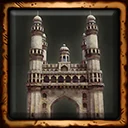
Mansabdar Urumi (proto ID ypUrumiMansabdar) is an infantry unit in AoE3: Definitive Edition 100.19.18309 from the Colonial Age: 520 hit points, melee 17 every 1 s (×1.75 vs Heavy Infantry, ×2 vs Light Cavalry, ×2 vs Ranged Shock Infantry), 30% ranged resist. It costs 320 food, 120 coin and takes 45 s to train at the Charminar Gate. 1 civilization has it.
Quick answers (3)
- How much does Mansabdar Urumi cost in AoE3?
- 320 food, 120 coin; 45 s to train; 2 population (AoE3: Definitive Edition 100.19.18309).
- Which civilizations have Mansabdar Urumi?
- Indians.
- What is the proto ID of Mansabdar Urumi?
- ypUrumiMansabdar — the name scenario triggers, AI scripts and mods use.
 320
320 120
120Inspires all nearby Urumi Swordsmen. Uses a sword whip that does area damage. Regenerates hitpoints when idle. Good against heavy infantry. Available only from the Home City.
- Population
- 2
- Line of sight
- 16
- Ranged resist
- 30%
- Build limit
- 1
- Available from
- IIColonial
- XP when killed
- 44
- Game ID
ypUrumiMansabdar
In the game's words
How to use it
The Mansabdar Urumi is an Elite Indian unit that can be trained at the Charminar Gate Wonder. It has an inspiring affect on all nearby non-Mansabdar units of the same type, increasing their attack and hitpoints. The Urumi is an Indian heavy infantry unit. Swinging its coiled sword, the Urumi is highly effective against heavy infantry and does a great amount of splash damage.
History
During his rule over the Mughal Empire of India, Akbar the Great brought the whole of his military organization under a new system of administration called the mansabdari. The title was taken from the term “mansab,” which means rank. Officers in the Mughal army were given a mansab and then expected to be servants of the state, with their dismissal or suspension resting directly in the hands of the emperor. There were thirty-three grades of mansabdars, differentiated by the Zat and the Sawar. The Zat referred to the number of troops that the mansabdar maintained, while the Sawar referred to the number of horses that he maintained. The number of soldiers under a man’s command could start at ten and rise into the ten thousands. Of course, the highest rank that any common officer could hold only offered a command of 5,000 men. Larger forces were always first allotted to royal princes. Yet, after the death of Akbar at the beginning of the seventeenth century, the grades were increased. Common officers could reach the mansabdar grade corresponding to a command of over 20,000 men. Practitioners of the Indian martial art of Kalarippayattu, which dates back at least the twelfth century, begin their education at the age of seven. Once training commences, it progresses through four unique stages of development: Meithari, Kolthari, Ankathari and Verumkai. Meithari is a rigorous series of posture and coordination exercises that helps the student achieve peak physical condition through jumps, balance, and flexibility. Kolthari is the study of fighting with wooden weapons. Ankathari is the study of metal weapons, and near the end of this stage a student chooses a weapon in which to specialize. Finally, once the student has mastered all forms of weaponry, he is taught how to defend himself in hand-to-hand combat using grapples, blows, and strikes to vital pressure points, or marmam. Only the most trusted students of Kalarippayattu are instructed in this honored art. Masters of Kalarippayattu are highly skilled in many weapons, but none as strange, or as deadly, as the urumi, or flexible sword. The urumi is a flexible band of steel about one inch in width, and up to 5 feet in length, that is attached to a handle. Most urumi have multiple bands attached to a single handle. Because of its flexibility, an urumi can be coiled around the waist and inconspicuously carried like a belt. If a fight breaks out, the urumi can be uncoiled and swung like a sword. It is most effective when the wielder faces multiple enemies.
From the game's History encyclopedia (Special).

Attacks
| Attack | Damage | Every | Range | Multipliers |
|---|---|---|---|---|
| Meleearea 1 | 17 ranged | 1 s | 2 | ×0.6 vs Cavalry×1.75 vs Heavy Infantry×2 vs Light Cavalry×0.75 vs Light Infantry×2 vs Ranged Shock Infantry |
| Siege | 28 siege | 3 s | — | — |
| Melee (cover)area 1 | 9 ranged | 1 s | 2 | ×0.6 vs Cavalry×1.75 vs Heavy Infantry×2 vs Light Cavalry×0.75 vs Light Infantry×1.5 vs Ranged Shock Infantry |
Trained at
Civilizations

Home City cards that ship it

Cards and technologies that change it
 Disciplined Urumi SwordsmanUrumi: damage +20%, hit points +20%
 Exalted Urumi SwordsmanUrumi: hit points +50%, damage +50%
 Honored Urumi SwordsmanUrumi: damage +30%, hit points +30%
 Somali Jile DaggersMelee Skirmisher: time between attacks (Melee) +20%, time between attacks (Melee (defend)) +20%, time between attacks (Melee (stagger)) +20%, time between attacks (Melee (cover)) +20%; Urumi: time between attacks (Siege) −20%, time between attacks (Siege (cover)) −20%, time between attacks (Melee (cover)) −20%, time between attacks (Melee (defend)) −20%, time between attacks (Melee) −20%
 Archaic Infantry CombatHand Infantry: hit points +15%, damage +15%
 Archaic Infantry HitpointsHand Infantry: hit points +15%
 Carib Kasiri BeerHand Infantry: damage +10%
 Hand Infantry / Hand Cavalry HitpointsHand Infantry: hit points +15%
 Infantry BreastplateHand Infantry: hit points +10%
 Mapuche TacticsHand Infantry: damage (Siege) +50%
 Master LessonsHand Infantry: damage +10%
 Maya Cotton ArmorHand Infantry: hit points +20%
 Push of PikeHand Infantry: speed +10%, train time +10%
 Somali Oryx Hide ShieldsInfantry: ranged resist +0.05; Hand Infantry: Wood cost −10%, Food cost −10%, Coin cost −10%
 TEAM Hand Infantry AttackHand Infantry: damage +15%
 Zapotec Cult of the DeadHand Infantry: damage +20%
 End RelationsMilitary: line of sight −7
 Ottoman AlliesMilitary: line of sight +7
 TEAM Spanish InquisitionMilitary: line of sight +10
 Town WatchMilitary: line of sight +3
 Ignatian SpiritualityUnit Class: hit points +5%
 AcupunctureUnit: train time −25%
 Cult of the Supreme BeingUnit: XP for building +10%, XP for kills −10%
 Feudal ArmiesUnit: train time −15%
 Gadaa SystemUnit: hit points +5%, damage +5%
 Golden LibertyUnit: Coin cost −5%
 Mapuche Ad-mapuUnit: Coin cost −10%
 Tar KilnsUnit: hit points +5%
 TEAM Shivaji's TacticsUnit: damage +5%, hit points +5%
 Torii GatesUnit: XP for building +60%
 Torii GatesUnit: XP for building +60%
 Torii GatesUnit: XP for building +60%
 Torii GatesUnit: XP for building +60%
 WampumUnit: XP for building +35%, train time −20%
 Western ReformsUnit: damage +8%, hit points +8%
 Winter CountsUnit: XP for building +40%
 Akan FontomfromInfantry: speed +5%, train time −20%
 BastimentoInfantry: train time −25%
…and 32 more that change every Mansabdar.
Source: protoy.xml and techtreey.xml, AoE3: DE 100.19.18309 (build 25040513).