Native settlement · AoE3: DE 100.19.18309
House of Hanover
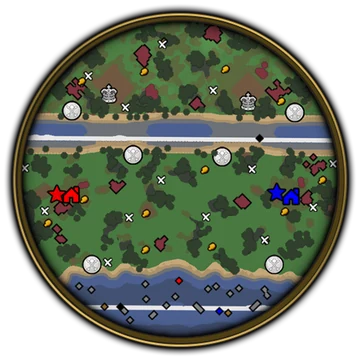
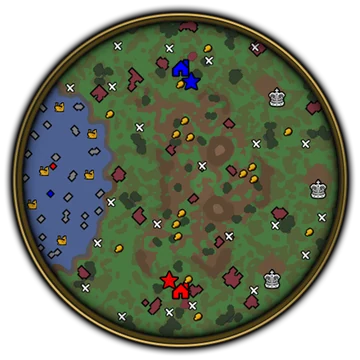
The House of Hanover are a native settlement in AoE3: Definitive Edition 100.19.18309: a Trading Post on their site brings Black Brunswicker, Totenkopf Hussar, Drummer and Battleship and 7 improvements (Veteran Hanoverians, Royal Guard Hanoverians, Royal Scots Grey, Royal Card Games, Acts of Union and 2 more). 14 random maps can place them, among them Danish Straits, England, Ireland and Low Countries.
This section as JSON: /raw/natives.json
Quick answers (3)
- What units do the House of Hanover give in AoE3?
- Black Brunswicker, Totenkopf Hussar, Drummer and Battleship.
- What can you research at the House of Hanover Trading Post?
- Veteran Hanoverians, Royal Guard Hanoverians, Royal Scots Grey, Royal Card Games, Acts of Union, Victorian Era and Royal Fireworks.
- Which maps have the House of Hanover?
- Danish Straits, England, Ireland, Low Countries, Mediterranean, North Sea, Rhine, Saxony, Scotland, The Seven Years' War, Unknown, Unknown - LOST, Virgin Islands and Wales.
Units
| Unit | HP | Cost | Fights won | Beaten hardest by |
|---|---|---|---|---|
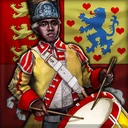
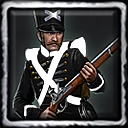 Black BrunswickerNative warrior Black BrunswickerNative warrior | 135 |  70 70 50 50 | 39% | Jaguar Prowl Knight |
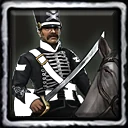 Totenkopf HussarNative warrior Totenkopf HussarNative warrior | 180 | 7090 | 49% | Puma Spearman |
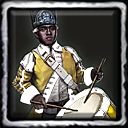 DrummerNative warrior DrummerNative warrior | 250 | 150150 | 2% | Steppe Rider |
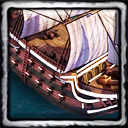 BattleshipShip BattleshipShip | 4,500 | 1,000 1,000 1,000 | — | — |
Fights won: share of equal-cost matchups against every regular unit it wins (base stats, Lanchester square law, as on /counters).
Trading Post improvements
Hanoverian unit attack and hitpoints increased.
Totenkopf Hussar: hit points +20%, damage +20%
Drummer: hit points +20%, damage +20%
Totenkopf Hussar: hit points +20%, damage +20%
Drummer: hit points +20%, damage +20%

Hanoverian unit attack and hitpoints increased.
Totenkopf Hussar: hit points +40%, damage +40%
Drummer: hit points +40%, damage +40%
Black Brunswicker: hit points +40%, damage +40%
Totenkopf Hussar: hit points +40%, damage +40%
Drummer: hit points +40%, damage +40%

Ships a number of Totenkopf Hussars. Totenkopf Hussars require fewer hits to charge their Death Strike ability.
Ships 5 Totenkopf Hussar

Immediately sends a random Card in your deck.

Enables Drummers to plant an Inspiring Flag that boosts nearby unit morale! When the flag is planted, 1 English, Scottish, and Irish mercenary is spawned.

Directly advances you straight to the Imperial Age and grants 1 Factory Wagon. This upgrade gets cheaper as you earn XP from training units and constructing buildings.
Makes researchable: Victorian Era
Makes researchable: Victorian Era
Makes researchable: Victorian Era
Makes researchable: Victorian Era
Ships 1 Factory Wagon

Unleash a dazzling display of lights to very briefly stun enemy units.
History
The House of Hanover can trace its origins back to the prestigious German families of Brunswick and Welf, the latter of which produced the influential Henry the Lion during the 1100s. These families' steady rise over the coming centuries eventually culminated in the elector George I becoming head of the British monarchy, a connection which would result in the most prestigious period in British history. Through their network of benefits as part of the Holy Roman Empire, including a key alliance with the Prussians, the Hanoverians transformed Britain into the world’s leading superpower that would reach its apex by the Victorian Era, a period sometimes referred to as Pax Britannica, for the record-shattering size of the British Empire during the long reign of Queen Victoria. The combined German Legion and British Army saw generations of great military victories, most notably the Battle of Waterloo of 1815, in which the renowned Royal Scots Greys cavalry led a decisive charge that put an end to the ambitions of Napoleon. Reaping the lucrative benefits of their partnership, the Hanoverians ultimately developed their own kingdom following the demise of the Holy Roman Empire at the start of the 1800s and would rule much of their native Germany for several decades. Despite–and indeed as a result of–producing the largest maritime empire in world history, the unique relationship between the Hanoverians and the British also contributed to the divestment of British royal powers in favor of a constitutional monarchy, setting the precedent for the decentralized system of politics that dominates most of Europe today.