
Worked out · AoE3: DE 100.19.18309
Germans builds
For the Germans in AoE3: Definitive Edition 100.19.18309, the Fortress Age army that answers the most enemy units for the same resources is Pikeman, Uhlan and Falconet: between them they beat 87% of the 119 regular units of all civilizations out by then (average edge ×1.96). Colonial pressure (Colonial Age): Pikeman and Uhlan, 66%. Economic boom (Industrial Age): Pikeman, Uhlan and Falconet, 87%. Treaty (Imperial Age): Crossbowman, Pikeman, Uhlan and Falconet, 90%.
This section as JSON: /raw/builds.json
Quick answers (4)
- What is the best Germans army in AoE3?
- Colonial Age: Pikeman and Uhlan (beats 66% of 77 units); Fortress Age: Pikeman, Uhlan and Falconet (beats 87% of 119 units); Industrial Age: Pikeman, Uhlan and Falconet (beats 87% of 123 units); Imperial Age: Crossbowman, Pikeman, Uhlan and Falconet (beats 90% of 123 units) — base stats, AoE3: Definitive Edition 100.19.18309.
- What beats the Germans Fortress Age army?
- Veteran Halberdier (its best answer, Pikeman, is at ×0.59), Poruchik (its best answer, Pikeman, is at ×0.73), Jaguar Prowl Knight (its best answer, Uhlan, is at ×0.75), Tomahawk (its best answer, Pikeman and is at ×0.76).
- Which cards should the Germans send first?
- For the fortress push: 2 Settler Wagons, 1 Settler Wagon, Cavalry Combat and TEAM Cavalry Attack.
- Which Germans age-ups hand over the most?
- to the Colonial Age: The Naturalist (≈ 500 resources); to the Fortress Age: The Gentleman Pirate (≈ 800 resources).
Colonial pressure · Colonial Age
Army
Beats 66% of the 77 regular units out by the Colonial Age (average edge ×1.54), training the right one of them against each.





Age-ups
- II
 The Naturalist≈ 500
Cards to send, in order
- 1.I
 2 Settler WagonsEconomy · hands over ≈ 400 net
 - 2.I
 1 Settler WagonEconomy · hands over ≈ 200 net
 - 3.II
 4 Surgeons +2 UhlansArmy · hands over ≈ 1,200 net
 - 4.II
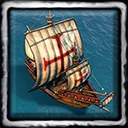 2 Caravels +2 UhlansArmy · hands over ≈ 1,100 net
 - 5.II
 Chests of 700 Coin +2 UhlansArmy · hands over ≈ 1,000 net
 - 6.II
 Cavalry CombatUpgrade · helps Uhlan
 - 7.II
 TEAM Cavalry AttackUpgrade · helps Uhlan
The full deck (25 cards)
2 Settler WagonsI1 Settler WagonII4 Surgeons +2 UhlansII2 Caravels +2 UhlansIIChests of 700 Coin +2 UhlansIICavalry CombatIITEAM Cavalry AttackIV 24 Crossbowmen +4 UhlansIV
 Hire Highland Mercenary ArmyIV
 Hire Holy Roman ArmyIV
 3 Horse Artillery +4 UhlansIII
 15 Sheep + 1 Homestead WagonIII
 Hire British HarquebusiersIII
 Hire Landsknecht MercenariesIII
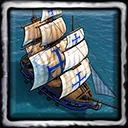 1 Frigate +3 UhlansIII
 5 Doppelsoldners +3 UhlansIIIChests of 1,000 Coin +3 UhlansII
 Cords of 700 Wood +2 UhlansII
 Crates of 700 Food +2 UhlansII
 6 Spies +2 UhlansII8 Crossbowmen +2 UhlansI
 CapitalismI
 Economic TheoryI
 Establish IronmongerI
 Exotic Hardwoods
Fortress push · Fortress Age
Army
 PikemanInfantry · answers 42 enemy units
 40
40 40
40 UhlanCavalry · answers 37 enemy units50
 100
100 FalconetArtillery · answers 24 enemy units400100
Beats 87% of the 119 regular units out by the Fortress Age (average edge ×1.96), training the right one of them against each.
Weak against
 Veteran Halberdier×0.59
 Poruchik×0.73
 Jaguar Prowl Knight×0.75
 Tomahawk×0.76
 Samurai×0.81
 Changdao Swordsman×0.82
Age-ups
- IIThe Naturalist≈ 500
- III
 The Gentleman Pirate≈ 800
Cards to send, in order
- 1.I2 Settler WagonsEconomy · hands over ≈ 400 net
- 2.I1 Settler WagonEconomy · hands over ≈ 200 net
- 3.IICavalry CombatUpgrade · helps Uhlan
- 4.IITEAM Cavalry AttackUpgrade · helps Uhlan
- 5.III15 Sheep + 1 Homestead WagonArmy · hands over ≈ 1,950 net
- 6.IIIHire British HarquebusiersArmy · hands over ≈ 1,640 net
- 7.IIIHire Landsknecht MercenariesArmy · hands over ≈ 1,500 net
The full deck (25 cards)
2 Settler WagonsI1 Settler WagonIICavalry CombatIITEAM Cavalry AttackIII15 Sheep + 1 Homestead WagonIIIHire British HarquebusiersIIIHire Landsknecht MercenariesIV24 Crossbowmen +4 UhlansIVHire Highland Mercenary ArmyIVHire Holy Roman ArmyIV3 Horse Artillery +4 UhlansIV9 Doppelsoldners +4 UhlansIII1 Frigate +3 UhlansIII5 Doppelsoldners +3 UhlansIIIChests of 1,000 Coin +3 UhlansIIICords of 1,000 Wood +3 UhlansIIICrates of 1,000 Food +3 UhlansII4 Surgeons +2 UhlansII2 Caravels +2 UhlansIIChests of 700 Coin +2 UhlansIICords of 700 Wood +2 UhlansIICrates of 700 Food +2 UhlansICapitalismIEconomic TheoryIEstablish IronmongerEconomic boom · Industrial Age
Army
- PikemanInfantry · answers 42 enemy units4040
- UhlanCavalry · answers 40 enemy units50100
- FalconetArtillery · answers 25 enemy units400100
Beats 87% of the 123 regular units out by the Industrial Age (average edge ×2), training the right one of them against each.
Weak against
- Veteran Halberdier×0.59
- Poruchik×0.73
- Jaguar Prowl Knight×0.75
- Tomahawk×0.76
- Samurai×0.81
- Changdao Swordsman×0.82
Age-ups
- IIThe Naturalist≈ 500
- IIIThe Gentleman Pirate≈ 800
- IV
 The Cavalry Marshal≈ 1,050
Cards to send, in order
- 1.I2 Settler WagonsEconomy · hands over ≈ 400 net
- 2.I1 Settler WagonEconomy · hands over ≈ 200 net
- 3.ICapitalismEconomy · gathering or trickle bonus
- 4.IICavalry CombatUpgrade · helps Uhlan
- 5.IITEAM Cavalry AttackUpgrade · helps Uhlan
- 6.III
 TEAM Settler WagonsEconomy · hands over ≈ 400 net
 - 7.IV24 Crossbowmen +4 UhlansArmy · hands over ≈ 2,520 net
- 8.IVHire Highland Mercenary ArmyArmy · hands over ≈ 2,490 net
The full deck (25 cards)
2 Settler WagonsI1 Settler WagonICapitalismIICavalry CombatIITEAM Cavalry AttackIIITEAM Settler WagonsIV24 Crossbowmen +4 UhlansIVHire Highland Mercenary ArmyIEconomic TheoryIEstablish IronmongerIExotic HardwoodsI FurrierIVHire Holy Roman ArmyIV3 Horse Artillery +4 UhlansIV9 Doppelsoldners +4 UhlansIII15 Sheep + 1 Homestead WagonIIIHire British HarquebusiersIIIHire Landsknecht MercenariesIII1 Frigate +3 UhlansIII5 Doppelsoldners +3 UhlansII4 Surgeons +2 UhlansII2 Caravels +2 UhlansIIChests of 700 Coin +2 UhlansIICords of 700 Wood +2 UhlansIICrates of 700 Food +2 Uhlans
Treaty · Imperial Age
Army
 CrossbowmanInfantry · answers 9 enemy units4040
- PikemanInfantry · answers 39 enemy units4040
- UhlanCavalry · answers 40 enemy units50100
- FalconetArtillery · answers 23 enemy units400100
Beats 90% of the 123 regular units out by the Imperial Age (average edge ×2.02), training the right one of them against each.
Weak against
- Veteran Halberdier×0.63
- Poruchik×0.79
- Jaguar Prowl Knight×0.81
- Tomahawk×0.82
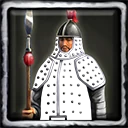 Qiang Pikeman×0.87
- Changdao Swordsman×0.89
Age-ups
- IIThe Naturalist≈ 500
- IIIThe Gentleman Pirate≈ 800
- IVThe Cavalry Marshal≈ 1,050
- V
 El Presidente≈ 2,000
Cards to send, in order
The full deck (15 cards)




What to train against the most common units
The Germans unit that does best for the same resources against each of the 12 units most civilizations have (any age).
| Enemy unit | Train | Edge |
|---|---|---|
| Uhlan | Pikeman | ×1.68 |
 Culverin Culverin | Uhlan | ×4 |
| Falconet | Uhlan | ×3.14 |
 Gatling Gun Gatling Gun | Uhlan | ×4 |
| Horse Artillery | Uhlan | ×3.37 |
 Hussar Hussar | Pikeman | ×1.86 |
 Dragoon Dragoon | Pikeman | ×3.32 |
| Pikeman | Crossbowman | ×1.02 |
 Grenadier Grenadier | Uhlan | ×2.82 |
 Musketeer Musketeer | Falconet | ×1.44 |
 Carbine Cavalry Carbine Cavalry | Pikeman | ×3.06 |
| Crossbowman | Uhlan | ×1.9 |
How this is worked out
Army: every mix of 2 (Colonial), 3 (Fortress, Industrial) or 4 (Treaty, Imperial) of the civ's own regular units out by that age is tried against every regular unit of every civilization out by then. Against each enemy the best unit of the mix counts, by its edge for the same resources (Lanchester's square law: strength = (resources ÷ cost)² × damage per second × hit points; edge = √ of the strength ratio, held between ×¼ and ×4). The mix with the highest geometric mean of those edges wins; "beats" = the share of enemy units where that edge is above ×1.
Age-ups: on the way, the choice that hands over the most (shipped units at their train cost, livestock and crates at what they hold, resources). Cards: economy first (villagers, crates, livestock, gathering and trickle bonuses), then the shipments of fighting units worth the most net of their price, then cards that raise hit points, damage, resists, range or speed of the army's units or cut their cost or train time. The Treaty plan keeps only cards that last (upgrades, gathering and trickle bonuses, building improvements), no one-off shipments. The deck adds more of the same by value, spread over the ages by the plan (an early plan keeps more early cards), at most 10 per age, 25 cards.
Not modelled: upgrades, civilization bonuses, range and speed (kiting), area damage beyond one target, abilities, maps, timing and the economy behind it. These plans are what the game's numbers favour, not build orders from top players.
Germans: bonuses, units and every cardGermans deck builder← All civilizations' builds