

European civilization · Home City Berlin
Germans
The Germans (civ ID Germans, Home City Berlin) in AoE3: Definitive Edition 100.19.18309 start with 1 Chests of Coin, 3 Crates of Food, 1 Cords of Wood, 1 Explorer and 3 Settler Wagon, train 20 kinds of units from their own buildings and have 182 Home City cards. Their age-up choices number 5 / 5 / 5 / 5 for the Colonial, Fortress, Industrial and Imperial ages.
This section as JSON: /raw/civilizations.json
Quick answers (4)
- What are the Germans bonuses in AoE3?
- Civilization bonus: Receives Uhlans with every home city shipment. Begins with three Settler Wagons. Royal guard units: Skirmisher (Prussian Needle Gun) and Uhlan (Prussian Uhlan) Unique units: Settler Wagon, Doppelsoldner, Uhlan and War Wagon In the New World, the Germans ruled territories in South America in the 1500s, such as Venezuela. They were short lived until were able to successfully colonize in the late 1800s.
- What do the Germans start with?
- 1 Chests of Coin, 3 Crates of Food, 1 Cords of Wood, 1 Explorer and 3 Settler Wagon.
- Which Germans age-up gives the most?
- to the Colonial Age: The Naturalist (≈ 500 resources); to the Fortress Age: The Gentleman Pirate (≈ 800 resources); to the Industrial Age: The Cavalry Marshal (≈ 1,050 resources); to the Imperial Age: El Presidente (≈ 2,000 resources).
- How many Home City cards do the Germans have?
- 182, plus 72 more in revolution decks.
Germans army builds, age-ups and cards to sendGermans deck builder
Bonuses
Civilization bonus: Receives Uhlans with every home city shipment. Begins with three Settler Wagons. Royal guard units: Skirmisher (Prussian Needle Gun) and Uhlan (Prussian Uhlan) Unique units: Settler Wagon, Doppelsoldner, Uhlan and War Wagon In the New World, the Germans ruled territories in South America in the 1500s, such as Venezuela. They were short lived until were able to successfully colonize in the late 1800s.
The game's own civilization summary (civ picker rollover).
Starting units


Units few others have
Units Germans train from their own buildings that no more than one other civilization has.
Age-up choices
What each choice costs and hands over, valued at the units' train cost. Compare every civilization's age-ups.
To the Colonial Age
 The Naturalist
 800gives ≈ 500
- The Philosopher Prince800gives ≈ 500
- The Quartermaster800gives ≈ 400
- The Inventor800
- The Logistician900
To the Fortress Age
 The Gentleman Pirate1,200
 1,000gives ≈ 800
- The Sergeant at Arms1,2001,000gives ≈ 800
- The Marksman1,2001,000gives ≈ 690
- The Bishop1,2001,000
- The Exiled Prince1,2001,000
To the Industrial Age
 The Cavalry Marshal2,0001,200gives ≈ 1,050
- The Engineer2,0001,200gives ≈ 1,000
- The Tycoon2,0001,200gives ≈ 1,000
- The Viceroy2,0001,200gives ≈ 900
- The Papal Guard2,0001,200
To the Imperial Age
 El Presidente4,0004,000gives ≈ 2,000
- The Black Duke4,0004,000gives ≈ 1,920
- The General4,0004,000gives ≈ 1,600
- The Knight4,0004,000
- The Mercenary Contractor4,0004,000
History
At the time of Columbus' first voyage, Germany consisted of four hundred separate entities, including cities, principalities, and feudal states. Though nominally part of the Holy Roman Empire, they were in fact beyond the control of the Holy Roman Emperor in Spain. There was no central government that dictated policy, collected taxes, or marshaled armies. In 1517 a German monk, Martin Luther, protested against a variety of practices of the Catholic Church by nailing his arguments to a church door in Wittenberg. This was a traditional way of opening a debate at the university there, but he started something larger than a scholarly debate. His act set off the Protestant Reformation, as copies of his theses, translated from Latin into German and other languages, spread throughout Germany and the rest of Europe. The Reformation in turn brought about the Counter-Reformation as the Catholic Church reordered itself. The struggle between the two religious views broke out into the Thirty Years' War, which was particularly brutal and devastating in Germany. German provinces ended up choosing to be either Catholic (primarily in the south) or Protestant (primarily in the north). The small Baltic duchy of Prussia gradually began expanding in the sixteenth century thanks to good leadership and a growing military tradition. It repulsed Swedish encroachments in the seventeenth century and rose to real prominence under Frederick the Great in the eighteenth century. The Prussians were particularly noted for their disciplined infantry, elite Grenadiers, and cavalry. They fought a series of wars with the much larger Austrian Empire to the south, usually with great success, up to the Napoleonic Era. Germans briefly attempted to colonize Venezuela in the sixteenth century. Augsburg banking families obtained the rights to the country in 1526 and began exploring the land in 1529, mainly looking for El Dorado, the famed city of gold. Approximately two hundred settlers landed at Coro. They continued to search for gold and established some sugar plantations worked by African slaves. The colony reverted to Spanish control in 1556. Most of the German colonists had died from disease or native attacks, especially during their treks into the interior searching for gold.
From the game's History encyclopedia.
Units
Villager
 Fishing Boat
 70
70 Settler100
Infantry
Cavalry
 Uhlan50100
 Veteran War Wagon150150
Artillery



Also available: 99 mercenaries, natives, pets and shipment-only units
 Bank Wagon
 Heavy Cannon
 Covered Wagon
 Mill Wagon
 Dragoon
 Explorer
 Explorer's Dog
 Factory Wagon
 Fort Wagon
 Galley
 Grenadier
 Hussar
 Veteran Lancer
 Black Rider
 Elmetto
 Li'l Bombard
 Highlander
 Jaeger
 Landsknecht
 Mameluke
 Swiss Pikeman
 Militiaman
 Musketeer
 Outpost Wagon
 Privateer
 Settler Wagon
 Grove Rickshaw
 Prinz Chevauleger
 Native Embassy Travois
 GeneralHomestead Wagon
 LandwehrDragoon
 RetainerLombard WagonSpanish Musketeer
 Battleship
 Bosniak
 Irish Brigadier
 Cranequinier
 Giant Grenadier
 Harquebusier
 Pandour
 Royal Horseman
 Fortified Wagon
 Black BrunswickerChevaulegerHungarian Grenadier
 Line InfantryBlack Brunswicker
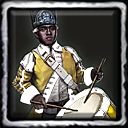 DrummerLine Infantry
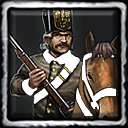 Mounted Infantry
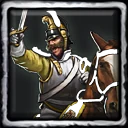 Saxon Cuirassier
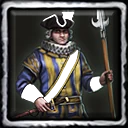 Trabant
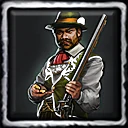 Mountain TrooperMounted Infantry
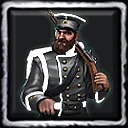 Northern Musketeer
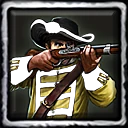 Royal HunterSaxon Cuirassier
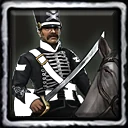 Totenkopf HussarTrabant
 Whaling Ship
 Aiz the Tame Elephant
 Nili the Playful Hippo
 Sanura the Tame Leopard
 Pambuu the Tame WarthogEstate WagonCoal Prospector WagonGold Prospector Wagon
 Bolivar
 Tabor
Tabor Gaucho
 Mounted Granadero
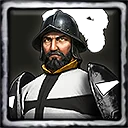 High Master
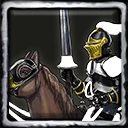 Knight BrotherLlanero
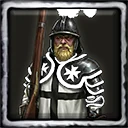 Order Musketeer
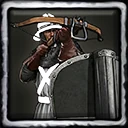 Order Crossbowman
 San Martin
 Teutonic Knight
 Crabat
 Hajduk
 Inquisitor
 Sloop
Sloop SteamerTavern WagonGuard Totenkopf HussarTrading Post Wagon
 Winged Hussar
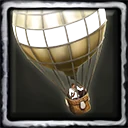 Advanced Hot Air Balloon
 Revolutionary
 Gatling Gun
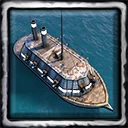 Ironclad
 Nitroglycerin PetardArsenal WagonMarket Rickshaw
 War Elephant
 Old Doug the Orangutan
Buildings
 Arsenal250
 Artillery Foundry250
 Barracks200
 Gate50
 Capitol300
 Church150
 Dock200
 Factory400200
 Field Hospital200
 Fort500600
 House100
 Livestock Pen150
 Market100
 Mill400
 Outpost250
 Estate600
 Stable200
 Town Center500
 Trading Post200
 Wall10Wall10Wall10
 Coal Mine—
 Copper Mine—Gold Mine—
 Silver Mine—Diamond Mine—
 Tavern200
 Torp140
 Watch Tower—
Home City cards (182)
Every card of the Berlin Home City, by the first age it can be sent in. "×N" = can be sent N times; ∞ = no limit.
I Discovery Age (34)
 1 Settler Wagon∞2 Settler Wagons×1
 7 Sheep + 1 Homestead Wagon∞
 Advanced Dock×1
 Advanced Estate×1
 Advanced Market×1
 Advanced Mill×1
 Advanced Trading Post×1
 Buergermeister×1
 Capitalism×1
 Chests of 300 Coin∞
 Cords of 300 Wood∞
 Crates of 300 Food∞
 Economic Theory×1
 Establish Ironmonger×1
 Exotic Hardwoods×1
 Fish Market×1
 Furrier×1
 Hot Air Balloons×1
 Land Grab×1
 Master Surgeons×1
 Native Lore×1
 Pioneers×1
 Prince-Electors×1
 Ranching×1
 Rum Distillery×1
 Sawmills×1
 Stockyards×1
 Stonemasons×1
 TEAM Coastal Defenses×1
 TEAM Food Silos×1
 TEAM House of Hohenzollern×1
 TEAM Reichsritter×1
 Town Militia×1
II Colonial Age (56)
 1 Caravel +2 Uhlans∞
 1 Galleon +2 Uhlans×1
 10 Wettin Allies×1
 2 Caravels +2 Uhlans×12 Settler Wagons +2 Uhlans×1
 3 Doppelsoldners +2 Uhlans×13 Ironclads×13 Settler Wagons +2 Uhlans×1
 4 Surgeons +2 Uhlans×1
 5 Uhlans×1
 6 Spies +2 Uhlans×1
 7 Cows +2 Uhlans×1
 8 Crossbowmen +2 Uhlans×1
 Admiralty×1
 Advanced Arsenal×1Advanced Arsenal×1Advanced Dock×1
 Agents×1Band of Landsknecht Mercenaries×1
 Cavalry Combat×1
 Cavalry Hitpoints×1
 Chests of 600 Coin +2 Uhlans×1Chests of 700 Coin +2 Uhlans×1
 Cigar Roller×1
 Cords of 600 Wood +2 Uhlans×1Cords of 700 Wood +2 Uhlans×1
 Crates of 400 Food, 400 Wood, and 400 Coin∞
 Crates of 600 Food +2 Uhlans×1Crates of 700 Food +2 Uhlans×1
 Fencing School×1
 Frontier Defenses∞
 Hand Infantry Attack×1
 Hand Infantry Hitpoints×1Hire Fortified Wagons×1
 Hire Irish Brigadiers×1
 Hire Whaling Crew×1
 Improved Warships×1Improved Warships×1
 Medicine×1
 Native Treaties×1
 Naval Gunners×1
 Nuremberg Gunsmiths×1
 Offshore Support×1
 Palatine Settlements×1
 Recruit Privateers×1
 Rendering Plant×1
 Riding School×1Riding School×1
 Silversmith×1
 Spice Trade×1
 Sustainable Agriculture×1
 TEAM 2 Surgeons×1
 TEAM Cavalry Attack×1Trattoria×1
 Treaty of Westphalia×1
 Witch Hammer×1
III Fortress Age (42)
1 Covered Wagon +3 Uhlans×1 1 Falconet +3 Uhlans∞
 1 Frigate +3 Uhlans×1
 10 Crossbowmen +3 Uhlans∞
 11 Habsburg Allies×1
 12 Skirmishers∞
 15 Sheep + 1 Homestead Wagon×1
 3 War Wagons +3 Uhlans×14 Doppelsoldners +3 Uhlans×15 Doppelsoldners +3 Uhlans×1
 7 Skirmishers +3 Uhlans×18 Skirmishers +3 Uhlans×18 Uhlans×19 Uhlans×1
 Adler von Lübeck×1
 Advanced Artillery×1Cavalry Combat×1Chests of 1,000 Coin +3 Uhlans×1
 Circle Army×1Cords of 1,000 Wood +3 Uhlans×1Crates of 1,000 Food +3 Uhlans×1Fort×1
 Germantown Farmers×1
 Grenade Launchers×1Grenade Launchers×1
 Hand Infantry Combat×1
 Hire Bosniaks×1
 Hire British Harquebusiers×1
 Hire German Black Riders×1
 Hire Hessian Jaegers×1Hire Landsknecht Mercenaries×1
 Hire Pandours×1
 Improved Mercenaries×1
 Mercenary Camps×1
 Mercenary Loyalty×1
 Native Warriors×1
 Princely Bavarian Chevaulegers×1
 Refrigeration×1
 Royal Mint×1
 Scharnhorst Reform×1
 TEAM Settler Wagons×1
 Textile Mill×1
IV Industrial Age (50)
 1 Battleship∞
 1 Heavy Cannon +4 Uhlans∞
 1 Monitor +4 Uhlans∞11 Uhlans×1
 11 Wettin Allies×112 Skirmishers +4 Uhlans×113 Uhlans×1
 17 Habsburg Allies∞2 Covered Wagons×1
 2 Culverins +4 Uhlans∞2 Falconets +4 Uhlans∞2 Heavy Cannon +4 Uhlans×1
 2 Horse Artillery +4 Uhlans×1
 2 Mortars +4 Uhlans∞20 Crossbowmen +4 Uhlans×124 Crossbowmen +4 Uhlans×13 Horse Artillery +4 Uhlans×1
 3 Mortars +4 Uhlans×14 War Wagons +4 Uhlans×16 Doppelsoldners +4 Uhlans×16 Settler Wagons +4 Uhlans×1
 7 Lancers∞8 Doppelsoldners +4 Uhlans×19 Doppelsoldners +4 Uhlans×19 Skirmishers +4 Uhlans×1
 Advanced Balloon×1
 Blood Brothers×1
 Castrametation×1
 Death Ride×1Demolition Squad×1Factory×1Factory×1
 Guild Artisans×1
 Hire Highland Mercenary Army∞
 Hire Holy Roman Army∞Hire Italian Elmetti×1
 Improved Buildings×1
 Lipizzaner Cavalry×1
 Long-range Infantry Hitpoints×1
 Outlaw Band×1
 Polish Winged Hussars×1
 Potsdam Giants×1
 Robber Barons×1
 San Martin×1
 Solingen Steel×1
 Spanish Riding School×1
 TEAM 2 Mortars×1
 TEAM Conestoga Wagons×1
 TEAM Gunboat Diplomacy×1
 TEAM Soldier Trade∞
After a revolution: 72 cards of the revolution decks
 1 Fort Wagon10 Pandours12 Crabats
 12 Crossbowmen
 16 Independence Guards16 Musketeers
 16 Revolutionaries
 2 Fortified Wagons2 Heavy Cannons
 2 Horse Artillery
 2 Ironclads
 2 Steamers3 Falconets3 Mortars
 4 Gatling Guns
 6 Grenadiers
 9 UhlansAdler von Lübeck
 Albion Mercenary Legion
 Argentine Mortars
 Avisos
 Baltic Crusade
 Berlin Academies
 Blandengues
 Border Fortress
 Buenos Aires
 Caballeros
 Carlsbad Decrees
 Cattle DriversCattle Drivers
 CitizenshipCitizenship
 Colombian Army
 Colombian Navy
 Crates of 500 Food, 500 Wood, and 500 Coin
 Criollos
 Danubian Flotilla
 Fire Drills
 Flying Battery
 Frankfurt Assembly
 Garde du Corps
 Granaderos
 Hajduks
 Half-Brothers
 Hire CranequiniersHire Li'l Bombards
 Honvédség
 Hungarian Grenadiers
 Knighthood
 Kontors
 Kovats' LegionLlaneros
 Magyar HussarsMercenary Camps
 Military Frontier
 Monastic GrangesNational Hero
 Outlaw Combat
 PeeragePrince-Electors
 Prussian General
 Prussian Leib Guard
 Riga Blackheads
 Spandau Arms Factory
 Squires
 Steel Bolts
 Sword-BrothersTEAM Teutonic Town Center
 Teutonic Knights
 Teutonic Order Castles
 Towarczys
 Trip To Jerusalem