
Worked out · AoE3: DE 100.19.18309
Poles builds
For the Poles in AoE3: Definitive Edition 100.19.18309, the Fortress Age army that answers the most enemy units for the same resources is Pikeman, Retainer and Falconet: between them they beat 87% of the 119 regular units of all civilizations out by then (average edge ×1.9). Colonial rush (Colonial Age): Pikeman and Retainer, 65%. Boom (Industrial Age): Pikeman, Retainer and Falconet, 87%. Treaty (Imperial Age): Crossbowman, Pikeman, Retainer and Falconet, 90%.
This section as JSON: /raw/builds.json
Quick answers (4)
- What is the best Poles army in AoE3?
- Colonial Age: Pikeman and Retainer (beats 65% of 77 units); Fortress Age: Pikeman, Retainer and Falconet (beats 87% of 119 units); Industrial Age: Pikeman, Retainer and Falconet (beats 87% of 123 units); Imperial Age: Crossbowman, Pikeman, Retainer and Falconet (beats 90% of 123 units) — base stats, AoE3: Definitive Edition 100.19.18309.
- What beats the Poles Fortress Age army?
- Veteran Halberdier (its best answer, Pikeman, is at ×0.59), Jaguar Prowl Knight (its best answer, Falconet, is at ×0.61), Poruchik (its best answer, Pikeman, is at ×0.73), Tomahawk (its best answer, Pikeman and is at ×0.76).
- Which cards should the Poles send first?
- For the fast fortress: 3 Settlers, Agrarian Reforms, Cigar Roller and Cavalry Combat.
- Which Poles age-ups hand over the most?
- to the Colonial Age: The Naturalist (≈ 700 resources); to the Fortress Age: The Scout (≈ 840 resources).
Colonial rush · Colonial Age
Army
Beats 65% of the 77 regular units out by the Colonial Age (average edge ×1.47), training the right one of them against each.





Age-ups
- II
 The Naturalist≈ 700
Cards to send, in order
- 1.I
 3 SettlersEconomy · hands over ≈ 300 net
 - 2.I
 Agrarian ReformsEconomy · gathering or trickle bonus
 - 3.II
 5 RetainersArmy · hands over ≈ 700 net
 - 4.II
 Hire CranequiniersArmy · hands over ≈ 660 net
 - 5.II
 8 CrossbowmenArmy · hands over ≈ 640 net
 - 6.II
 Cavalry CombatUpgrade · helps Retainer
 - 7.II
 PetyhorcyUpgrade · helps Retainer
The full deck (25 cards)
3 SettlersIAgrarian ReformsII5 RetainersIIHire CranequiniersII8 CrossbowmenIICavalry CombatIIPetyhorcyIV 3 Horse ArtilleryIV
 Hire Highland Mercenary ArmyIV
 Hire Holy Roman ArmyIV
 6 Winged HussarsIII
 20 PikemenIII
 12 SkirmishersIII
 LeičiaiIII
 Hire PandoursIII
 2 FalconetsIII
 Hire Hessian JaegersII4 RetainersII
 KoncerzII
 5 PiechursII
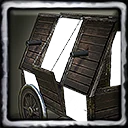 Hire Fortified WagonsI
 Amber CraftsmenI
 DistributivismI
 Fulling MillsI
 Sawmills
Fast Fortress · Fortress Age
Army
 PikemanInfantry · answers 42 enemy units
 40
40 40
40 RetainerCavalry · answers 37 enemy units9050
- FalconetArtillery · answers 24 enemy units
 400100
Beats 87% of the 119 regular units out by the Fortress Age (average edge ×1.9), training the right one of them against each.
Weak against
 Veteran Halberdier×0.59
 Jaguar Prowl Knight×0.61
 Poruchik×0.73
 Tomahawk×0.76
 Maceman×0.8
 Samurai×0.81
Age-ups
- IIThe Naturalist≈ 700
- III
 The Scout≈ 840
Cards to send, in order
- 1.I3 SettlersEconomy · hands over ≈ 300 net
- 2.IAgrarian ReformsEconomy · gathering or trickle bonus
- 3.II
 Cigar RollerEconomy · gathering or trickle bonus
 - 4.IICavalry CombatUpgrade · helps Retainer
- 5.III20 PikemenArmy · hands over ≈ 1,600 net
- 6.III12 SkirmishersArmy · hands over ≈ 1,380 net
- 7.IIILeičiaiArmy · hands over ≈ 1,360 net
- 8.IIICavalry CombatUpgrade · helps Retainer
The full deck (25 cards)
3 SettlersIAgrarian ReformsIICigar RollerIICavalry CombatIII20 PikemenIII12 SkirmishersIIILeičiaiIIICavalry CombatIV3 Horse ArtilleryIVHire Highland Mercenary ArmyIVHire Holy Roman ArmyIV6 Winged HussarsIV14 PiechursIIIHire PandoursIII2 FalconetsIIIHire Hessian JaegersIII7 RetainersII5 RetainersIIHire CranequiniersII8 CrossbowmenII4 RetainersIIKoncerzIAmber CraftsmenIDistributivismIFulling MillsBoom · Industrial Age
Army
- PikemanInfantry · answers 42 enemy units4040
- RetainerCavalry · answers 39 enemy units9050
- FalconetArtillery · answers 26 enemy units400100
Beats 87% of the 123 regular units out by the Industrial Age (average edge ×1.94), training the right one of them against each.
Weak against
- Veteran Halberdier×0.59
- Jaguar Prowl Knight×0.61
- Poruchik×0.73
- Tomahawk×0.76
- Maceman×0.8
- Samurai×0.81
Age-ups
- IIThe Naturalist≈ 700
- IIIThe Scout≈ 840
- IV
 The Cavalry Marshal≈ 1,400
Cards to send, in order
- 1.I3 SettlersEconomy · hands over ≈ 300 net
- 2.IAgrarian ReformsEconomy · gathering or trickle bonus
- 3.IAmber CraftsmenEconomy · gathering or trickle bonus
- 4.IICigar RollerEconomy · gathering or trickle bonus
- 5.II
 SilversmithEconomy · gathering or trickle bonus
 - 6.II
 Sustainable AgricultureEconomy · gathering or trickle bonus
 - 7.IICavalry CombatUpgrade · helps Retainer
- 8.III
 Textile MillEconomy · gathering or trickle bonus
 - 9.IIICavalry CombatUpgrade · helps Retainer
- 10.IV3 Horse ArtilleryArmy · hands over ≈ 1,800 net
- 11.IVHire Highland Mercenary ArmyArmy · hands over ≈ 1,800 net
The full deck (25 cards)
3 SettlersIAgrarian ReformsIAmber CraftsmenIICigar RollerIISilversmithIISustainable AgricultureIICavalry CombatIIITextile MillIIICavalry CombatIV3 Horse ArtilleryIVHire Highland Mercenary ArmyIDistributivismIFulling MillsIV Royal SaltworksISawmillsI
 Wódka DistilleryIVHire Holy Roman ArmyIV6 Winged HussarsIII20 PikemenIII12 SkirmishersIIILeičiaiIIIHire PandoursII5 RetainersIIHire CranequiniersII8 Crossbowmen
Treaty · Imperial Age
Army
 CrossbowmanInfantry · answers 9 enemy units4040
- PikemanInfantry · answers 39 enemy units4040
- RetainerCavalry · answers 39 enemy units9050
- FalconetArtillery · answers 24 enemy units400100
Beats 90% of the 123 regular units out by the Imperial Age (average edge ×1.97), training the right one of them against each.
Weak against
- Veteran Halberdier×0.63
- Poruchik×0.79
- Maceman×0.8
- Jaguar Prowl Knight×0.81
- Tomahawk×0.82
 Qiang Pikeman×0.87
Age-ups
- IIThe Naturalist≈ 700
- IIIThe Scout≈ 840
- IVThe Cavalry Marshal≈ 1,400
- V
 The Royalist≈ 2,100
Cards to send, in order
- 1.IAgrarian ReformsEconomy · gathering or trickle bonus
- 2.IAmber CraftsmenEconomy · gathering or trickle bonus
- 3.IICigar RollerEconomy · gathering or trickle bonus
- 4.IICavalry CombatUpgrade · helps Retainer
- 5.IIPetyhorcyUpgrade · helps Retainer
- 6.II
 Polish Cavalry CombatUpgrade · helps Retainer
 - 7.IIICavalry CombatUpgrade · helps Retainer
- 8.IIITextile MillEconomy · gathering or trickle bonus
- 9.IV
 Piechota WybranieckaUpgrade · helps Crossbowman, Pikeman
 - 10.IV
 National CavalryUpgrade · helps Retainer
 - 11.IVRoyal SaltworksEconomy · gathering or trickle bonus
The full deck (25 cards)
Agrarian ReformsIAmber CraftsmenIICigar RollerIICavalry CombatIIPetyhorcyIIPolish Cavalry CombatIIICavalry CombatIIITextile MillIVPiechota WybranieckaIVNational CavalryIVRoyal SaltworksII Polish HorsemanshipII
 Riders of the ApocalypseIII
 SzlachtaIDistributivismIFulling MillsISawmillsIISilversmithIV
 Democracy of NoblesIII
 AssassinsIII
 BarbicansIII
 TEAM Lithuanian Cavalry CombatIV
 Blood BrothersIISustainable AgricultureIWódka Distillery
What to train against the most common units
The Poles unit that does best for the same resources against each of the 12 units most civilizations have (any age).
| Enemy unit | Train | Edge |
|---|---|---|
 Uhlan Uhlan | Pikeman | ×1.68 |
 Culverin Culverin | Retainer | ×4 |
| Falconet | Retainer | ×3.96 |
 Gatling Gun Gatling Gun |  Cavalry Archer Cavalry Archer | ×4 |
| Horse Artillery | Retainer | ×4 |
 Hussar Hussar | Pikeman | ×1.86 |
 Dragoon Dragoon | Pikeman | ×3.32 |
| Pikeman | Crossbowman | ×1.02 |
 Grenadier Grenadier |  Winged Hussar Winged Hussar | ×2.36 |
 Musketeer Musketeer | Falconet | ×1.44 |
 Carbine Cavalry Carbine Cavalry | Pikeman | ×3.06 |
| Crossbowman | Retainer | ×1.77 |
How this is worked out
Army: every mix of 2 (Colonial), 3 (Fortress, Industrial) or 4 (Treaty, Imperial) of the civ's own regular units out by that age is tried against every regular unit of every civilization out by then. Against each enemy the best unit of the mix counts, by its edge for the same resources (Lanchester's square law: strength = (resources ÷ cost)² × damage per second × hit points; edge = √ of the strength ratio, held between ×¼ and ×4). The mix with the highest geometric mean of those edges wins; "beats" = the share of enemy units where that edge is above ×1.
Age-ups: on the way, the choice that hands over the most (shipped units at their train cost, livestock and crates at what they hold, resources). Cards: economy first (villagers, crates, livestock, gathering and trickle bonuses), then the shipments of fighting units worth the most net of their price, then cards that raise hit points, damage, resists, range or speed of the army's units or cut their cost or train time. The Treaty plan keeps only cards that last (upgrades, gathering and trickle bonuses, building improvements), no one-off shipments. The deck adds more of the same by value, spread over the ages by the plan (an early plan keeps more early cards), at most 10 per age, 25 cards.
Not modelled: upgrades, civilization bonuses, range and speed (kiting), area damage beyond one target, abilities, maps, timing and the economy behind it. These plans are what the game's numbers favour, not build orders from top players.
Poles: bonuses, units and every cardPoles deck builder← All civilizations' builds