
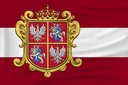
European civilization · Home City Warsaw
Poles
The Poles (civ ID DEPolish, Home City Warsaw) in AoE3: Definitive Edition 100.19.18309 start with 4 Crates of Food, 2 Cords of Wood, 6 Settler and 1 Hetman, train 20 kinds of units from their own buildings and have 153 Home City cards. Their age-up choices number 5 / 5 / 5 / 5 for the Colonial, Fortress, Industrial and Imperial ages.
This section as JSON: /raw/civilizations.json
Quick answers (4)
- What are the Poles bonuses in AoE3?
- Civilization bonus: Buildings cost less and build faster, but are weaker. Starts with a Hetman, a cavalry hero who can construct the Sejm, a building that produces resources based on Settler population. Royal guard units: Cavalry Archer (Pancerny), Piechur (Kurpie Marksman), Pikeman (Scytheman), and Retainer (Vanguard). Unique units: Hetman, Winged Hussar, Retainer, Piechur. Unique buildings: Folwarks can train military units and also replace Mills and Livestock Pens. The Sejm combines an early Capitol and Factory. The Polish-Lithuanian Commonwealth was one of the greatest territorial states in 17th century Europe stretching from the Baltic Sea to the Black Sea. It was an ethnically diverse multinational state known for its unique political system, agricultural production and terrifying cavalry, most prominently the Winged Hussars. Through its ties with the Duchy of Courland, the Commonwealth even participated in minor colonial endeavors in the Caribbean. The Commonwealth's inability to adapt and modernize as well as several invasions from neighboring powers eventually led to its dissolution in 1795.
- What do the Poles start with?
- 4 Crates of Food, 2 Cords of Wood, 6 Settler and 1 Hetman.
- Which Poles age-up gives the most?
- to the Colonial Age: The Naturalist (≈ 700 resources); to the Fortress Age: The Scout (≈ 840 resources); to the Industrial Age: The Cavalry Marshal (≈ 1,400 resources); to the Imperial Age: The Royalist (≈ 2,100 resources).
- How many Home City cards do the Poles have?
- 153, plus 97 more in revolution decks.
Bonuses
Civilization bonus: Buildings cost less and build faster, but are weaker. Starts with a Hetman, a cavalry hero who can construct the Sejm, a building that produces resources based on Settler population. Royal guard units: Cavalry Archer (Pancerny), Piechur (Kurpie Marksman), Pikeman (Scytheman), and Retainer (Vanguard). Unique units: Hetman, Winged Hussar, Retainer, Piechur. Unique buildings: Folwarks can train military units and also replace Mills and Livestock Pens. The Sejm combines an early Capitol and Factory. The Polish-Lithuanian Commonwealth was one of the greatest territorial states in 17th century Europe stretching from the Baltic Sea to the Black Sea. It was an ethnically diverse multinational state known for its unique political system, agricultural production and terrifying cavalry, most prominently the Winged Hussars. Through its ties with the Duchy of Courland, the Commonwealth even participated in minor colonial endeavors in the Caribbean. The Commonwealth's inability to adapt and modernize as well as several invasions from neighboring powers eventually led to its dissolution in 1795.
The game's own civilization summary (civ picker rollover).
Starting units
- 4×
 Crates of Food
 - 2×
 Cords of Wood
 - 6×
 Settler
 - 1×
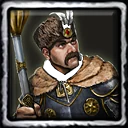 Hetman
Units few others have
Units Poles train from their own buildings that no more than one other civilization has.
Age-up choices
What each choice costs and hands over, valued at the units' train cost. Compare every civilization's age-ups.
To the Colonial Age
 The Naturalist
 800gives ≈ 700
- The Philosopher Prince800gives ≈ 500
- The Inventor800
- The Logistician900
- The Governor800
To the Fortress Age
 The Scout1,200
 1,000gives ≈ 840
- The Gentleman Pirate1,2001,000gives ≈ 800
- The Marksman1,2001,000gives ≈ 660
- The Mercenary Contractor1,2001,000
- The Exiled Prince1,2001,000
To the Industrial Age
 The Cavalry Marshal2,0001,200gives ≈ 1,400
- The Viceroy2,0001,200gives ≈ 1,300
- The Tycoon2,0001,200gives ≈ 1,000
- The Logistician2,0001,200
- The Pope2,0001,200
To the Imperial Age
 The Royalist4,0004,000gives ≈ 2,100
- El Presidente4,0004,000gives ≈ 2,000
- The General4,0004,000gives ≈ 1,600
- The Knight4,0004,000
- The Mercenary Contractor4,0004,000
History
A true crossroads of Eastern Europe, the Polish-Lithuanian Commonwealth was a premier early modern melting pot. Its foundations were forged when the Lithuanian Grand Duke Jogaila ascended the Polish throne in 1386, a union that eventually shattered the power of the Teutonic Knights at the Battle of Grunwald in 1410. This republic of the two nations was home to a staggering diversity of peoples, including Poles, Lithuanians, Ruthenians, Germans, and Tatars, encompassing a mosaic of Catholic, Orthodox, Protestant, Jewish, and Muslim faiths. Strategically, it served as a massive buffer state, shielding the West from the rising power of the Muscovites and Ottomans. The Commonwealth’s agrarian economy heavily relied on Folwarks. These vast estates produced massive grain surpluses that were shipped through the port of Gdańsk to feed the continent, coining the title ‘Granary of Europe’. At the vanguard of the Commonwealth's army stood the Winged Hussars, the most feared heavy cavalry of the age, whose iconic feathered wings and lethal charges dominated the battlefield. Beyond this elite core, the military was a tapestry of ethnically and militarily distinct banners, including the mail-clad Pancerni medium cavalry and various light units drawn from Cossacks, Hungarians, Tatars and Wallachians. These forces were perpetually engaged in the so-called 'Deluge' of wars against Sweden, Muscovy, and the Ottomans. At the Battle of Vienna in 1683, Polish heavy cavalry thundered down from the hills in a massive, coordinated effort, shattering the Ottoman lines in one of the largest cavalry charges in history. King Jan III Sobieski’s victory secured the Commonwealth’s legacy as the "Shield of Christendom" and put a stop to Ottoman territorial expansion into the European interior. The Commonwealth achieved its territorial zenith in the 17th century, stretching from the Baltic to the Black Sea. However, its archaic feudal structures were soon exposed by professional standing armies. The very 'Golden Liberty' that once empowered the Szlachta nobility became the tool for its undoing. Exploiting a paralyzed government, the autocracies of Russia, Prussia, and Austria toppled the once-mighty state through a series of invasions and partitions. Although Napoleon would briefly revive Polish hopes with the creation of the Duchy of Warsaw, the Commonwealth disappeared from the map in 1795, its legacy preserved in the culture and resilience of a people who remained a nation in spirit long before they were once again a state.
From the game's History encyclopedia.
Units
Villager
 Fishing Boat
 70Settler100
Infantry
Cavalry
Artillery


Also available: 103 mercenaries, natives, pets and shipment-only units
 Bank Wagon
 Heavy Cannon
 Covered Wagon
 Dragoon
 Explorer's Dog
 Factory Wagon
 Fort Wagon
 Galley
 Hussar
 Black Rider
 Fusilier
 Li'l Bombard
 Highlander
 Jaeger
 Landsknecht
 Mameluke
 Swiss Pikeman
 Militiaman
 Musketeer
 Outpost Wagon
 Privateer
 Rocket
 Settler Wagon
 Skirmisher
 UhlanMonastery RickshawBattery Tower Wagon
 Crown Janissary
 Depot Wagon
 Native Embassy TravoisCrates of FoodFrontier Post Wagon
 GeneralHetmanHomestead Wagon
 LandwehrDragoon
 Grenadier
 Battleship
 Irish Brigadier
 Cranequinier
 Gallowglass
 Giant Grenadier
 Harquebusier
 Mounted Rifleman
 Pandour
 Royal Horseman
 Fortified Wagon
 XebecHungarian Grenadier
 Boyar
Boyar Clansman
 Companion
 Lipka Tatar
 Lowlander
 Royal Arquebusier
 Saxon Cuirassier
 Shock Rider
 Trabant
 Ordinance Rifleman
 Aiz the Tame Elephant
 Nili the Playful Hippo
 Sanura the Tame Leopard
 Pambuu the Tame WarthogEstate WagonProspector WagonGold Prospector WagonSalt Prospector Wagon
 Quaker Gun
 Tabor
Tabor Haidamaka Rifleman
 Haidamaka
 High Master
 Knight Brother
 Order Musketeer
 Order Crossbowman
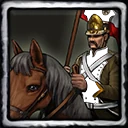 Vistula Uhlan
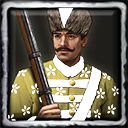 Serdyuk
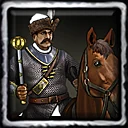 Starshyna
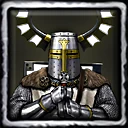 Teutonic Knight
 Revolutionary Sharpshooter
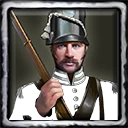 Regular
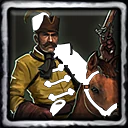 Crabat
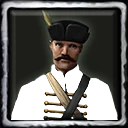 Hajduk
 Inquisitor
 Cossack Daredevil
 Cossack Daredevil
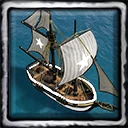 Sloop
Sloop State Militia
 Stealth PetardTavern WagonTrading Post Wagon
 Carbine Cavalry
 Advanced Hot Air Balloon
 Revolutionary
 Gatling Gun
 Ironclad
 CulverinUhlanMarket Rickshaw
 War Elephant
 Old Doug the OrangutanRepentant Fusilier
Buildings
 Arsenal250
 Artillery Foundry250
 Barracks200
 Gate50
 Dock200
 Factory400200
 Field Hospital200
 Fort500600
 House100
 Market100
 Outpost250
 Estate600
 Stable200
 Town Center500
 Trading Post200
 Wall10Wall10Wall10
 Church150
 Folwark200
 Farming Folwark300
 Livestock Folwark300
 Coal Mine—
 Copper Mine—Gold Mine—
 Silver Mine—Diamond Mine—
 Sejm300
 Tavern200
 Torp140
 Watch Tower—
Home City cards (153)
Every card of the Warsaw Home City, by the first age it can be sent in. "×N" = can be sent N times; ∞ = no limit.
I Discovery Age (30)
3 Settlers×1 4 Pigs + 1 Homestead Wagon∞
 Advanced Dock×1
 Advanced Estate×1
 Advanced Folwarks×1
 Advanced Market×1
 Advanced Trading Post×1
 Agrarian Reforms×1
 Amber Craftsmen×1
 Chests of 300 Coin∞
 Cords of 300 Wood∞
 Crates of 300 Food∞
 Distributivism×1
 Fish Market×1
 Fulling Mills×1
 Grain Export∞
 Grand Hetman×1
 Hot Air Balloons×1
 Kielbasa×1
 Master Surgeons×1
 Native Lore×1
 Pioneers×1
 Royal Union×1
 Rzeczpospolita×1
 Sawmills×1
 Stockyards×1
 Stonemasons×1
 TEAM Coastal Defenses×1
 Town Militia×1
 Wódka Distillery×1
II Colonial Age (45)
 1 Caravel∞
 1 Galleon×110 Pigs∞
 2 Caravels×1
 4 Retainers×1
 5 Piechurs×15 Retainers×1
 6 Spies×1
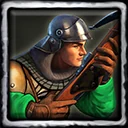 8 Crossbowmen×1
 Admiralty×1
 Advanced Arsenal×1
 Cavalry Combat×1
 Chests of 600 Coin×1Chests of 700 Coin×1
 Cigar Roller×1
 Cords of 700 Wood×1
 Couronian Shipyards×1
 Crates of 400 Food, 400 Wood, and 400 Coin∞
 Crates of 600 Food×1Crates of 700 Food×1
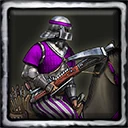 Hire Cranequiniers×1Hire Fortified Wagons×1
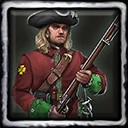 Hire Irish Brigadiers×1
 Koncerz×1
 Kosynierzy×1
 Kusznicy×1
 Medicine×1
 Offshore Support×1
 Petyhorcy×1
 Polish Cavalry Combat×1
 Polish Horsemanship×1
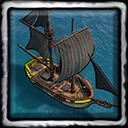 Recruit Privateers×1
 Register Cossacks×1
 Rendering Plant×1
 Riders of the Apocalypse×1
 Riding School×1
 Royal Banner×1
 Saxon Banner×1
 Silversmith×1
 Sustainable Agriculture×1
 TEAM 2 Surgeons×1
 TEAM Husaria×1
 Treaty of Lublin×1
 Witch Hammer×1
 Wladyslaw's Banner×1
III Fortress Age (44)
1 Covered Wagon×1 1 Falconet∞
 1 Frigate×1
 10 Crossbowmen∞
 10 Pikemen∞10 Spies×1
 10 Stuart Allies×1
 10 Vistula Uhlans∞
 12 Skirmishers∞
 15 Pigs + 1 Homestead Wagon×1
 2 Falconets×1
 2 Winged Hussars∞
 20 Pikemen∞
 5 Cavalry Archers×17 Retainers×18 Piechurs×1
 Advanced Artillery×1
 Assassins×1
 Barbicans×1
 Bathory's Banner×1Cavalry Combat×1Chests of 1,000 Coin×1Cords of 1,000 Wood×1Crates of 1,000 Food×1Crates of 500 Food, 500 Wood, and 500 Coin∞Fort×1
 Grenade Launchers×1
 Hire British Harquebusiers×1
 Hire German Black Riders×1
 Hire Hessian Jaegers×1
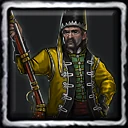 Hire Pandours×1
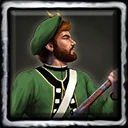 Hire Scottish Highlanders×1
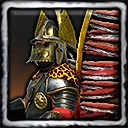 Kircholm Veterans×1
 Leičiai×1
 Mercenary Loyalty×1
 Piechota Dymowa×1
 Pospolite Ruszenie×1
 Pułaski's Legion×1
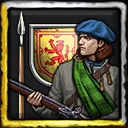 Scottish Banner×1
 Szlachta×1
 TEAM Lithuanian Cavalry Combat×1
 Textile Mill×1
 Towarzysze Pancerni×1
 Vlach Banner×1
IV Industrial Age (34)
 1 Battleship∞
 1 Monitor∞14 Piechurs×12 Falconets∞2 Heavy Cannon×1
 2 Horse Artillery×1
 2 Mortars∞20 Pigs×13 Horse Artillery×1
 5 Winged Hussars×16 Winged Hussars×1
 7 Cavalry Archers∞9 Cavalry Archers×1
 Advanced Balloon×1
 Blood Brothers×1Chests of 1,600 Coin×1Cords of 1,600 Wood×1Crates of 1,600 Food×1
 Democracy of Nobles×1
 Duchess of Courland×1Factory×1
 Heavy Fortifications×1
 Hire Highland Mercenary Army∞
 Hire Holy Roman Army∞Hire Li'l Bombards×1
 Krakow Salt Mines×1
 Mirów Dragoons×1
 National Cavalry×1
 Piechota Wybraniecka×1
 Robocizna×1
 Royal Saltworks×1
 TEAM Gunboat Diplomacy×1
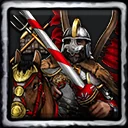 Towarzysze Husarze×1
 Vilnius Castle Complex×1
After a revolution: 97 cards of the revolution decks
 1 Fort Wagon10 Pandours
 12 Cossack Daredevils12 Crabats
 12 Crossbowmen
 14 Haidamaka
 16 Musketeers
 16 Revolutionaries
 2 Fortified Wagons
 2 Horse Artillery
 2 Ironclads3 Falconets
 4 Gatling Guns
 4 Tabors
 6 Grenadiers
 9 Wettin Allies
 Adler von LübeckAdvanced ArsenalAgrarian Reforms
 American Patriotism
 Baltic Crusade
 Bila Tserkva Regiment
 Border Fortress
 Bushnell's Continental Sappers
 Chyhyryn Regiment
 CitizenshipCitizenship
 Continental Army
 Cossack Code of Law
 Cossack Navy
 Dąbrowski Legion
 Danubian Flotilla
 Ducal Army
 European ImmigrantsFactory
 Fencing School
 Fertile Lowlands
 First Partition
 Flying Battery
 Haidamaky Uprising
 Hajduks
 Half-Brothers
 Haslet's Continental Regiment
 Hero of the Two Worlds
 Hire Cranequiniers
 Hire Mounted Riflemen
 Honvédség
 Hungarian Grenadiers
 Infantry Combat
 Jozef Bem Rockets
 Khmelnytsky Uprising
 Knighthood
 Knowlton's Continental Rangers
 Knox's Continental Artillery
 Kontors
 Korsun Regiment
 Kościuszko Uprising
 Kosiński Uprising
 Kovats' Legion
 Kraków Republic
 Kyiv Monastery of the Caves
 Land of Washington
 Lee's Continental Light Dragoons
 Lexington Minutemen
 Magyar Hussars
 Marion's Diversions
 Mercenary Camps
 Military Frontier
 Monastic Granges
 Morgan's Continental SharpshootersNational Cavalry
 November UprisingOutlaw Combat
 Peerage
 Pennsylvania Long Rifles
 Plater's Legion
 Poltava Regiment
 Poniatowski's Legion
 Powder AlarmPułaski's Continental Cavalry
 Pułaski's Legion
 Raiding EconomyRegister Cossacks
 Rhode Island Militia
 Riga Blackheads
 Sister Republics
 Squires
 Steel Bolts
 Sword-Brothers
 TEAM Teutonic Town Center
 Teutonic Knights
 Teutonic Order Castles
 Trip To Jerusalem
 Washington's Continental Grenadiers
 Wild FieldsWódka Distillery
 Zaporozhian Sich