
Building · Discovery Age
Town Center
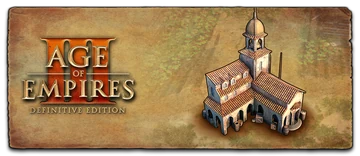
Town Center (proto ID TownCenter) is a building in AoE3: Definitive Edition 100.19.18309 from the Discovery Age: 6,500 hit points, ranged 9 every 3 s at range 32 (×2 vs Villager). It costs 500 wood and takes 60 s to build. 24 civilizations have it.
Quick answers (3)
- How much does Town Center cost in AoE3?
- 500 wood; 60 s to build (AoE3: Definitive Edition 100.19.18309).
- Which civilizations have Town Center?
- British, Chinese, United States, Danes, Ethiopians, Hausa, Inca, Italians, Maltese, Mexicans, Poles, Swedes, Dutch, French, Germans, Indians, Japanese, Ottomans, Portuguese, Russians, Spanish, Aztecs, Haudenosaunee and Lakota.
- What is the proto ID of Town Center?
- TownCenter — the name scenario triggers, AI scripts and mods use.
 500
500Most important building in a town. Home City arrival point. Supports 10 population.
- Population space
- +10
- Siege resist
- 0%
- Build limit
- 1
- Available from
- IDiscovery
- XP when killed
- 100
- Game ID
TownCenter
In the game's words
How to use it
The Town Center is the heart of every colony or village. Gatherers are trained here. Shipments from the Tribal Council or Home City arrive here. The improvements that advance your colony through the Ages are here. Town Centers provide population spaces, or slots, for your total population limit. In the Fortress Age, units which can construct new Town Centers become available from the Tribal Council or Home City. The Tribal Council can provide Town Travois to build new Town Centers, while the Home City provides Covered Wagons and Rickshaws to build new Town Centers. Town Travois, Covered Wagons, and Rickshaws are available in limited numbers. If your town comes under attack, there is a Minutemen button in European Town Centers that drums up the militia for your town's defense. In Asian towns, there are two buttons, one for ranged Irregulars and one for melee Sentries. In Native towns, this defense comes from the Call the People Ceremony at the Community Plaza. Both of these measures are for emergencies only, since these fighters aren't meant to be used as regular warriors. There is also a button called the Town Bell that calls all your gatherers to the Town Center to hide from attacks. While inside, the gatherers fire at any attackers nearby. Pressing the Town Bell button again sends your gatherers back to work.
History
During the Qing Dynasty, beginning in the seventeenth century, Chinese way of life was undergoing a drastic shift, as powerful Manchu rulers of the Qing were conquering and occupying large portions of the Chinese empire. Manchus faced a challenge in controlling an enormous population, one that had long-held resentment towards foreign rule. Communities were a focal point of the Manchu strategy to win over the populace. Roughly 80 to 90 percent of administrative posts were given to native Han Chinese, while the most powerful positions were reserved for Manchu tribesman or Chinese collaborators. The rule of the Manchu brought about extensive agricultural reforms that benefited the peasants of China, and stimulated cultivation of land that led to vast commercial expansion. As a result, daily life improved. Markets and tea houses thrived. Storytellers and performers spread aspects of cultural usually reserved for the elite. At the same time, members of the wealthy class invested their additional income in libraries, gardens, orphanages, medical clinics, and even volunteer firefighting organizations. Peasants and rich alike were enriching their communities. Japan’s Sengoku, or Warring States period, occurred between the fifteenth and seventeenth centuries, and was a time of seemingly endless conflict. Constant fighting between the nation’s nearly 250 individual daimyo, or feudal landowners, had created a way of life completely focused on survival. If a daimyo was not fighting to defend his land and peasants, he was striving to win the land and peasants of his enemy. As a damiyo waged war, his region’s every resource was channeled into the subsistence of his soldiers and the maintenance of his campaign, the length of which was always a defining factor. Villagers were sent ahead of all marching armies to work the land and provide for the soldiers that followed. If they came under attack, peasants would hurry into hiding in the surrounding countryside or a temple, and wait out the battle. To form a supply train, or konidatai, human and animal porters were sent back-and-forth into the field of battle to deliver goods, often under the watchful eye of a supply master. The farther from home an army became, the less likely it would continue. Since resource scarcity was such a concern, it was not uncommon for a daimyo to abandon a campaign and return to his home, only to focus his ambitions and the efforts of his vassals on planning for a future conflict. During the reign of the Mughal Empire’s greatest ruler, Akbar, society was organized under a feudal system. Under the emperor, the warrior aristocracy, known as mansabdars, held ranks that were based on the size of their personal armies, which then indicated salary and obligation to the government. The mansabdars were paid from revenues generated by villages existing specifically for that purpose, called jagirs.
From the game's History encyclopedia (Buildings).
Attacks
| Attack | Damage | Every | Range | Multipliers |
|---|---|---|---|---|
| Ranged | 9 ranged | 3 s | 32 | ×0.5 vs Artillery×2 vs Villager |
| Anti-ship | 75 siege | 3 s | 40 | ×0.5 vs Siege Trooper |
| Cannonarea 1 | 30 ranged | 3 s | 32 | ×0.5 vs Artillery×2 vs Villager |
Trains and researches
Every unit and technology the game lists at this building; each civilization sees only its own.
 Hindu Villager
 Villager
 Settler
 Coureur des Bois
 Envoy
Envoy Chasqui
 Architect
 Revolutionary
 Vistula Uhlan
 Shaolin Master
 Brahmin
 Sohei Archer
 The Warrior
 The Wise Woman
 The Messenger
 The Messenger
 Immigrants
 Strangers' QuartersThe WarriorThe MessengerThe Admiral of the Ocean SeaThe ViceroyThe ViceroyThe Cavalry MarshalThe King's MusketeerThe GeneralThe Viceroy
 Haudenosaunee War Party
 Legendary Native WarriorsThe GeneralThe MarksmanThe Wise WomanThe AdventurerThe King's MusketeerThe ChiefThe ElderThe Wise WomanThe ChiefThe ElderHaudenosaunee Raiding PartyThe MessengerThe ElderThe ElderThe ChiefThe ElderAztec Scouting PartyThe Cavalry MarshalThe King's MusketeerThe Sergeant at Arms
 SpiesSpiesThe Sergeant at ArmsThe Wise WomanThe MessengerThe AdventurerThe King's MusketeerThe Philosopher PrinceThe EngineerThe MessengerThe WarriorThe ChiefThe WarriorThe Cavalry MarshalThe Cavalry MarshalThe ScoutThe ScoutThe MarksmanThe Cavalry MarshalThe King's MusketeerThe ChiefThe ElderThe Warrior
 LivoniaCossack HetmanateChileSouth AfricaRevolutionary FranceHaitiEgyptFinlandRomaniaPeruBrazilArgentinaDuchy of WarsawUnited StatesCanadaCanadaIndonesiaBarbary StatesHungaryHungaryHungaryHungaryPrussiaGerman ConfederationThe WarriorThe WarriorThe ChiefThe ElderThe MessengerThe ScoutThe ViceroyThe War MinisterThe Admiral of the Ocean SeaThe BishopThe GeneralThe King's MusketeerThe QuartermasterThe EngineerThe Sergeant at ArmsThe Gentleman PirateEl PresidenteThe NaturalistThe NaturalistThe TycoonThe War MinisterThe Exiled Prince
 BlockadeBlockadeThe Cavalry MarshalThe Grand VizierThe MessengerThe Wise WomanThe Wise WomanThe Wise WomanThe MessengerAztec War PartyThe ChiefThe ChiefThe ChiefThe ChiefThe ElderThe WarriorThe Wise WomanThe Wise WomanThe Wise WomanThe Wise WomanThe WarriorThe ChiefThe ChiefThe ElderThe ElderThe MessengerAztec Raiding Party
 Lakota Tokala SoldiersMexicoGran ColombiaGran ColombiaHaudenosaunee Scouting Party
 Exalted NativesCommerce AgeFortress AgeImperial AgeIndustrial AgeThe AdventurerThe GovernorThe ImamThe Mohawk StatesmanThe MarksmanThe MessengerThe WarriorThe WarriorThe ElderThe ElderThe WarriorThe Wise WomanThe MessengerThe ChiefThe ChiefThe ChiefThe ChiefThe ElderThe ElderThe ElderThe ElderThe WarriorThe WarriorThe WarriorThe WarriorThe Wise WomanThe Wise WomanThe Wise WomanThe Wise WomanThe MessengerThe MessengerThe MessengerThe MessengerInca Scouting PartyInca Raiding PartyInca War PartyThe LogisticianThe ScoutThe MarksmanThe Cavalry MarshalThe RoyalistThe NaturalistThe LogisticianThe Mercenary ContractorThe MarksmanThe ScoutThe ViceroyThe Cavalry MarshalThe KnightThe RoyalistThe MarksmanThe Cavalry MarshalThe Ethiopian QueenThe King's MusketeerThe GeneralThe Papal GuardThe Mercenary ContractorThe Papal GuardThe Papal GuardThe Papal GuardThe Mercenary ContractorThe Mercenary ContractorThe Mercenary ContractorThe Mercenary ContractorThe Mercenary ContractorThe KnightThe InventorThe InventorThe Black DukeThe Black DukeThe RoyalistThe RoyalistThe RoyalistThe LogisticianThe LogisticianThe LogisticianThe LogisticianThe LogisticianThe LogisticianThe LogisticianThe LogisticianThe LogisticianThe LogisticianThe LogisticianDelawarePennsylvaniaConnecticutMassachusettsNew JerseyMarylandTennesseeSouth CarolinaVirginiaNew YorkVermontRhode IslandKentuckyNew HampshireTexasCaliforniaFloridaIndianaIllinoisOhioPortugueseHabeshaSomalisSudaneseJesuitsPortugueseHabeshaSomalisSudaneseIndiansJesuitsOromoPortugueseHabeshaSomalisSudaneseIndiansJesuitsOromoPortugueseHabeshaSomalisSudaneseIndiansJesuitsArabsBerbersHausaSonghaiAkanMoroccansFulaniBerbersHausaSonghaiAkanMoroccansFulaniBerbersHausaSonghaiYorubaAkanMoroccansFulaniBerbersHausaSonghaiYorubaAkanMoroccansBritish
 Fortified CitiesFortified CitiesDurangoMichoacánTlaxcalaChiapasQuerétaroTabascoSonoraSinaloaCoahuilaSan Luis PotosíZacatecasTamaulipasChihuahuaGuanajuatoGuerreroJaliscoEstado de MéxicoVeracruzPueblaOaxacaCentral AmericaBaja CaliforniaYucatánRio GrandeMayaCaliforniaTexas
 MexicoMexicoMexicoMexicoThe MediciThe LogisticianThe AdventurerThe MarksmanThe Mercenary ContractorThe Cavalry MarshalThe PopeThe Papal GuardThe RoyalistThe GeneralThe Admiral of the Ocean SeaThe War MinisterThe Sergeant at ArmsThe Mercenary ContractorThe Scottish MarshalThe Papal Guard
 Duty-free Area
 Tax Haven
 Contraband
Built by
Coureur des Bois Cree Coureur des Bois
 Covered Wagon
 ExplorerSettler
 Villager
 Settler WagonArchitect
 Kingdom BuilderChasqui
 Emir
Emir Grand Master
 Hetman
 War Chief
 Sámi Noaidi
 Berber Nomad
 Ras
Ras Bolivar
 High MasterManco Inca
 Native Villager
 Arsenal Wagon
 Indian Market Rickshaw
 Mosque WagonShaolin MasterBrahminSohei ArcherHindu Villager
Civilizations





















Cards and technologies that change it
1 Covered Wagonbuild limit +11 Covered Wagon +3 Uhlansbuild limit +11 Town Center Builderbuild limit +12 Covered Wagonsbuild limit +22 Covered Wagonsbuild limit +2 2 Town Rickshaws +1 Villagerbuild limit +2Barbary Statescan train Barbary Warrior
 Boxer Rebelliondamage +50%Brazilbuild limit +4Californiabuild limit +1
 Chipotle TacticsBuilding: resources back when killed set to 0.2; resources back when killed set to 0.2
 Chitetdamage +50%
 City Defensedamage +50%
 Colonial Estanciaspopulation space +70
 Donatariosbuild limit +2Donatariosbuild limit +2Duty-free Areaauto gather food rate set to 0.75, auto gather wood rate set to 0.5, auto gather gold rate set to 0.5
 Enlist Irregularsdamage +50%Enlist Irregularsdamage +50%Fortified Citieshit points +50%Fortified Citieshit points +50%
 Gondarine ArchitectureBuilding: hit points +25%; hit points +25%
 Great Housedamage +50%, Wood cost −25%Haitibuild limit +4
 Hausa Bakwaibuild limit +3
 High Groundrange (Ranged) +5, line of sight +15
 Huanka SupportBuilding: build time −15%; build limit +1Mayacan train Native ScoutMexicocan train Cuerudo
 Missouri River Expeditionsbuild limit +1
 Monumental ArchitectureBuilding: hit points +30%; damage +35%New Year Festivalbuild limit +1
 Sevastopolbuild time −50%
 StadhouderWood cost −50%
 TEAM Conestoga Wagonsbuild limit +1
 TEAM House of Hohenzollerndamage +50%, hit points +30%
 TEAM Louisiana Purchasebuild limit +1
 TEAM Nuevo México Territorybuild limit +1TEAM Teutonic Town Centerdamage +50%, hit points +50%The Logisticiancan train Crossbowman, can train Pikeman, can train Musketeer
 Town Militiadamage +50%
 Town Rickshawbuild limit +1
 Town Rickshawbuild limit +1Town Rickshaw +1 Villagerbuild limit +1
 Town Rickshaw +5 Villagersbuild limit +1
 VittoriosaWood cost −30%
 Bayajidda EpicBuilding: XP for building set to 0
 Branicki ArchitectureBuilding: hit points +5%
 Byzantine LegacyBuilding: hit points +15%
 Camp MovementsBuilding: build time −25%
 Code NapoleonBuilding: Coin cost +25%, Wood cost +25%, Food cost +25%
 End RelationsBuilding: line of sight −7End RelationsBuilding: Food cost +15%, Wood cost +15%
 Gas LightingBuilding: line of sight +4
 Heated ShotBuilding: damage bonus against Ship +50%
 Improved BuildingsBuilding: hit points +40%Improved BuildingsBuilding: hit points +40%
 Industrial AgeBuilding: line of sight +4
 Land ReformsBuilding: XP for building +100%Land ReformsBuilding: XP for building +100%
 LantakasBuilding: damage +15%
 Maya ArchitectureBuilding: hit points +30%
 Mazepa ArchitectureBuilding: hit points +25%
 Mughal ArchitectureBuilding: Wood cost −20%, build time −30%
 Ottoman AlliesBuilding: line of sight +7
 Portuguese AlliesBuilding: Wood cost −15%, Food cost −15%
 Radvila ArchitectureBuilding: hit points +25%
 State ConstitutionsBuilding: hit points +25%
 TEAM Coastal DefensesBuilding: damage bonus against Ship +0.8
 TEAM Improved BuildingsBuilding: hit points +25%Torii GatesBuilding: XP for building +60%Torii GatesBuilding: XP for building +60%Torii GatesBuilding: XP for building +60%Torii GatesBuilding: XP for building +60%
 WampumBuilding: XP for building +35%
 Winter CountsBuilding: XP for building +20%
 Zamojski ArchitectureBuilding: hit points +15%
Source: protoy.xml and techtreey.xml, AoE3: DE 100.19.18309 (build 25040513).