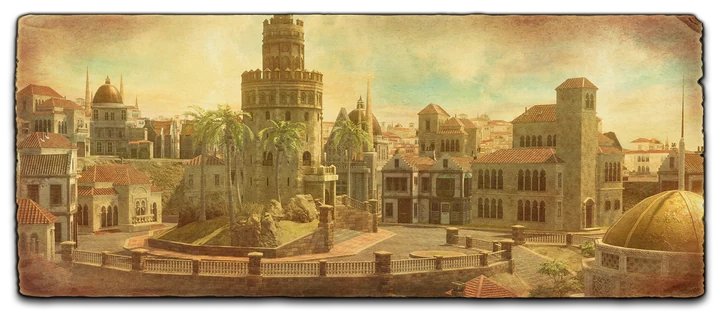

European civilization · Home City Seville
Spanish
The Spanish (civ ID Spanish, Home City Seville) in AoE3: Definitive Edition 100.19.18309 start with 3 Crates of Food, 2 Cords of Wood, 1 Explorer, 6 Settler and 1 War Dog, train 22 kinds of units from their own buildings and have 166 Home City cards. Their age-up choices number 5 / 5 / 5 / 5 for the Colonial, Fortress, Industrial and Imperial ages.
This section as JSON: /raw/civilizations.json
Quick answers (4)
- What are the Spanish bonuses in AoE3?
- Civilization bonus: Faster shipments from home city. Royal guard units: Pikeman (Tercios), Rodelero (Espadachins), Lancer (Garrochistas) Unique units: War Dog, Missionary, Rodelero, Lancer One of the greatest colonizers of North and South America was known for having acquired great wealth from the colonies during the 17th century. While Spain focused primarily on South America, developments in Europe often entangled it in the affairs of other colonizing nations.
- What do the Spanish start with?
- 3 Crates of Food, 2 Cords of Wood, 1 Explorer, 6 Settler and 1 War Dog.
- Which Spanish age-up gives the most?
- to the Colonial Age: The Naturalist (≈ 500 resources); to the Fortress Age: The Scout (≈ 800 resources); to the Industrial Age: The Cavalry Marshal (≈ 1,200 resources); to the Imperial Age: El Presidente (≈ 2,000 resources).
- How many Home City cards do the Spanish have?
- 166, plus 59 more in revolution decks.
Bonuses
Civilization bonus: Faster shipments from home city. Royal guard units: Pikeman (Tercios), Rodelero (Espadachins), Lancer (Garrochistas) Unique units: War Dog, Missionary, Rodelero, Lancer One of the greatest colonizers of North and South America was known for having acquired great wealth from the colonies during the 17th century. While Spain focused primarily on South America, developments in Europe often entangled it in the affairs of other colonizing nations.
The game's own civilization summary (civ picker rollover).
Starting units
- 3×
 Crates of Food
 - 2×
 Cords of Wood
 - 1×
 Explorer
 - 6×
 Settler
 - 1×
 War Dog
Age-up choices
What each choice costs and hands over, valued at the units' train cost. Compare every civilization's age-ups.
To the Colonial Age
 The Naturalist
 800gives ≈ 500
- The Philosopher Prince800gives ≈ 500
- The Inventor800
- The Logistician900
- The Governor800
To the Fortress Age
 The Scout1,200
 1,000gives ≈ 800
- The Admiral of the Ocean Sea1,2001,000gives ≈ 700
- The Adventurer1,2001,000gives ≈ 640
- The Sergeant at Arms1,2001,000gives ≈ 640
- The Bishop1,2001,000
To the Industrial Age
 The Cavalry Marshal2,0001,200gives ≈ 1,200
- The War Minister2,0001,200gives ≈ 1,200
- The Engineer2,0001,200gives ≈ 1,000
- The King's Musketeer2,0001,200gives ≈ 1,000
- The Papal Guard2,0001,200
To the Imperial Age
 El Presidente4,0004,000gives ≈ 2,000
- The General4,0004,000gives ≈ 1,600
- The Inventor4,0004,000
- The Knight4,0004,000
- The Mercenary Contractor4,0004,000
History
In 1492 the combined kingdoms of Aragon and Castile completed the reconquest of Spain, driving the last of the Moors back to North Africa. At this moment the discoveries of Columbus fell into their lap. They followed his first voyage with more that were disappointing at first, revealing new continents but not the Asian source of gold or riches they sought. That changed, however, when first the Aztec and then Incan civilizations were discovered in the interior. Both were destroyed in audacious and brutal campaigns, and looted of enormous treasure. These conquests revitalized interest in the New World, and Spanish conquistadors searched north and south for more treasure and more civilizations, especially the legendary El Dorado, the city of gold. When these searches proved largely fruitless, the Spanish settled where they found precious metal to be mined, or where surviving native populations could be put to work. Other European nations and assorted pirates began preying on Spanish outposts and returning treasure fleets. While Spain fought endless wars in Europe against Protestantism, it was also engaged in the New World, defending its colonies and sources of wealth. By the late eighteenth century Spain's opportunity for greatness on a worldwide scale had passed. The wealth it extracted from the New World had largely spent on luxuries and wasteful wars. Spain resisted change and progress at home and abroad. Its colonial system installed a ruling elite over indigenous populations. The costs of maintaining its empire outstripped the income it generated, and one by one the colonies wrested control from Spain. The Spanish fell behind the other contending nations in Europe in economic and military power, and when the French under Napoleon marched in they could offer little organized resistance.
From the game's History encyclopedia.
Units
Villager
 Fishing Boat
 70Settler100
Infantry

Cavalry

Artillery

Also available: 107 mercenaries, natives, pets and shipment-only units
 Heavy Cannon
 Canoe
Canoe Covered Wagon
 Mill WagonExplorer
 Explorer's Dog
 Factory Wagon
 Fort Wagon
 Grenadier
 Veteran Halberdier
 Black Rider
 Elmetto
 Fusilier
 Li'l Bombard
 Highlander
 Jaeger
 Landsknecht
 Mameluke
 Ronin
Ronin Swiss Pikeman
 Apache Cavalry
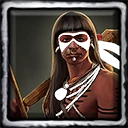 Carib Blowgunner
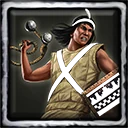 Quechua Bolas Warrior
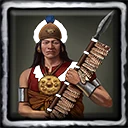 Quechua Huaminca
 Zapotec Lightning Warrior
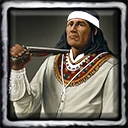 Navajo Rifleman
 Outpost Wagon
 Privateer
 Comanchero
 Villager
 Settler Wagon
 UhlanWar Dog
 Bolas Warrior
 Chinaco
 SoldadoDock Wagon
 Native Embassy TravoisHacienda WagonHomestead WagonInfrastructure Wagon
 Peruvian Dog
 Chimu Runner
 Plumed Spearman
 Stronghold Travois
 Insurgente
 Dragoon
 Lombard Wagon
 Spanish Musketeer
 Maceman
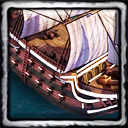 Battleship
 Irish Brigadier
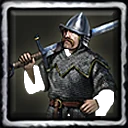 Gallowglass
 Harquebusier
 Armored Pistoleer
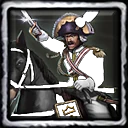 Royal Horseman
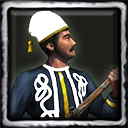 Zouave
 Mapuche Bolas Rider
 Holcan JavelineerMapuche Bolas RiderHolcan Javelineer
 Mounted Infantry
 Royal Musketeer
 Whaling Ship
 Aiz the Tame Elephant
 Nili the Playful Hippo
 Sanura the Tame Leopard
 Pambuu the Tame WarthogEstate Wagon
 PriestessProspector WagonSilver Prospector Wagon
 BolivarGaucho
 Mounted GranaderoLlanero
 Manco Inca
 San MartinCuerudo
 Bandido
 Desperado
 Inquisitor
 Cuatrero
 Huaraca
 SloopSoldado
 Steamer
 Leonardo's TankTavern WagonTrading Post Wagon
 Advanced Hot Air Balloon
 Revolutionary
 Gatling Gun
 IroncladChurch Wagon
 German Expeditionary Company
 German Expeditionary Force
 German Expeditionary ArmyUhlan
 Espadachin
 Prussian Needle Gunner
 ZweihänderMarket Rickshaw
 Conquistador
 War Elephant
 Old Doug the OrangutanRepentant Ronin
Buildings
 Arsenal250
 Artillery Foundry250
 Barracks200
 Gate50
 Capitol300
 Church150
 Dock200
 Factory400200
 Field Hospital200
 Fort500600
 House100
 Livestock Pen150
 Market100
 Mill400
 Outpost250
 Estate600
 Stable200
 Town Center500
 Trading Post200
 Wall10Wall10Wall10
 Coal Mine—
 Copper Mine—Gold Mine—
 Silver Mine—Diamond Mine—
 Tavern200
 Torp140
 Watch Tower—
Home City cards (166)
Every card of the Seville Home City, by the first age it can be sent in. "×N" = can be sent N times; ∞ = no limit.
I Discovery Age (35)
 2 Settlers∞3 Settlers×1
 7 Sheep + 1 Homestead Wagon∞
 Advanced Dock×1
 Advanced Estate×1
 Advanced Market×1
 Advanced Mill×1
 Advanced Trading Post×1
 Capitalism×1
 Charreada×1
 Chests of 300 Coin∞
 Conquistador×1
 Cords of 300 Wood∞
 Crates of 300 Food∞
 Exotic Hardwoods×1
 Fish Market×1
 Furrier×1
 Hot Air Balloons×1
 Land Grab×1
 Llama Ranching×1
 Native Lore×1
 Pioneers×1
 Ranching×1
 Rum Distillery×1
 Sawmills×1
 Schooners×1
 Stockyards×1
 Stonemasons×1
 TEAM Coastal Defenses×1
 TEAM Fencing Instructor×1
 TEAM Hidalgos×1
 TEAM Ironmonger×1
 TEAM Spanish Road×1
 Town Militia×1
 Unction×1
II Colonial Age (49)
 1 Caravel∞
 1 Galleon×1
 2 Caravels×13 Ironclads×14 Settlers×1
 4 Surgeons×15 Settlers×1
 6 Rodeleros×1
 6 Spies×17 Rodeleros×1
 7 Semi-fattened Cows×1
 8 Pikemen×1
 Admiralty×1
 Advanced Arsenal×1
 Archaic Infantry Hitpoints×1
 Barbacoa×1
 Chests of 600 Coin×1Chests of 700 Coin×1
 Cigar Roller×1
 Cords of 600 Wood×1Cords of 700 Wood×1
 Crates of 600 Food×1Crates of 700 Food×1
 Extensive Fortifications×1
 Frontier Defenses∞
 Hand Cavalry Attack×1
 Hand Cavalry Hitpoints×1
 Hire Gallowglasses×1
 Hire Irish Brigadiers×1
 House of Trastámara×1
 Improved Warships×1
 Medicine×1
 Native Treaties×1
 Naval Gunners×1
 Reconquista×1
 Recruit Privateers×1Recruit Whaling Ships×1
 Rendering Plant×1
 Royal Decree to Claim the New World×1
 Silversmith×1
 Spanish Galleons×1
 Spice Trade×1
 Sustainable Agriculture×1
 TEAM 2 Surgeons×1
 TEAM Hand Infantry Attack×1
 TEAM Spanish Inquisition×1
 Tercio Tactics×1
 Theaters×1Trattoria×1
III Fortress Age (40)
1 Covered Wagon×1 1 Falconet∞
 1 Frigate×1
 10 Pikemen∞10 Spies×112 Pikemen×1
 15 Sheep + 1 Homestead Wagon×1
 2 Falconets×1
 4 Hussars×1
 4 Lancers×15 Hussars×15 Lancers×18 Rodeleros×1
 9 Habsburg Allies×19 Rodeleros×1
 Advanced Artillery×1
 Advanced Frontier Defenses×1
 Archaic Infantry Combat×1
 Armada×1
 Assassins×1
 Caballeros×1
 Cavalry Combat×1
 Colonial Estancias×1Cords of 1,000 Wood×1Crates of 1,000 Food×1Fort×1
 Grenade Launchers×1
 Hire Armored Pistoleers×1
 Hire Scottish Highlanders×1
 Hire Swiss Pikemen×1
 Liberation March×1
 Marvelous Year×1
 Mercenary Loyalty×1
 Native Warriors×1
 Refrigeration×1
 Royal Mint×1
 Spanish Gold×1
 TEAM 1 Falconet×1
 Textile Mill×1
 Viceroyalty of New Spain×1
IV Industrial Age (42)
 1 Battleship∞
 1 Monitor∞
 14 Rodeleros∞15 Spies×116 Rodeleros×1
 17 Mayan Allies∞2 Covered Wagons×12 Falconets∞2 Heavy Cannon×1
 2 Mortars∞
 24 Crossbowmen×124 Pikemen×1
 25 Bourbon Allies×1
 3 Mortars×1
 4 Culverins×17 Hussars×1
 7 Lancers∞8 Lancers×1
 Advanced Balloon×1
 Blood Brothers×1
 Castrametation×1
 Chipotle Tactics×1Crates of 1,600 Food×1Factory×1
 Heavy Fortifications×1
 Hire French Fusiliers×1
 Hire Highland Mercenary Army∞
 Hire Holy Roman Army∞Hire Italian Elmetti×1
 Hire Mediterranean Mercenary Army∞
 Improved Buildings×1
 Industrial Revolution×1
 Nuestras Señoras×1
 Outlaw Band×1
 Palace of Iturbide×1
 Peninsular Guerrillas×1
 San Martin×1
 Spanish Square×1
 Spanish Treasure Fleet×1
 TEAM 1 Heavy Cannon×1
 TEAM 2 Mortars×1
 TEAM Gunboat Diplomacy×1
After a revolution: 59 cards of the revolution decks
 1 Fort Wagon
 1 Hacienda Wagon10 Cuerudos, 10 Cows, 1 Homestead Wagon
 11 Bandidos
 16 Independence Guards
 16 Revolutionaries
 2 Ironclads
 2 Steamers3 Mortars
 33 Insurgentes
 4 Gatling Guns
 6 Fattened Llamas
 6 Priestesses
 6 Soldados
 7 Mapuche Bolas Riders
 Albion Mercenary Legion
 Alpaca Wool
 American Allies
 Andean Warriors
 Argentine Mortars
 Army of the Three Guarantees
 Blandengues
 Buenos AiresCaballeros
 Cattle DriversCattle DriversCattle DriversCattle DriversCentral American Allies
 Charros
 Citizenship
 Colombian Army
 Colombian Navy
 Cowboys
 Criollos
 Cuzco
Cuzco Fishing Fleet
 Flying Battery
 German Settlements
 Granaderos
 Guadalajara Ranching
 Guano EconomyHire Li'l Bombards
 Junín HussarsLiberation March
 LimaLlaneros
 Machu Picchu
 Manco Inca
 Military Parade
 Monumental ArchitectureNational Hero
 Outlaw Combat
 Peruvian Guard
 Port Veracruz
 Salitrera
 TEAM Aqllakuna
 TEAM Seasonal Labor
 Zacatecas Silver