

European civilization · Home City London
British
The British (civ ID British, Home City London) in AoE3: Definitive Edition 100.19.18309 start with 2 Crates of Food, 2 Cords of Wood, 1 Explorer, 6 Settler, 1 Tiny Crate of Food and 1 Tiny Crate of Wood, train 20 kinds of units from their own buildings and have 167 Home City cards. Their age-up choices number 5 / 5 / 5 / 5 for the Colonial, Fortress, Industrial and Imperial ages.
This section as JSON: /raw/civilizations.json
Quick answers (4)
- What are the British bonuses in AoE3?
- Civilization bonus: Manor spawns a settler when built. Royal guard units: Musketeer (Redcoat) and Hussar (King's Life Guard) Unique units: Longbowman and Rocket In the New World they were one of the most powerful colonizers defeating multiple European powers. They eventually established thirteen colonies, which later revolted against the British Empire to form the United States of America.
- What do the British start with?
- 2 Crates of Food, 2 Cords of Wood, 1 Explorer, 6 Settler, 1 Tiny Crate of Food and 1 Tiny Crate of Wood.
- Which British age-up gives the most?
- to the Colonial Age: The Naturalist (≈ 500 resources); to the Fortress Age: The Mohawk Statesman (≈ 790 resources); to the Industrial Age: The Engineer (≈ 1,000 resources); to the Imperial Age: El Presidente (≈ 2,000 resources).
- How many Home City cards do the British have?
- 167, plus 67 more in revolution decks.
Bonuses
Civilization bonus: Manor spawns a settler when built. Royal guard units: Musketeer (Redcoat) and Hussar (King's Life Guard) Unique units: Longbowman and Rocket In the New World they were one of the most powerful colonizers defeating multiple European powers. They eventually established thirteen colonies, which later revolted against the British Empire to form the United States of America.
The game's own civilization summary (civ picker rollover).
Starting units


Units few others have
Units British train from their own buildings that no more than one other civilization has.
Age-up choices
What each choice costs and hands over, valued at the units' train cost. Compare every civilization's age-ups.
To the Colonial Age
 The Naturalist
 800gives ≈ 500
- The Philosopher Prince800gives ≈ 500
- The Inventor800
- The Logistician900
- The Governor800
To the Fortress Age
 The Mohawk Statesman1,200
 1,000gives ≈ 790
- The Admiral of the Ocean Sea1,2001,000gives ≈ 700
- The Adventurer1,2001,000gives ≈ 700
- The Mercenary Contractor1,2001,000
- The Bishop1,2001,000
To the Industrial Age
 The Engineer2,0001,200gives ≈ 1,000
- The King's Musketeer2,0001,200gives ≈ 1,000
- The Tycoon2,0001,200gives ≈ 1,000
- The Viceroy2,0001,200gives ≈ 1,000
- The Logistician2,0001,200
To the Imperial Age
 El Presidente4,0004,000gives ≈ 2,000
- The Black Duke4,0004,000gives ≈ 1,800
- The General4,0004,000gives ≈ 1,800
- The Knight4,0004,000
- The Mercenary Contractor4,0004,000
History
In 1492 England was a modest agricultural nation recovering from the effects of long wars in which its kings attempted to retain inherited control of large parts of France. By the early eighteenth century the English ruled Great Britain, having united all the British Isles and established important colonies and outposts around the world. By the nineteenth century they controlled the world's largest empire and were the first nation to industrialize. These transformations were the result of their favorable position as an island nation, a high relative degree of personal and economic freedom, a large literate middle class, financial acumen, and a culture that encouraged action, progress, and achievement. Critical to Britain's empire building was the rise of its military, especially its navy. Beginning as raiders and privateers preying on Spanish shipping from the New World, by 1588 their sea rogues were able to defeat the immense Spanish Armada in the English Channel. Recurring European naval wars established Royal Navy standards and traditions that allowed Britain to project its trade and empire to India, Australia, China, and North America. On land, the relatively small British army earned a reputation for disciplined musketry, an excellent officer corps, and occasionally brilliant generalship. Britain established colonies on Caribbean islands and the North American continent in the early seventeenth century. The islands were the real prize at first, as sugar plantations proved enormously profitable. The small settlements in Virginia and Massachusetts expanded gradually as an accelerating flood of farmers and laborers came to North America looking for land, religious freedom, and opportunity. The colonies welcomed the poor and dispossessed not only from the home country and Ireland, but also from mainland Europe. The British colonies were bordered by the French in Canada, a small Spanish presence in Florida, and Native Americans across the mountains to the west. Victory in a middle eighteenth century world war with France, disputed from India to Europe to North America, made Canada British and opened the door to western expansion. One of Britain's few setbacks in this period was the loss of its American colonies in the revolution of 1776.
From the game's History encyclopedia.
Units
Villager
 Fishing Boat
 70
70 Settler100
Infantry



Artillery

Also available: 99 mercenaries, natives, pets and shipment-only units
 Bank Wagon
 Coureur des Bois
 Cree Coureur des Bois
 Covered Wagon
 Mill Wagon
 Explorer
 Explorer's Dog
 Factory Wagon
 Fort Wagon
 Elmetto
 Li'l Bombard
 Highlander
 Jaeger
 Mameluke
 Ronin
Ronin Swiss Pikeman
 Militiaman
 Nootka Clubman
 Huron Mantlet
 Carib Blowgunner
 Cherokee RiflemanCherokee Rifleman
 Haudenosaunee Tomahawk
 Cree Tracker
 Native Scout
 Outpost Wagon
 Honcho the Pet Grizzly
 Privateer
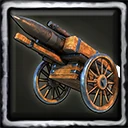 Rocket
 Pirate
 Settler Wagon
 Uhlan
Uhlan Veteran War WagonDepot Wagon
 Native Embassy TravoisFrontier Post Wagon
 GeneralHomestead Wagon
 Dragoon
 Grenadier
 Dahomey Amazon
 Battleship
 Irish Brigadier
 Gallowglass
 Giant Grenadier
 Harquebusier
 Royal Horseman
 ZouaveMilitary Wagon
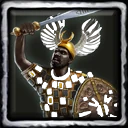 Akan Tufohen
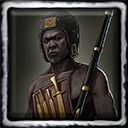 Akan Ankobia
 Bagpiper
 Clansman
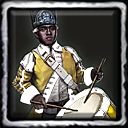 Drummer
 Lenape Warrior
 Lowlander
 Lowland Dragoon
 Royal Musketeer
 Totenkopf Hussar
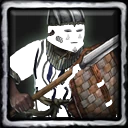 Yoruba Oyo Legionary
 Yoruba Eso Rider
 Whaling Ship
 Aiz the Tame Elephant
 Nili the Playful Hippo
 Sanura the Tame Leopard
 Pambuu the Tame WarthogEstate WagonGold Prospector Wagon
 Quaker GunProspector WagonTrek Wagon
 Revolutionary Sharpshooter
 Ranger
 RegularRepentant Harquebusier
 Militia Officer
 Harpooner
 Sailor
 State Militia
 Stealth PetardTrading Post Wagon
 Carbine Cavalry
 Advanced Hot Air Balloon
 Revolutionary
 Gatling Gun
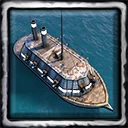 Ironclad
 War CanoeArsenal Wagon
 CulverinUhlanMarket Rickshaw
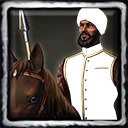 Jat Lancer
 War Elephant
 Old Doug the Orangutan
 Duber the Pet MonkeyRepentant JaegerRepentant Ronin
 Sepoy
Sepoy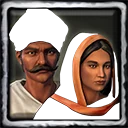 Hindu Villager
Buildings
 Arsenal250
 Artillery Foundry250
 Barracks200
 Gate50
 Capitol300
 Church150
 Dock200
 Factory400200
 Field Hospital200
 Fort500600
 Livestock Pen150
 Manor House140
 Market100
 Mill400
 Outpost250
 Estate600
 Stable200
 Town Center500
 Trading Post200
 Wall10Wall10Wall10
 Coal Mine—
 Copper Mine—Gold Mine—
 Silver Mine—Diamond Mine—
 Tavern200
 Torp140
 Watch Tower—
Home City cards (167)
Every card of the London Home City, by the first age it can be sent in. "×N" = can be sent N times; ∞ = no limit.
I Discovery Age (38)
 2 Settlers∞3 Settlers×1
 7 Sheep + 1 Homestead Wagon∞
 Advanced Dock×1
 Advanced Estate×1
 Advanced Market×1
 Advanced Mill×1
 Advanced Trading Post×1
 Chests of 300 Coin∞
 Cords of 300 Wood∞
 Crates of 300 Food∞
 Distributivism×1
 Establish Ironmonger×1
 Exotic Hardwoods×1
 Fish Market×1
 Florence Nightingale×1
 Fulling Mills×1
 Fur Trade×1
 Greenwich Time×1
 Hot Air Balloons×1
 Land Grab×1
 Native Lore×1
 Pioneers×1
 Ranching×1
 Sawmills×1
 Schooners×1
 South Sea Bubble×1
 Stockyards×1
 Stonemasons×1
 TEAM 4 Sheep×1
 TEAM Coastal Defenses×1
 TEAM Great Lakes×1
 TEAM House of Tudor×1
 TEAM Rum Distillery×1
 TEAM Whale Oil×1
 TEAM Wool Staple Ports×1
 Town Militia×1
 Virginia Company×1
II Colonial Age (45)
 1 Caravel∞
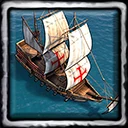 1 Galleon×1
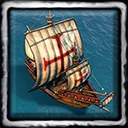 2 Caravels×14 Settlers×1
 4 Surgeons×1
 6 Longbowmen×1
 6 Musketeers×1
 6 Spies×1
 7 Hanover Allies×1
 7 Semi-fattened Cows×1
 Admiralty×1
 Advanced Arsenal×1
 Agents×1
 Captain×1
 Cavalry Damage×1
 Cavalry Hitpoints×1
 Chests of 600 Coin×1Chests of 700 Coin×1
 Cigar Roller×1
 Cords of 600 Wood×1Cords of 700 Wood×1
 Crates of 600 Food×1Crates of 700 Food×1
 Extensive Fortifications×1
 Fencing School×1
 Frontier Defenses∞
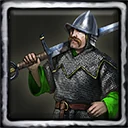 Hire Gallowglasses×1
 Hire Irish Brigadiers×1
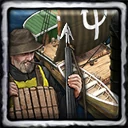 Hire Whaling Crew×1
 Improved Warships×1
 Medicine×1
 Native Treaties×1
 Native Warrior Combat×1
 Recruit Privateers×1
 Rendering Plant×1
 Riding School×1
 Scots Guards×1
 Silversmith×1
 Spice Trade×1
 Sustainable Agriculture×1
 TEAM 2 Surgeons×1
 TEAM Grenadier Guards×1
 The Glorious Revolution×1
 Theaters×1
 Wilderness Warfare×1
III Fortress Age (45)
1 Covered Wagon×1 1 Falconet∞
 1 Frigate×110 Longbowmen×1
 10 Pikemen∞10 Spies×1
 10 Stuart Allies×1
 13 Rangers∞
 15 Sheep + 1 Homestead Wagon×1
 2 Falconets×1
 4 Hanover Allies×1
 4 Hussars×1
 4 Stuart Allies×14 War Canoes∞5 Hussars×1
 6 Grenadiers×1
 8 Longbowmen∞8 Musketeers×1
 8 Rangers×18 Settlers×19 Musketeers×1
 Advanced Artillery×1
 British Grenadiers×1
 Cavalry Combat×1Chests of 1,000 Coin×1
 Coldstream Guards×1Cords of 1,000 Wood×1Crates of 1,000 Food×1Fort×1
 Hire British Harquebusiers×1
 Hire Giant Grenadiers×1
 Hire Hessian Jaeger Division×1
 Hire Hessian Jaegers×1
 Hire Scottish Highlanders×1
 Line Grenadiers×1
 Mercenary Loyalty×1
 Nantucket Sleighride×1
 Native Warriors×1
 Naval Gunners×1Recruit Privateer Fleet×1
 Refrigeration×1
 Royal Mint×1
 Siege Archery×1
 Textile Mill×1
 Yeomen×1
IV Industrial Age (39)
 1 Monitor∞
 13 Cherokee Allies∞13 Rangers×114 Musketeers×115 Longbowmen×116 Musketeers×12 Falconets∞
 2 Horse Artillery×1
 2 Monitors×1
 2 Mortars∞
 2 Rockets∞20 Longbowmen×1
 22 Lenape Allies×124 Akan Allies×1
 24 Stuart Allies×13 Congreve Rockets×13 Horse Artillery×1
 3 Mortars×1
 6 Grenadiers∞7 Grenadiers×17 Hussars×18 Hussars×1
 Advanced Balloon×1
 Canadian Loyalists×2
 Castrametation×1Factory×1
 Gentlemen of the Pike×1
 Heavy Fortifications×1
 Hire Highland Mercenary Army∞
 Hire Indian Jat Lancers×1Hire Li'l Bombards×1
 Hire Mediterranean Mercenary Army∞
 Improved Buildings×1
 Rangers×1Recruit Privateer Armada×1
 Robber Barons×1
 Rule, Britannia∞
 TEAM Monitor Combat×1
 Terraced Houses×1
After a revolution: 67 cards of the revolution decks
 1 Fort Wagon
 14 Blackwatch Highlanders
 15 Carib Blowgunners
 15 Elk
 16 Musketeers
 16 Revolutionaries
 2 Bank Wagons
 2 Covered Wagons2 Covered Wagons
 2 Ironclads
 25 Bourbon Allies3 Falconets
 3 Homestead Wagons +2 Trek Wagons
 3 Privateers
 4 Gatling Guns4 Outpost Wagons +2 Trek Wagons
 4 War Wagons5 Military Wagons +2 Trek Wagons
 7 Grizzlies
 African Roots
 American Patriotism
 Blood Brothers
 Brethren of the Coast
 Bushnell's Continental Sappers
 Citizenship
 Continental Army
 Diamond Rush
 European Immigrants
 Fencibles
 Fertile Lowlands
 Haslet's Continental Regiment
 Hero of the Two Worlds
 Hudson Bay Company
 Huguenots
 Knowlton's Continental Rangers
 Knox's Continental Artillery
 Land of Washington
 Lee's Continental Light Dragoons
 Letter of Marque
 Lexington Minutemen
 Louverture Liberation
 Marion's Diversions
 Métis PathfindersMilitia Officer
 Morgan's Continental Sharpshooters
 Native American AlliesNaval Gunners
 Nova Scotia Gaels
 Pennsylvania Long Rifles
 Permanent Active Militia
 Pickets
 Powder Alarm
 Pułaski's Continental Cavalry
 Quebec
 Raadsaal
 Rhode Island MilitiaRobber Barons
 Royal Dahomets
 SevitesSpice Trade
 TEAM Great Buffalo Hunt
 TEAM Native Weapon Trade
 Vodou Ceremonies
 Wagon Warfare
 Wanderlust
 Washington's Continental Grenadiers
 Xhosa Foods