

European civilization · Home City Istanbul
Ottomans
The Ottomans (civ ID Ottomans, Home City Istanbul) in AoE3: Definitive Edition 100.19.18309 start with 1 Crates of Food, 3 Cords of Wood, 1 Explorer, 6 Settler and 1 Tiny Crate of Wood, train 20 kinds of units from their own buildings and have 165 Home City cards. Their age-up choices number 5 / 5 / 5 / 5 for the Colonial, Fortress, Industrial and Imperial ages.
This section as JSON: /raw/civilizations.json
Quick answers (4)
- What are the Ottomans bonuses in AoE3?
- Civilization bonus: Town Centers cannot train Settlers but Yörüks arrive over time, villagers which do not cost resources. Artillery has extra line of sight and style. Has access to the most unique units compared to European civilizations. Royal guard units: Deli (Rumeliot) and Humbaraci (Ulufeli) Unique units: Yörük, Azap, Janissary, Imam, Bashibozuk, Muhbir, Sipahi, Abus Gunner, Humbaraci, Great Bombard and Galley Unique buildings: Has a Mosque to train healers, base and unit improvements. The Ottoman Empire, situated in a prime position between Europe and Asia, was the location of great technological and militarist improvements. They had heavy influence on Eastern Europe and possessed the main trade route to Asia until the path around Africa was discovered.
- What do the Ottomans start with?
- 1 Crates of Food, 3 Cords of Wood, 1 Explorer, 6 Settler and 1 Tiny Crate of Wood.
- Which Ottomans age-up gives the most?
- to the Colonial Age: The Naturalist (≈ 500 resources); to the Fortress Age: The Scout (≈ 800 resources); to the Industrial Age: The Grand Vizier (≈ 1,200 resources); to the Imperial Age: El Presidente (≈ 2,000 resources).
- How many Home City cards do the Ottomans have?
- 165, plus 53 more in revolution decks.
Bonuses
Civilization bonus: Town Centers cannot train Settlers but Yörüks arrive over time, villagers which do not cost resources. Artillery has extra line of sight and style. Has access to the most unique units compared to European civilizations. Royal guard units: Deli (Rumeliot) and Humbaraci (Ulufeli) Unique units: Yörük, Azap, Janissary, Imam, Bashibozuk, Muhbir, Sipahi, Abus Gunner, Humbaraci, Great Bombard and Galley Unique buildings: Has a Mosque to train healers, base and unit improvements. The Ottoman Empire, situated in a prime position between Europe and Asia, was the location of great technological and militarist improvements. They had heavy influence on Eastern Europe and possessed the main trade route to Asia until the path around Africa was discovered.
The game's own civilization summary (civ picker rollover).
Starting units
- 1×
 Crates of Food
 - 3×
 Cords of Wood
 - 1×
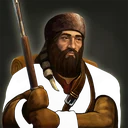 Explorer
 - 6×
 Settler
 - 1× Tiny Crate of Wood
Units few others have
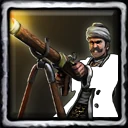
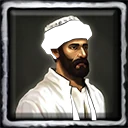
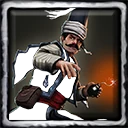
Units Ottomans train from their own buildings that no more than one other civilization has.

Age-up choices
What each choice costs and hands over, valued at the units' train cost. Compare every civilization's age-ups.
To the Colonial Age
 The Naturalist
 800gives ≈ 500
- The Philosopher Prince800gives ≈ 500
- The Quartermaster800gives ≈ 400
- The Imam900gives ≈ 315
- The Inventor800
To the Fortress Age
 The Scout1,200
 1,000gives ≈ 800
- The Admiral of the Ocean Sea1,2001,000gives ≈ 700
- The Marksman1,2001,000gives ≈ 620
- The Mercenary Contractor1,2001,000
- The Exiled Prince1,2001,000
To the Industrial Age
 The Grand Vizier2,0001,200gives ≈ 1,200
- The Cavalry Marshal2,0001,200gives ≈ 1,000
- The Engineer2,0001,200gives ≈ 1,000
- The Tycoon2,0001,200gives ≈ 1,000
- The Logistician2,0001,200
To the Imperial Age
 El Presidente4,0004,000gives ≈ 2,000
- The General4,0004,000gives ≈ 1,400
- The Inventor4,0004,000
- The Knight4,0004,000
- The Mercenary Contractor4,0004,000
History
The Ottoman Empire had existed since 1300, and at its peak in the sixteenth and seventeenth centuries was one the world's most powerful empires, stretching from northern Africa through the Middle East, Asia Minor, the Balkans, and what is now southern Russia. The Ottomans finally took Constantinople in 1453 after many years of trying, thereby severing the city's long link with the West, back to the ancient empire of Rome. By 1529 they had pushed to the gates of Vienna and toward the western Mediterranean basin.The Ottomans appeared unstoppable, but were actually near the limit of their expansion. Europeans had been making advances in technology that the Ottomans could not match. For example, the Turks had to purchase cannons from Europe, and often had to hire European cannoneers. In 1683 they failed once more to take Vienna. At this point the string of successful Ottoman rulers came to an end, while the power and organization of their European enemies was growing. Much of the Ottoman Empire's energy was dissipated in struggles over succession. The bureaucracy that ran the empire became unwieldy and often corrupt. The Ottomans fell behind in industry, as well. The profits they enjoyed from the trade between Asia and Europe eroded as the Europeans learned to sail directly to the East Indies. The trade balance actually reversed as the Ottomans found they needed European goods more than Europe needed theirs. Eventually the Ottoman armies went into decline. The empire came to depend more on slave and captive soldiers, especially its famed Janissaries. The Europeans were generally content to let the Ottomans remain where they were, although the Russians fought for the plains north of the Black Sea. The Industrial Revolution left the Ottomans completely at the mercy of Europe. For a time the British even propped up the Ottoman Empire to keep it from being occupied by their enemies.
From the game's History encyclopedia.
Units
Villager
 Fishing Boat
 70Settler100
Infantry
Cavalry
 Cavalry Archer10060
 Deli11090
Artillery
Also available: 78 mercenaries, natives, pets and shipment-only units
 Covered Wagon
 Mill Wagon
 DragoonExplorer
 Explorer's Dog
 Factory Wagon
 Fort Wagon
 Great Bombard
 Hussar
 Barbary Corsair
 Elmetto
 Li'l Bombard
 Mameluke
 Manchu
 Ronin
Ronin Stradiot
 Outpost Wagon
 Priest
 Privateer
 Sipahi
 Uhlan
Uhlan Corsair Marksman
 Athos Monastery Wagon
 Counter Jaeger
 Native Embassy TravoisHomestead Wagon
 Landwehr
 Askari
 Battleship
 Bosniak
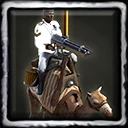 Gatling Camel
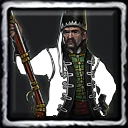 Pandour
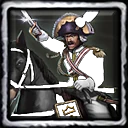 Royal Horseman
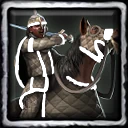 Sennar Horseman
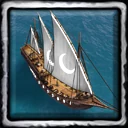 Xebec
Xebec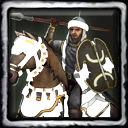 Zenata Rider
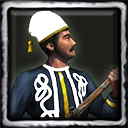 ZouaveMilitary Wagon
 Hungarian Grenadier
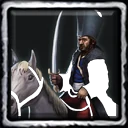 Boyar
Boyar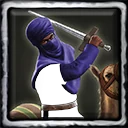 Berber Camel Rider
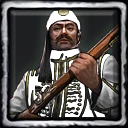 Evzone
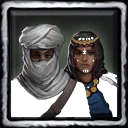 Berber Nomad
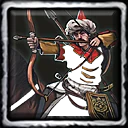 Qizilbash
 Sudanese Dervish
 Tatar Archer
 Nizam Fusilier
 Aiz the Tame Elephant
 Nili the Playful Hippo
 Sanura the Tame Leopard
 Pambuu the Tame WarthogEstate Wagon
 Barbary Warrior
 Corsair Captain
 Crabat
 Hajduk
 Leonardo's TankTrading Post Wagon
 Advanced Hot Air Balloon
 Revolutionary
 Gatling Gun
 IroncladBlockhouse WagonChurch Wagon
 Russian Expeditionary Company
 Russian Expeditionary Force
 Russian Expeditionary Army
 CulverinGreat BombardCounter Dragoon
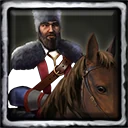 Siberian Cossack
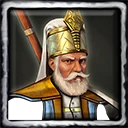 Baghdad JanissaryMarket Rickshaw
 War Elephant
 Old Doug the OrangutanRepentant CorsairRepentant MamelukeRepentant Ronin
Buildings
 Arsenal250
 Artillery Foundry250
 Barracks200
 Gate50
 Capitol300
 Church150
 Dock200
 Factory400200
 Field Hospital200
 Fort500600
 House100
 Livestock Pen150
 Market100
 Mill400
 Outpost250
 Estate600
 Stable200
 Town Center500
 Trading Post200
 Wall10Wall10Wall10
 Coal Mine—
 Copper Mine—Gold Mine—
 Silver Mine—Diamond Mine—
 Tavern200
 Torp140
 Watch Tower—
Home City cards (165)
Every card of the Istanbul Home City, by the first age it can be sent in. "×N" = can be sent N times; ∞ = no limit.
I Discovery Age (34)
 2 Yörüks∞
 3 Yörüks×1
 7 Sheep + 1 Homestead Wagon∞
 Advanced Dock×1
 Advanced Estate×1
 Advanced Market×1
 Advanced Mill×1
 Advanced Trading Post×1
 Agha×1
 Capitalism×1
 Chests of 300 Coin∞
 City Defense×1
 Cords of 300 Wood∞
 Crates of 300 Food∞
 Economic Theory×1
 Exotic Hardwoods×1
 Fish Market×1
 Food Silos×1
 Furrier×1
 Hot Air Balloons×1
 Land Grab×1
 Master Surgeons×1
 Native Lore×1
 Pioneers×1
 Ranching×1
 Sawmills×1
 Schooners×1
 Silk Road×1
 Stockyards×1
 Stonemasons×1
 Sublime Porte×1
 TEAM Coastal Defenses×1
 TEAM House of Osman×1
 TEAM Ironmonger×1
II Colonial Age (39)
 1 Galleon×1
 1 Galley∞
 2 Galleys×1
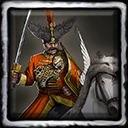 3 Delis×1
 4 Surgeons×1
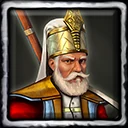 5 Janissaries×15 Yörüks×1
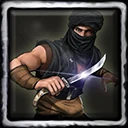 6 Muhbirs×1
 7 Azaps×1
 7 Semi-fattened Cows×1
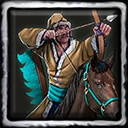 7 Tengri Allies×1
 9 Phanar Allies∞
 Admiralty×1
 Advanced Arsenal×1
 Cavalry Combat×1
 Cebeci×1
 Chests of 600 Coin×1Chests of 700 Coin×1
 Cords of 600 Wood×1Cords of 700 Wood×1
 Crates of 600 Food×1Crates of 700 Food×1
 Derbentler×1
 Engineering School×1
 Extensive Fortifications×1
 Frontier Defenses∞
 Improved Warships×1
 Matrakci School×1
 Native Treaties×1
 Palace Intrigue×1
 Recruit Privateers×1
 Rendering Plant×1
 Riding School×1Riding School×1
 Silversmith×1
 Spice Trade×1
 Sustainable Agriculture×1
 TEAM 2 Surgeons×1
 Theaters×1
III Fortress Age (45)
 1 Falconet∞
 1 Frigate×110 Muhbirs×111 Azaps×1
 15 Sheep + 1 Homestead Wagon×1
 2 Falconets×1
 20 Sheep×13 Galleys×1
 3 Sipahis∞4 Delis×1
 5 Cavalry Archers×15 Delis×1
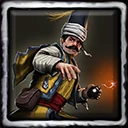 5 Humbaracis×1
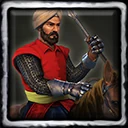 5 Sipahis×1
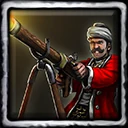 6 Abus Gunners×16 Janissaries×1
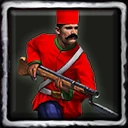 6 Nizam Fusiliers×1
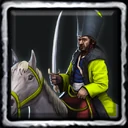 7 Phanar Allies×18 Berber Allies×18 Janissaries×1
 Advanced Artillery×1
 Advanced Frontier Defenses×1
 Akincis×1Cavalry Combat×1Chests of 1,000 Coin×1Cords of 1,000 Wood×1
 Enderun School×1Fort×1
 Grenade Launchers×1Grenade Launchers×1
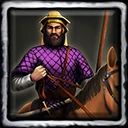 Hire Balkan Stradiots×1
 Hire Bosniaks×1
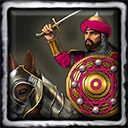 Hire Egyptian Mamelukes×1
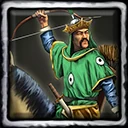 Hire Manchurian Cavalry Archers×1
 Mercenary Loyalty×1
 Mosque Construction×1
 Native Warriors×1Recruit Privateer Fleet×1
 Refrigeration×1
 Royal Mint×1
 TEAM 2 Military Wagons×1
 TEAM Chests of 500 Coin×1
 Textile Mill×1
 Topçular×1
 Yildiz Intelligence Agency×1
IV Industrial Age (47)
 1 Battleship∞
 1 Great Bombard∞
 1 Monitor∞12 Abus Gunners×114 Janissaries×12 Covered Wagons×12 Falconets∞2 Great Bombards×1
 2 Horse Artillery×1
 2 Mortars∞22 Azaps×13 Falconets×1
 3 Mortars×14 Galleys∞4 Sipahis∞
 6 Humbaracis∞6 Sipahis×17 Delis×1
 7 Nizam Fusiliers∞8 Abus Gunners×18 Cavalry Archers×18 Delis×19 Cavalry Archers×1
 9 Janissaries∞
 9 Sufi Allies∞
 Acemi Oglan School×1
 Advanced Balloon×1
 Castrametation×1Factory×1
 Flight Archery×1
 Hire Asian Mercenary Army∞
 Hire Askaris×1
 Hire Barbary Corsair Force∞
 Hire Mediterranean Mercenary Army∞
 Improved Buildings×1
 Kuleli School×1
 Mahmudiye×1
 Offshore Support×1
 Ottoman Artillery Division×1Ottoman Assault Fleet×1
 Ottoman Mercenary Army∞
 Recruit Xebecs×1
 Robber Barons×1
 TEAM 2 Mortars×1TEAM Chests of 1000 Coin×1
 TEAM Gunboat Diplomacy×1
 TEAM Timariots×1
After a revolution: 53 cards of the revolution decks
 1 Fort Wagon
 10 Pandours12 Crabats
 14 Khevite Fusiliers15 Berber Allies15 Sudanese Allies
 16 Corsair Marksmen16 Revolutionaries
 18 Barbary Warriors
 2 Horse Artillery2 Horse Artillery
 2 Ironclads3 Falconets3 Falconets
 3 Privateers
 4 Gatling Guns
 6 Grenadiers
 8 Cavalry Archers
 Aïr Berbers
 Barbary Combat
 Border Fortress
 CitizenshipCitizenship
 Corsair Captain
 Danubian Flotilla
 Danubian Principalities
 Dhimma
 Egyptian Army ReformEgyptian Fleet + 1 Privateer
 Flood of the Nile
 HajduksHire Askaris
 Hire Balkan Stradiots
 Hire Gatling CamelsHire Sennar Horsemen
 Honvédség
 Hungarian Grenadiers
 Kovats' Legion
 Loyal Warriors
 Magyar Hussars
 Military Frontier
 Ottoman Expeditionary Army
 Outlaw CombatOutlaw CombatRanged Infantry Combat
 Recruit XebecRecruit Xebecs
 Roșior DragoonsRussian Expeditionary Army
 Salé Rovers
 Suez Canal
 TEAM 4 Zenata Rider
 Wallachian Horse Archers