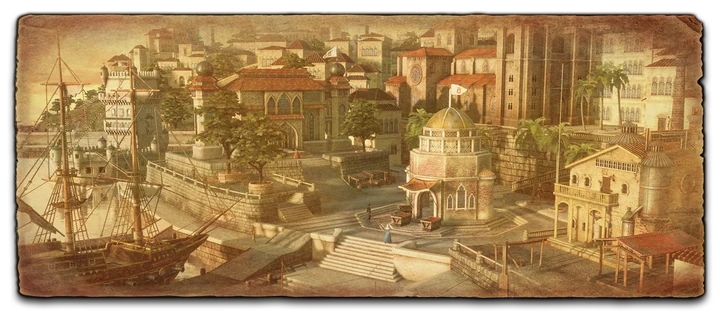

European civilization · Home City Lisbon
Portuguese
The Portuguese (civ ID Portuguese, Home City Lisbon) in AoE3: Definitive Edition 100.19.18309 start with 2 Crates of Food, 2 Cords of Wood, 1 Explorer, 7 Settler and 1 Tiny Crate of Food, train 21 kinds of units from their own buildings and have 168 Home City cards. Their age-up choices number 5 / 5 / 5 / 5 for the Colonial, Fortress, Industrial and Imperial ages.
This section as JSON: /raw/civilizations.json
Quick answers (4)
- What are the Portuguese bonuses in AoE3?
- Civilization bonus: Receives a free Covered Wagon with every Age and starts with 7 Settlers. Royal guard units: Crossbowman (Order Besteiro), Pikeman (Ordinance Pikeman), Musketeer (Legionario), Dragoon (Legion Dragoon) Unique units: Cassador and Organ Gun The Portuguese Empire was a global empire originating from the European nation of Portugal that possessed multiple overseas colonies. In the New World, the Portuguese controlled a large amount of land in the eastern parts of South America until 1822 which is now known as Brazil.
- What do the Portuguese start with?
- 2 Crates of Food, 2 Cords of Wood, 1 Explorer, 7 Settler and 1 Tiny Crate of Food.
- Which Portuguese age-up gives the most?
- to the Colonial Age: The Naturalist (≈ 500 resources); to the Fortress Age: The Admiral of the Ocean Sea (≈ 700 resources); to the Industrial Age: The King's Musketeer (≈ 1,000 resources); to the Imperial Age: El Presidente (≈ 2,000 resources).
- How many Home City cards do the Portuguese have?
- 168, plus 66 more in revolution decks.
Bonuses
Civilization bonus: Receives a free Covered Wagon with every Age and starts with 7 Settlers. Royal guard units: Crossbowman (Order Besteiro), Pikeman (Ordinance Pikeman), Musketeer (Legionario), Dragoon (Legion Dragoon) Unique units: Cassador and Organ Gun The Portuguese Empire was a global empire originating from the European nation of Portugal that possessed multiple overseas colonies. In the New World, the Portuguese controlled a large amount of land in the eastern parts of South America until 1822 which is now known as Brazil.
The game's own civilization summary (civ picker rollover).
Starting units
- 2×
 Crates of Food
 - 2×
 Cords of Wood
 - 1×
 Explorer
 - 7×
 Settler
 - 1× Tiny Crate of Food
Units few others have
Units Portuguese train from their own buildings that no more than one other civilization has.
Age-up choices
What each choice costs and hands over, valued at the units' train cost. Compare every civilization's age-ups.
To the Colonial Age
 The Naturalist
 800gives ≈ 500
- The Philosopher Prince800gives ≈ 500
- The Quartermaster800gives ≈ 400
- The Inventor800
- The Logistician900
To the Fortress Age
 The Admiral of the Ocean Sea1,200
 1,000gives ≈ 700
- The Marksman1,2001,000gives ≈ 690
- The Ethiopian Queen1,2001,000gives ≈ 525
- The Mercenary Contractor1,2001,000
- The Exiled Prince1,2001,000
To the Industrial Age
 The King's Musketeer2,0001,200gives ≈ 1,000
- The Tycoon2,0001,200gives ≈ 1,000
- The Viceroy2,0001,200gives ≈ 820
- The Engineer2,0001,200gives ≈ 800
- The Papal Guard2,0001,200
To the Imperial Age
 El Presidente4,0004,000gives ≈ 2,000
- The General4,0004,000gives ≈ 1,600
- The Inventor4,0004,000
- The Knight4,0004,000
- The Mercenary Contractor4,0004,000
History
In 1492 Portugal was a tiny nation of one million people perched on the edge of the Atlantic Ocean. Cut off from trade to the eastern Mediterranean by the Venetians and Ottomans, they had turned south seeking a source for the spices and gold that appeared in the markets of North Africa. By the mid-fourteenth century they had discovered several island groups in the Atlantic that they settled and planted with sugar. Under the sponsorship and support of Prince Henry, they built up their knowledge of seafaring and continued edging their way down the coast of Africa. By 1487 they had reached the southern tip of the continent, and in ten years they reached the long sought goal of India. By accident they had discovered Brazil when blown off course and within a few decades they had a colony there collecting Brazil wood (for its dyes) and growing sugar. Portuguese navigators were very active in the further discovery of the Americas and one of their pilots, Ferdinand de Magellan, began a circumnavigation of the world in 1519 in the service of Spain. Leaving most of the New World to Spain by mutual agreement, they concentrated on their trading with the East Indies. They built trading stations at key points in Africa, India, and Malaysia, and enjoyed some very profitable years. Their monopoly on Atlantic trade to the Indies was short-lived. They fell temporarily under Spanish rule in the late sixteenth century, which opened their shipping to attack by the Protestant Dutch and the English. Both of these enemies set up trading companies to compete in the East Indies, which came to dominate the market. Gradually the Portugese lost their lead in seafaring and fell behind other nations in technology and trade. Eventually their power and influence waned to the point that they needed a British military presence to stave off conquest by Napoleonic France.
From the game's History encyclopedia.
Units
Villager
 Fishing Boat
 70Settler100
Infantry





Artillery



Also available: 97 mercenaries, natives, pets and shipment-only units
 Heavy Cannon
 Canoe
Canoe Covered Wagon
 Mill WagonExplorer
 Explorer's Dog
 Factory Wagon
 Falconet
 Fort Wagon
 Grenadier
 Black Rider
 Elmetto
 Li'l Bombard
 Highlander
 Jaeger
 Landsknecht
 Mameluke
 Manchu
 Ninja
Ninja Ronin
Ronin Missionary
 Carib Blowgunner
 Quechua Bolas Warrior
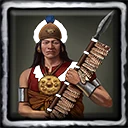 Quechua Huaminca
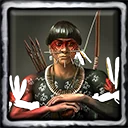 Tupi Blackwood ArcherCarib Blowgunner
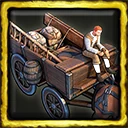 Outpost Wagon
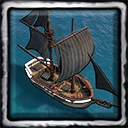 Privateer
 Comanchero
 Villager
 Uhlan
Uhlan Corsair Marksman
 Bolas Warrior
 Cassador
 Soldado
 Native Embassy TravoisHomestead WagonInfrastructure Wagon
 Peruvian Dog
 Chimu Runner
 Plumed Spearman
 Stronghold Travois
 Insurgente
 Maceman
 Battleship
 Cannoneer
 Cranequinier
 Harquebusier
 Armored Pistoleer
 Royal Horseman
 Xebec
Xebec Zenata Rider
 Zouave
 Mapuche Bolas Rider
 Akan Ankobia
 Berber Camel Rider
 Berber Nomad
 Trabant
 Ordinance Rifleman
 Whaling Ship
 Aiz the Tame Elephant
 Nili the Playful Hippo
 Sanura the Tame Leopard
 Pambuu the Tame WarthogEstate Wagon
 PriestessProspector WagonSilver Prospector Wagon
 Barbary Warrior
 Bolivar
 Cetbang Cannon
 Corsair CaptainJagunço
 Javanese SpearmanLlanero
 Manco Inca
 Shotel Warrior
 Huaraca
 Sloop
Sloop Steamer
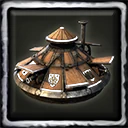 Leonardo's Tank
 Advanced Hot Air Balloon
 Revolutionary
 Gatling Gun
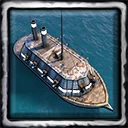 Ironclad
 Church Wagon
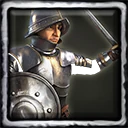 Espadachin
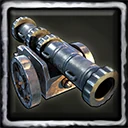 Great Bombard
 Baghdad JanissaryMarket Rickshaw
 Conquistador
 War Elephant
 Old Doug the OrangutanRepentant Li'l BombardRepentant Ronin
 Trading Post Rickshaw
 Wokou Junk
Buildings
 Arsenal250
 Artillery Foundry250
 Barracks200
 Gate50
 Capitol300
 Church150
 Dock200
 Factory400200
 Field Hospital200
 Fort500600
 House100
 Livestock Pen150
 Market100
 Mill400
 Outpost250
 Estate600
 Stable200
 Town Center500
 Trading Post200
 Wall10Wall10Wall10
 Coal Mine—
 Copper Mine—Gold Mine—
 Silver Mine—Diamond Mine—
 Tavern200
 Torp140
 Watch Tower—
Home City cards (168)
Every card of the Lisbon Home City, by the first age it can be sent in. "×N" = can be sent N times; ∞ = no limit.
I Discovery Age (36)
 7 Sheep + 1 Homestead Wagon∞
 Advanced Arsenal×1
 Advanced Dock×1
 Advanced Estate×1
 Advanced Market×1
 Advanced Mill×1
 Advanced Trading Post×1
 Amazonia×1
 Chests of 300 Coin∞
 Chinese Immigrants×1
 Cords of 300 Wood∞
 Crates of 300 Food∞
 Economic Theory×1
 Establish Ironmonger×1
 Exotic Hardwoods×1
 Feitorias×1
 Furrier×1
 Hot Air Balloons×1
 Land Grab×1
 Llama Ranching×1
 Master Surgeons×1
 Native Lore×1
 Naval Infantry×1
 Navigator×1
 Pioneers×1
 Rio de Janeiro×1
 Sawmills×1
 Schooners×1
 Stonemasons×1
 TEAM Coastal Defenses×1
 TEAM Fish Market×1
 TEAM House of Aviz×1
 TEAM Natural Lookouts×1
 TEAM Rum Distillery×1
 Town Militia×1
 Whale Oil×1
II Colonial Age (45)
 1 Caravel∞
 1 Galleon×1
 2 Caravels×13 Ironclads×1
 6 Musketeers×1
 6 Spies×1
 8 Crossbowmen×1
 8 Wettin Allies×1
 Admiralty×1Advanced Arsenal×1
 Agents×1
 Bahia×1
 Bandeirantes×1
 Bonifacio×1
 Brazilian Importers×1
 Chests of 600 Coin×1Chests of 700 Coin×1
 Cigar Roller×1
 Cords of 600 Wood×1Cords of 700 Wood×1
 Crates of 600 Food×1Crates of 700 Food×1
 Engineering School×1
 Fencing School×1
 Frontier Defenses∞
 Gunpowder Infantry Attack×1
 Hire Band of Cannoneer Mercenaries×1
 Hire Cranequiniers×1
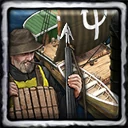 Hire Whaling Crew×1
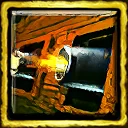 Improved Warships×1
 Native Treaties×1
 Navigation School×1
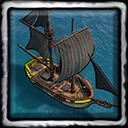 Recruit Privateers×1Recruit Whaling Ships×1
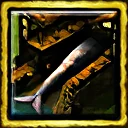 Rendering Plant×1
 Riding School×1
 Silversmith×1
 Spice Trade×1
 Sustainable Agriculture×1
 TEAM 2 Surgeons×1
 TEAM House of Bragança×1
 TEAM Improved Walls×1
 Theaters×1
 Treaty of Tordesillas×1
 Wildlife×1
III Fortress Age (42)
1 Covered Wagon×1 1 Frigate×1
 10 Crossbowmen∞
 10 Pikemen∞10 Spies×1
 15 Sheep + 1 Homestead Wagon×13 Caravels×1
 3 Organ Guns×1
 4 Dragoons×15 Dragoons×1
 7 Cassadores×1
 7 Halberdiers×18 Cassadores×18 Halberdiers×18 Musketeers×19 Musketeers×1
 Acobertados×1
 Advanced Artillery×1
 Artillery Hitpoints×1
 Carracks×1Chests of 1,000 Coin×1
 Constable×1Cords of 1,000 Wood×1Crates of 1,000 Food×1
 Donatarios×1
 Dragoon Combat×1
 Estremoz Field Guns×1Fort×1
 Grenade Launchers×1
 Hire Armored Pistoleers×1
 Hire British Harquebusiers×1Hire Landsknecht Mercenaries×1
 Medicine×1
 Mercenary Loyalty×1
 Native Warriors×1
 Passage to Nippon×1
 Portuguese White Fleet×1Recruit Privateer Fleet×1
 Refrigeration×1
 Royal Mint×1
 TEAM Gunpowder Infantry Hitpoints×1
 Textile Mill×1
IV Industrial Age (45)
 1 Battleship∞
 1 Monitor∞10 Cassadores×110 Halberdiers×1
 10 Musketeers∞12 Cassadores×114 Musketeers×1
 15 Tupi Allies∞16 Musketeers×12 Covered Wagons×1
 2 Culverins∞2 Heavy Cannon×1
 2 Horse Artillery×1
 2 Mortars∞24 Akan Allies×1
 24 Pikemen×13 Horse Artillery×1
 3 Mortars×1
 3 Organ Guns∞5 Organ Guns×16 Dragoons×18 Dragoons×1
 Advanced Balloon×1
 Belanda Hitam×1
 Blood Brothers×1
 Castrametation×1Chests of 1,600 Coin×1Cords of 1,600 Wood×1Crates of 1,600 Food×1Factory×1
 Grapeshot×1
 Gunpowder Infantry Combat×1
 Heavy Fortifications×1
 Hire Asian Mercenary Army∞Hire Japanese Ninja×1Hire Li'l Bombards×1
 Hire Mediterranean Mercenary Army∞
 Improved Buildings×1
 Nossa Senhora da Conceição×1
 Order of Aviz×1
 Portuguese Expeditionary Force×1
 Rangefinding×1
 Robber Barons×1
 TEAM Crates of 1000 Wood×1
 TEAM Gunboat Diplomacy×1
After a revolution: 66 cards of the revolution decks
 1 Fort Wagon
 10 Cassadores14 Tupi Blackwood Archers15 Berber Allies
 15 Carib Blowgunners
 16 Corsair Marksmen16 Independence Guards
 16 Revolutionaries
 18 Barbary Warriors
 2 Covered Wagons
 2 Ironclads
 2 Steamers
 2 Wokou Junks
 20 Javanese Spearmen
 3 Falconets
 3 Privateers
 33 Insurgentes
 4 Cetbang Cannons
 4 Gatling Guns
 6 Fattened Llamas
 6 Priestesses
 6 Soldados
 Aceh Pepper Exports
 Aïr Berbers
 Albion Mercenary Legion
 Alpaca Wool
 American Allies
 Andean Warriors
 Barbary Combat
 Cattle DriversCattle DriversCattle Drivers
 Citizenship
 Colombian Army
 Colombian Navy
 Corsair Captain
 Cowboys
 Cuzco
Cuzco DhimmaDonatarios
 Guano Economy
 Guard of HonorJagunços
 Junín Hussars
 Kraton Guards
 Lantakas
 LimaLlaneros
 Loyal Warriors
 Machu Picchu
 Manco Inca
 Minas Gerais
 Monumental ArchitectureNational Hero
 Naval Gunners
 Ottoman Expeditionary ArmyOutlaw Combat
 Peruvian Guard
 Recruit Xebec
 Recruit Xebecs
 Salé Rovers
 Sumatran Elephants
 TEAM 4 Zenata Rider
 TEAM Aqllakuna
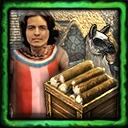 TEAM Seasonal Labor
 Yogyakarta Resistance