
European civilization · Home City Copenhagen
Danes
The Danes (civ ID DEDanish, Home City Copenhagen) in AoE3: Definitive Edition 100.19.18309 start with 3 Crates of Food, 2 Cords of Wood, 1 Explorer, 5 Settler and 1 Customs Wagon, train 24 kinds of units from their own buildings and have 150 Home City cards. Their age-up choices number 5 / 5 / 5 / 5 for the Colonial, Fortress, Industrial and Imperial ages.
This section as JSON: /raw/civilizations.json
Quick answers (4)
- What are the Danes bonuses in AoE3?
- Civilization bonus: Ages are cheaper but cannot Revolt. Starts with a Customs House that holds all resource crates and grants income for shipments of other players. Royal guard units: All military land units. Unique units: Snaphane and Gunboat. Unique buildings: Customs House gets resources from shipments. Round Churches act as defensive buildings. Watch Houses train and upgrade Snaphaner. At its height, the Danish Empire wielded maritime dominance and territorial control, shaping regional politics and commerce in Northern Europe. Through strategic acquisitions and colonial ventures in Greenland, Iceland, India, and the Caribbean, Denmark-Norway bolstered its prosperity and enhanced its significance in European affairs.
- What do the Danes start with?
- 3 Crates of Food, 2 Cords of Wood, 1 Explorer, 5 Settler and 1 Customs Wagon.
- Which Danes age-up gives the most?
- to the Colonial Age: The Naturalist (≈ 700 resources); to the Fortress Age: The Scout (≈ 720 resources); to the Industrial Age: The Viceroy (≈ 1,300 resources); to the Imperial Age: The Royalist (≈ 2,200 resources).
- How many Home City cards do the Danes have?
- 150, plus 3 more in revolution decks.
Bonuses
Civilization bonus: Ages are cheaper but cannot Revolt. Starts with a Customs House that holds all resource crates and grants income for shipments of other players. Royal guard units: All military land units. Unique units: Snaphane and Gunboat. Unique buildings: Customs House gets resources from shipments. Round Churches act as defensive buildings. Watch Houses train and upgrade Snaphaner. At its height, the Danish Empire wielded maritime dominance and territorial control, shaping regional politics and commerce in Northern Europe. Through strategic acquisitions and colonial ventures in Greenland, Iceland, India, and the Caribbean, Denmark-Norway bolstered its prosperity and enhanced its significance in European affairs.
The game's own civilization summary (civ picker rollover).
Starting units
- 3×
 Crates of Food
 - 2×
 Cords of Wood
 - 1×
 Explorer
 - 5×
 Settler
 - 1×
 Customs Wagon
Age-up choices
What each choice costs and hands over, valued at the units' train cost. Compare every civilization's age-ups.
To the Colonial Age
 The Naturalist
 800gives ≈ 700
- The Quartermaster800gives ≈ 400
- The Inventor800
- The Logistician900
- The Governor800
To the Fortress Age
 The Scout1,200
 1,000gives ≈ 720
- The Admiral of the Ocean Sea1,2001,000gives ≈ 700
- The Adventurer1,2001,000gives ≈ 640
- The Marksman1,2001,000gives ≈ 600
- The Bishop1,2001,000
To the Industrial Age
 The Viceroy2,0001,200gives ≈ 1,300
- The Cavalry Marshal2,0001,200gives ≈ 1,000
- The Engineer2,0001,200gives ≈ 1,000
- The Tycoon2,0001,200gives ≈ 1,000
- The Logistician2,0001,200
To the Imperial Age
 The Royalist4,0004,000gives ≈ 2,200
- El Presidente4,0004,000gives ≈ 2,000
- The General4,0004,000gives ≈ 1,600
- The Knight4,0004,000
- The Mercenary Contractor4,0004,000
History
The Kingdom of Denmark-Norway was a maritime empire that derived immense power from its strategic stranglehold on the Øresund strait, the narrow naval passage between Denmark and Sweden. For over four centuries, the Crown enforced the lucrative Sound Dues, demanding a toll from every merchant vessel passing between the North and Baltic Seas. This ‘river of gold’ flowing through Helsingør funded the monarchy's grand ambitions and made Denmark one of the wealthiest states in Europe. Better known in the English-speaking world as Elsinore, the city and its fortress would later gain global fame as the setting for William Shakespeare’s Hamlet. At the helm during the kingdom's most dynamic yet turbulent era was King Christian IV. A Renaissance monarch of boundless energy, he rebuilt Copenhagen into a grand capital, commissioning architectural marvels like the Børsen and Rosenborg Castle. However, his reign was defined by an existential rivalry with the rising Swedish Empire. Christian’s attempt to check Swedish expansion and champion the Protestant cause in the Thirty Years' War was a military disaster that ended in defeat and signaled a shift in the regional balance of power. In a daring maneuver during the harsh winter of 1658, Swedish armies marched across the frozen belts to threaten Copenhagen. The resulting Treaty of Roskilde stripped Denmark of its eastern provinces, including Scania, forever breaking its exclusive control over the Sound. Unlike the land-centric armies of its southern neighbors, Denmark’s true power rested on a formidable navy. As the binding force of a realm scattered across islands and fjords, the fleet was the kingdom’s wooden wall. Danish warships frequently clashed with Swedish fleets in a brutal contest for dominance over the Baltic Sea. Danish naval power fostered a vast global empire, with the Dannebrog flag flying over diverse territories, including the Danish West Indies, Tranquebar in India, and the Danish Gold Coast in West Africa. Through a personal union, Norway and Iceland formed the bedrock of the realm's North Atlantic presence, serving as equal kingdoms under a single crown. Expeditions like Hans Egede’s in 1721 re-established contact and solidified Danish authority over Greenland. The Danes maintained a fierce maritime tradition until the Napoleonic Wars. The British bombardment of Copenhagen in 1807 finally shattered the fleet, ending Denmark’s era as a great power, but leaving behind a legacy of resilience and a distinct maritime culture that survived the loss of empire.
From the game's History encyclopedia.
Units
Villager
 Fishing Boat
 70Settler100
Infantry
 Crossbowman4040
 Grenadier12060
 Veteran Halberdier5070
 Militiaman75
 Musketeer7525
 Pikeman4040
 Skirmisher5065
 Spy110

Artillery


Also available: 59 mercenaries, natives, pets and shipment-only units
 Heavy Cannon
 Covered Wagon
 Mill WagonExplorer
 Explorer's Dog
 Factory Wagon
 Fort Wagon
 Black Rider
 Fusilier
 Li'l Bombard
 Highlander
 Jaeger
 Landsknecht
 Mameluke
 Ronin
Ronin Swiss Pikeman
 Outpost Wagon
 Privateer
 Uhlan
Uhlan RocketCustoms Wagon
 Native Embassy Travois
 EspingolFrontier Post WagonHomestead Wagon
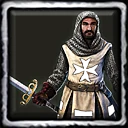 Hospitaller
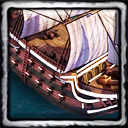 Battleship
 Bosniak
 Irish Brigadier
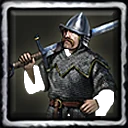 Gallowglass
 Giant Grenadier
 Harquebusier
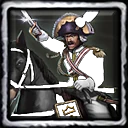 Royal Horseman
 Inuit Hunter
 Inuit Qamutik
 Lowland Dragoon
 Sámi Noaidi
 Northern Musketeer
 Royal HunterRoyal Huntsman
 Royal MusketeerRoyal Hunter
 Ordinance Rifleman
 Whaling Ship
 Aiz the Tame Elephant
 Nili the Playful Hippo
 Sanura the Tame Leopard
 Pambuu the Tame WarthogEstate Wagon
 Harpooner
 Sailor
 Advanced Hot Air Balloon
 Revolutionary
 Ironclad
 Market Rickshaw
 War ElephantWar Elephant
 Old Doug the OrangutanRepentant Ronin
Buildings
 Arsenal250
 Artillery Foundry250
 Barracks200
 Gate50
 Capitol300
 Dock200
 Factory400200
 Field Hospital200
 Fort500600
 Livestock Pen150
 Market100
 Mill400
 Outpost250
 Estate600
 Stable200
 Town Center500
 Trading Post200
 Wall10Wall10Wall10
 Round Church100150Customs House150150
 Watch House100
 Coal Mine—
 Copper Mine—Gold Mine—
 Silver Mine—Diamond Mine—
 Tavern200
 Torp140
 Watch Tower—
Home City cards (150)
Every card of the Copenhagen Home City, by the first age it can be sent in. "×N" = can be sent N times; ∞ = no limit.
I Discovery Age (39)
 1 Shipment×1
 2 Settlers∞3 Settlers×1
 4 Pigs + 1 Homestead Wagon∞
 Advanced Estate×1
 Advanced Market×1
 Advanced Mill×1
 Advanced Trading Post×1
 Agrarian Reforms×1
 Chests of Coin∞
 Cords of Wood∞
 Crates of Food∞
 Crates of Mixed Resources∞
 Customs Cruiser∞
 Distributivism×1
 Economic Theory×1
 Exotic Hardwoods×1
 Fish Market×1
 Fulling Mills×1
 Fur Trade×1
 Helsingør Customs Chamber×1
 Hygge×1
 Land Grab×1
 Master Surgeons×1
 Native Lore×1
 Oldenburg Kings×1
 Ranching×1
 Rigskansler×1
 Royal Dock×1
 Rum Distillery×1
 Safehouses×1
 Sawmills×1
 Schooners×1
 Stockyards×1
 Stonemasons×1
 TEAM Coastal Defenses×1
 TEAM Frugal Constructions×1
 TEAM Øresund Customs×1
 Town Militia×1
II Colonial Age (34)
10 Pigs∞ 2 Caravels×1
 3 Hussars×14 Settlers×15 Settlers×1
 8 Crossbowmen×1
 9 Inuit Allies×1
 Admiralty×1
 Advanced Arsenal×1
 Agents×1
 Archaic Soldier Hitpoints×1
 Cigar Roller×1
 Confiscation×1
 Danish Sausages×1
 Extensive Fortifications×1
 Fencing School×1
 Frontier Defenses∞
 Hire Gallowglasses×1
 Hire Irish Brigadiers×1
 Hire Whaling Crew×1
 Improved Warships×1
 Kongeloven×1
 Lockbows×1
 Native Treaties×1
 Recruit Privateers×1
 Rendering Plant×1
 Riding School×1
 Royal Naval Academy×1
 Silversmith×1
 Spice Trade×1
 Stowage×1
 TEAM 2 Surgeons×1
 Theaters×1
 Tycho's Observatory×1
III Fortress Age (37)
1 Covered Wagon×1 1 Falconet∞
 10 Crossbowmen∞
 10 Pikemen∞
 15 Pigs + 1 Homestead Wagon×1
 2 Falconets×1
 4 Sámi Allies×1
 5 Dragoons×15 Hussars×1
 6 Grenadiers×1
 8 Halberdiers×1
 8 Skirmishers×1
 9 Musketeers×1
 Advanced Artillery×1
 Bornholm Marines×1
 Cavalry Combat×1Fort×1
 Grenade Launchers×1
 Hire British Harquebusiers×1
 Hire German Black Riders×1
 Hire Giant Grenadiers×1
 Hire Hessian Jaegers×1Hire Landsknecht Mercenaries×1
 Hire Scottish Highlanders×1
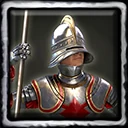 Hire Swiss Pikemen×1
 Kalmar Castle×1
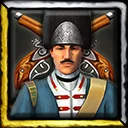 Line Grenadiers×1
 Mercenary Loyalty×1
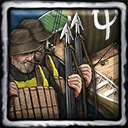 Nantucket Sleighride×1
 Native Warriors×1
 Naval Gunners×1
 Order of the Dannebrog×1Recruit Privateer Fleet×1
 Refrigeration×1
 Royal Mint×1
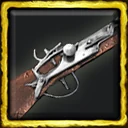 Snaplock×1
 Textile Mill×1
IV Industrial Age (40)
 1 Battleship∞
 1 Monitor∞11 Halberdiers×112 Skirmishers×114 Musketeers×12 Falconets∞
 2 Falconets +2 Culverins×12 Heavy Cannon×1
 2 Mortars∞20 Crossbowmen×120 Pigs×1
 20 Pikemen×1
 24 Stuart Allies×1
 25 Bourbon Allies×1
 3 Horse Artillery×1
 3 Mortars×1
 4 Culverins×1
 6 Inuit Allies×17 Grenadiers×17 Hussars×18 Dragoons×1
 Advanced Balloon×1
 Blood Brothers×1
 Castrametation×1
 Elephanten×1Factory×1
 Great Belt Tolls×1
 Gunboat Tactics×1
 Heavy Fortifications×1
 Hire French Fusiliers×1
 Hire Highland Mercenary Army∞
 Hire Holy Roman Army∞Hire Li'l Bombards×1
 Hire Royal Horsemen×1
 Improved Buildings×1
 Order of the Elephant×1
 Robber Barons×1
 Royal Guards×1
 Schumacher Rockets×1
 Tin Soldiers×1