

African civilization · Home City Kano
Hausa
The Hausa (civ ID DEHausa, Home City Kano) in AoE3: Definitive Edition 100.19.18309 start with 1 Sanga Cattle, 1 Emir, 1 Livestock Market Builder, 3 Sanga Cattle and 5 Villager, train 17 kinds of units from their own buildings and have 151 Home City cards. Their age-up choices number 5 / 6 / 7 / 8 for the Colonial, Fortress, Industrial and Imperial ages.
This section as JSON: /raw/civilizations.json
Quick answers (4)
- What are the Hausa bonuses in AoE3?
- Civilization bonus: Gets a free Sanga Cattle with all shipments. Universities generate Influence, especially when built in a Kingdom (nearby one Town Center, Palace and Trading Post). Age-Up Alliances: (each grant extra bonuses) • Two new technologies at the University • Units/Builders at the Palace or Town Center Unique Resource: Influence is a powerful resource spent primarily at the Palace on Native Warriors and Mercenaries. All unlocked features cost Influence. Generate it with Universities, Trading Posts and by controlling large herds of Livestock. Unique units: Maigadi, Griot, Fulani Archers, Raider and Lifidi Knight The wealthy Hausa kingdoms were magnets for merchants, intellectuals, and enemies. Their extensive trade relations and diplomacy enabled them to exert powerful influence over vast stretches of West Africa. The Hausa kings and emirs deployed powerful cavalry armies to compete with each other or conquer neighboring empires.
- What do the Hausa start with?
- 1 Sanga Cattle, 1 Emir, 1 Livestock Market Builder, 3 Sanga Cattle and 5 Villager.
- Which Hausa age-up gives the most?
- to the Colonial Age: Hausa (≈ 500 resources); to the Fortress Age: Berbers (≈ 720 resources); to the Industrial Age: Hausa (≈ 1,000 resources); to the Imperial Age: Hausa (≈ 2,000 resources).
- How many Home City cards do the Hausa have?
- 151, plus 0 more in revolution decks.
Bonuses
Civilization bonus: Gets a free Sanga Cattle with all shipments. Universities generate Influence, especially when built in a Kingdom (nearby one Town Center, Palace and Trading Post). Age-Up Alliances: (each grant extra bonuses) • Two new technologies at the University • Units/Builders at the Palace or Town Center Unique Resource: Influence is a powerful resource spent primarily at the Palace on Native Warriors and Mercenaries. All unlocked features cost Influence. Generate it with Universities, Trading Posts and by controlling large herds of Livestock. Unique units: Maigadi, Griot, Fulani Archers, Raider and Lifidi Knight The wealthy Hausa kingdoms were magnets for merchants, intellectuals, and enemies. Their extensive trade relations and diplomacy enabled them to exert powerful influence over vast stretches of West Africa. The Hausa kings and emirs deployed powerful cavalry armies to compete with each other or conquer neighboring empires.
The game's own civilization summary (civ picker rollover).
Starting units
- 1×
 Sanga Cattle
 - 1×
 Emir
Emir - 1×
 Livestock Market Builder
 - 3× Sanga Cattle
- 5×
 Villager
Units few others have
Units Hausa train from their own buildings that no more than one other civilization has.




Age-up choices
What each choice costs and hands over, valued at the units' train cost. Compare every civilization's age-ups.
To the Colonial Age

 800
800To the Fortress Age

To the Industrial Age


History
The Hausa are a people-group inhabiting the Sahelian region of modern-day Nigeria, a region that rose to immense prominence by the early modern period owing primarily to its location on the lucrative trans-Saharan trade routes. A mix of sedentary and pastoral-nomadic societies, the Hausa coalesced into a series of kingdoms during this time, such as Kano and Zazzau. As Islam spread to the region thanks to merchants from north of the Sahara, it took hold on vast numbers of people, from commoners to rulers. One such ruler, Muhammad Rumfa (r. 1463-1499), converted most of Kano to Islam, planting a seed that would bear fruit centuries later. Another ruler, Queen Amina of Zazzau (r. 1576-1610), is credited with building the first Islamicized Hausa kingdom. Her achievements were manifold, ranging from military expansion to city building and the reform of agricultural infrastructure. Like several other polities of the time, Zazzau had to contend with the frictious relationship between agriculturalists and pastoralists. While the former derived wealth and power from produce and urban consolidation, the latter measured wealth in mobile, utile materialism such as horses and cattle. Peaceful interaction between the groups was mutually beneficial, but predatory nomadism occasionally ensued and posed a major threat to both societies. To address this issue, Amina commissioned the construction of a series of fortifications around all major urban centers in her kingdom. By the turn of the 19th century, the Hausa polities were in turmoil. Exploited peasants banded with Fula pastoralists to resist the oppressive policies of Hausa city-states such as Gobir. They found a leader in Usman dan Fodio, a Fulani scholar and military leader. After several decades as a religious teacher, Usman organized an insurrection in 1802 that sought to reform his community – which he felt had strayed from a virtuous path and given itself over to greed, immorality, and cruelty – through Islamic teachings. Leading armies primarily of Fulani as Commander of the Faithful, he dismantled the existing Hausa system and established the Sokoto Caliphate in 1803. Before his death in 1817, Usman authored countless treatises on political, cultural, social, and religious matters. Over the next several decades, the Sokoto Caliphate expanded swiftly, establishing dominance over the nearby city-states and consolidating its power through control of vital trade, the construction of a network of fortresses, and a sophisticated taxation system. Despite these strengths and a robust military, the Caliphate was no match for the repeated incursions of fully industrialized European imperial powers during the turn of the 20th century, and it swiftly crumbled, allowing the British and Germans to partition its former territory.
From the game's History encyclopedia.
Units
Villager
Infantry
 70
70Cavalry
Ship
Other
 Surgeon
 225
225Also available: 56 mercenaries, natives, pets and shipment-only units
 Heavy Cannon
 Covered Wagon
 Culverin
 Explorer's Dog
 Falconet
 Frigate
 Imam
Imam Mortar
 Rocket
 Uhlan
Uhlan Corsair MarksmanTrade Builder
 Hausa Builder
 Kingdom Builder
 Camp Builder
 Native Embassy TravoisEmirEmir
 GriotLivestock Market Builder
 Dahomey Amazon
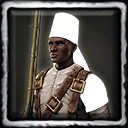 Askari
 Cannoneer
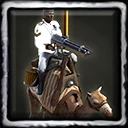 Gatling Camel
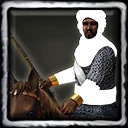 Kanuri Guard
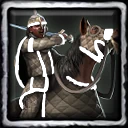 Sennar Horseman
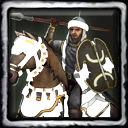 Zenata Rider
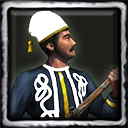 Zouave
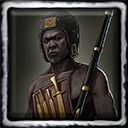 Akan Ankobia
 Berber Camel RiderAkan AnkobiaBerber Camel Rider
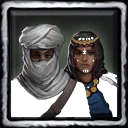 Berber Nomad
 Sudanese Dervish
 Yoruba Oyo Legionary
 Yoruba Eso RiderBerber Nomad
 Salt CamelYoruba Oyo LegionaryYoruba Eso RiderPalace Builder
 Aiz the Tame Elephant
 Nili the Playful Hippo
 Pambuu the Tame Warthog
 Gold Prospector Wagon
 Muhbir
 Watch Tower BuilderTrading Post Wagon
 Arsenal Wagon
 Mosque Wagon
 University BuilderArsenal Wagon
 Church Wagon
 Redcoat
 War Elephant
 Old Doug the Orangutan
Buildings
 Gate
Gate 50
50 Factory400200
 Field Hospital200
 Fort500600Native Embassy100
 Town Center500
 Trading Post200
 Wall10Wall10Wall10
 Field50
 Granary—
 Hut100
 Livestock Market200
 Coal Mine—
 Copper Mine—Gold Mine—
 Silver Mine—Palace200200
 Port200Diamond Mine—
 Torp140Watch Tower250Watch Tower—University200200
 War Camp200
Home City cards (151)
Every card of the Kano Home City, by the first age it can be sent in. "×N" = can be sent N times; ∞ = no limit.
I Discovery Age (34)
 2 Villagers∞
 3 Villagers×1
 4 Semi-fattened Cattle∞
 Advanced Agriculture×1
 Advanced Port×1
 Amina Epic×1
 Charity×1
 Chests of 300 Coin∞
 Cords of 300 Wood∞
 Crates of 300 Food∞
 Dambe Wrestling×1
 Draft Oxen×1
 Emir of Katsina×1
 Establish Ironmonger×1
 Fish Market×1
 Furrier×1Gidan Sarkin×1
 Gobarau Minaret×1Hausa Kingdom×1
 Hegemony×1
 Kilishi Jerky×1
 Kingslayer×1
 Koose×1
 Moroccan Leather×1
 Pioneers×1
 Pulaaku Code×1
 Sawmills×1
 TEAM 1 Camp Builder×1
 TEAM Hausa Gates×1
 TEAM Indigo Dyeworks×1
 TEAM Zuma Rock Lore×1
 Tokens of 300 Influence∞
 Warrior Nobility×1
 Woodcrafting×1
II Colonial Age (39)
 1 Battle Canoe∞10 Sudanese Allies×1
 2 Battle Canoes×1
 2 Camp Builders∞3 Trade Builders×14 Griots×1
 5 Raiders×16 Berber Allies×16 Yoruba Allies×1
 7 Fulani Archers×1
 9 Desert Warriors×1
 Chests of 600 Coin×1Chests of 700 Coin×1
 Cords of 600 Wood×1Cords of 700 Wood×1
 Crates of 600 Food×1Crates of 700 Food×1
 Crossing Festival×1
 Dane Guns×1
 European Cannons×1
 Fulani Cattle Fertilizer×1
 Gaananci×1
 Hand Cavalry Damage×1
 Hand Cavalry Hitpoints×1
 Improved Warships×1
 Katsina Fortifications×1
 Mass Levies×1
 Palace of Amina×1
 Rendering Plant×1
 Rumfa's Riders×1
 Silversmith×1
 Spice Trade×1
 TEAM Marabout Network×1
 TEAM Trade Empire×1
 Tokens of 600 Influence×1Tokens of 700 Influence×1
 Tsetse Sabotage×1
 University of Timbuktu×1
 Zazzau Cavalry×1
III Fortress Age (41)
 1 Cannon Boat×11 Town Center Builder×115 Sudanese Allies×13 Battle Canoes×1
 4 Lifidi Knights×15 Lifidi Knights×1
 6 Javelin Riders∞8 Berber Allies×18 Fulani Archers×1
 8 Javelin Riders×18 Semi-fattened Cattle + 1 Livestock Market Builder∞9 Fulani Archers×1
 Aïr Berbers×1
 Canoe Crafting×1Chests of 1,000 Coin×1Cords of 1,000 Wood×1
 Counter Cavalry Tactics×1Crates of 1,000 Food×1
 Emir of Kano×1
 Feudal Armies×1
 Fodio Tactics×1
 Fulani Archer Combat×1
 Gatekeepers×1
 Hadejia Emirate×1
 Hire Cannoneers×1
 Hire Kanuri Guards×1Hire Sennar Horsemen×1
 Jukunawa×1
 Loyal Warriors×1
 Maguzawa×1
 Massina Madrasahs×1
 Rano Indigo Production×1
 Recruit Xebec×1
 Sahelian Kingdoms×1
 Salé Rovers×1
 Sarkin Dogarai×1
 Suya Skewers×1
 TEAM 4 Zenata Rider×1
 TEAM Senegalese Riflemen×1Tokens of 1000 Influence×1
 Yawon Dandi×1
IV Industrial Age (37)
1 Cannon Boat + 1 Battle Canoe×1 10 Fulani Archers∞10 Villagers∞14 Javelin Riders×116 Fulani Archers×12 Battle Canoes∞
 5 Lifidi Knights∞
 7 Raiders∞8 Griots×18 Lifidi Knights×1
 Advanced Arsenal×1
 Advanced Livestock Market×1Chests of 1,600 Coin×1Cords of 1,200 Wood∞Crates of 1,600 Food×1
 Dodo Cult×1
 Durbar Parade×1
 Fulani Invasion×1
 Futa Jallon×1
 Futa Toro×1
 Gwandu×1
 Habbanaya×1
 Heavy Fortifications×1
 Hire Askaris×1
 Hire Dahomey Amazons×1
 Hire Gatling Camels×1
 Kola Nut Cultivation×1
 Kororofa Confederacy×1
 Native Treaties×1Recruit Xebecs×1
 Red Fulani Cattle×2Royal Fortifications×1
 Sokoto Chronicle×1
 TEAM Ancient Kano Walls×1Tokens of 1,000 Influence∞Tokens of 1600 Influence×1
 Zinder Kanuris×1