

European civilization · Home City Amsterdam
Dutch
The Dutch (civ ID Dutch, Home City Amsterdam) in AoE3: Definitive Edition 100.19.18309 start with 4 Chests of Coin, 2 Cords of Wood, 1 Envoy, 1 Explorer and 6 Settler, train 21 kinds of units from their own buildings and have 175 Home City cards. Their age-up choices number 5 / 5 / 5 / 5 for the Colonial, Fortress, Industrial and Imperial ages.
This section as JSON: /raw/civilizations.json
Quick answers (4)
- What are the Dutch bonuses in AoE3?
- Civilization bonus: Trains Merchants, unique villagers that cost coin instead of food and have lower train limit, but gather coin 15% faster. Begins with an Envoy. Royal guard units: Halberdier (Stadswacht) and Ruyter (Carabineer) Unique units: Merchant, Envoy, Ruyter and Fluyt Unique buildings: Can build Banks to automatically produce coin Replacing the Spanish as the wealthiest nation in the 18th century, the Dutch were a key proponent in managing the resources and profits gained from colonial North and South America.
- What do the Dutch start with?
- 4 Chests of Coin, 2 Cords of Wood, 1 Envoy, 1 Explorer and 6 Settler.
- Which Dutch age-up gives the most?
- to the Colonial Age: The Naturalist (≈ 500 resources); to the Fortress Age: The Sergeant at Arms (≈ 720 resources); to the Industrial Age: The Tycoon (≈ 1,000 resources); to the Imperial Age: El Presidente (≈ 2,000 resources).
- How many Home City cards do the Dutch have?
- 175, plus 60 more in revolution decks.
Bonuses
Civilization bonus: Trains Merchants, unique villagers that cost coin instead of food and have lower train limit, but gather coin 15% faster. Begins with an Envoy. Royal guard units: Halberdier (Stadswacht) and Ruyter (Carabineer) Unique units: Merchant, Envoy, Ruyter and Fluyt Unique buildings: Can build Banks to automatically produce coin Replacing the Spanish as the wealthiest nation in the 18th century, the Dutch were a key proponent in managing the resources and profits gained from colonial North and South America.
The game's own civilization summary (civ picker rollover).
Starting units
- 4×
 Chests of Coin
 - 2×
 Cords of Wood
 - 1×
 Envoy
Envoy - 1×
 Explorer
 - 6×
 Settler
Units few others have
Units Dutch train from their own buildings that no more than one other civilization has.

Age-up choices
What each choice costs and hands over, valued at the units' train cost. Compare every civilization's age-ups.
To the Colonial Age
 The Naturalist
 800gives ≈ 500
- The Quartermaster800gives ≈ 400
- The Logistician900gives ≈ 120
- The Inventor800
- The Governor800
To the Fortress Age
 The Sergeant at Arms1,200
 1,000gives ≈ 720
- The Admiral of the Ocean Sea1,2001,000gives ≈ 700
- The Mercenary Contractor1,2001,000
- The Bishop1,2001,000
- The Exiled Prince1,2001,000
To the Industrial Age
 The Tycoon2,0001,200gives ≈ 1,000
- The Cavalry Marshal2,0001,200gives ≈ 945
- The King's Musketeer2,0001,200gives ≈ 920
- The Viceroy2,0001,200gives ≈ 900
- The Logistician2,0001,200
To the Imperial Age
 El Presidente4,0004,000gives ≈ 2,000
- The Royalist4,0004,000gives ≈ 1,955
- The General4,0004,000gives ≈ 1,600
- The Knight4,0004,000
- The Mercenary Contractor4,0004,000
History
Holland in 1500 was a small European nation, but extremely energetic, practical, and progressive, with a strong emphasis on trade. Particularly in the northern provinces, the Dutch embraced Protestant Christianity during the sixteenth century, supplanting Catholicism. They were aggressive and dynamic traders, well-positioned to transport goods to and from the Baltic and North Atlantic, and the interior of Europe up the Rhine River. They built efficient ships that carried large cargoes with small crews. Very limited in land, they developed an intense agriculture and began reclaiming lowlands from the sea. By accident of marriage and inheritance, control of the now largely Protestant Holland shifted to Catholic Spain in the mid-sixteenth century, and Spanish kings sought, in turn, to supplant Protestantism within their realm. This led to a revolt against Spain. Although at a great disadvantage in overall wealth and power, the Dutch proved a tough opponent and drew allies to their side. By 1609 Holland was virtually independent. In the era of colonial expansion by great empires, the Dutch pursued business opportunities. They were soon engaged in the trade with the Americas, despite Spanish attempts to exclude non-allies. The efficiency of their ships made them attractive as low-cost carriers. They built a business carrying and processing sugar and other goods out of Portuguese Brazil. When the Spanish allied with Portugal and closed the Portuguese ports to the Dutch, the Dutch seized several islands, including Aruba and Curaçao. In 1610 Henry Hudson explored the North American coast and rediscovered both the river now named after him and the great harbor of modern-day New York City. After several trading voyages to the area seeking furs, the Dutch planted a small trading outpost up the river near Albany in 1614 and later a more permanent settlement on Manhattan Island. The relatively few colonists were more interested in trade profits than in establishing a lasting and well-defended colony. New Amsterdam fell easily to a British fleet commanded by the Duke of York in 1664. The Dutch regained it briefly in 1673, but ceded it permanently to Britain in 1674. The Dutch made their biggest mark in the East Indies. Following in the wake of the Portuguese around Africa in the early 1600s, agents of the Dutch East India Company took over much of the East India trade, together with England.
From the game's History encyclopedia.
Units
Villager
 Fishing Boat
 70Settler100
Infantry




Artillery



Also available: 89 mercenaries, natives, pets and shipment-only units
 Bank Wagon
 Heavy Cannon
 Coureur des Bois
 Covered Wagon
 Mill Wagon
 DragoonExplorer
 Explorer's Dog
 Factory Wagon
 Fort Wagon
 Black Rider
 Elmetto
 Fusilier
 Li'l Bombard
 Highlander
 Jaeger
 Landsknecht
 Mameluke
 Ronin
Ronin Stradiot
 Swiss Pikeman
 Militiaman
 Musketeer
 Tupi Blackwood Archer
 Carib Blowgunner
 Outpost Wagon
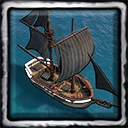 Privateer
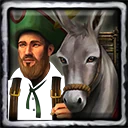 Settler Wagon
 Uhlan
Uhlan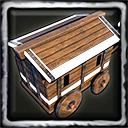 Veteran War Wagon
 Cassador
 SoldadoDepot Wagon
 Native Embassy TravoisFrontier Post Wagon
 GeneralHomestead WagonInfrastructure Wagon
 Grenadier
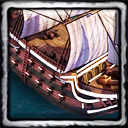 Battleship
 Bosniak
 Irish Brigadier
 Harquebusier
 Mounted Rifleman
 Royal HorsemanMilitary Wagon
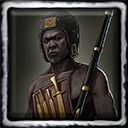 Akan Ankobia
 Line Infantry
 Mounted Infantry
 Royal Musketeer
 Saxon Cuirassier
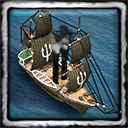 Whaling Ship
 Aiz the Tame Elephant
 Nili the Playful Hippo
 Sanura the Tame Leopard
 Pambuu the Tame WarthogEstate Wagon
 Quaker Gun
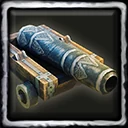 Cetbang Cannon
 Jagunço
 Javanese SpearmanProspector WagonTrek Wagon
 Revolutionary Sharpshooter
 Regular
 Harpooner
 Highwayman
 Sailor
 State Militia
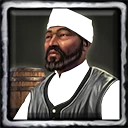 Stealth Petard
 Carbine Cavalry
 Advanced Hot Air Balloon
 Revolutionary
 Gatling Gun
 IroncladChurch Wagon
 CulverinUhlan
 Great Bombard
 Baghdad JanissaryMarket Rickshaw
 Conquistador
 War Elephant
 Old Doug the OrangutanRepentant ElmettoRepentant FusilierRepentant Ronin
 Trading Post Rickshaw
 Wokou Junk
Buildings
 Arsenal250
 Artillery Foundry250
 Bank350350
 Barracks200
 Gate50
 Capitol300
 Church150
 Dock200
 Factory400200
 Field Hospital200
 Fort500600
 House100
 Livestock Pen150
 Market100
 Mill400
 Outpost250
 Estate600
 Stable200
 Town Center500
 Trading Post200
 Wall10Wall10Wall10
 Coal Mine—
 Copper Mine—Gold Mine—
 Silver Mine—Diamond Mine—
 Tavern200
 Torp140
 Watch Tower—
Home City cards (175)
Every card of the Amsterdam Home City, by the first age it can be sent in. "×N" = can be sent N times; ∞ = no limit.
I Discovery Age (45)
 2 Merchants∞
 3 Merchants×1
 7 Sheep + 1 Homestead Wagon∞
 Advanced Arsenal×1
 Advanced Dock×1
 Advanced Estate×1
 Advanced Market×1
 Advanced Mill×1
 Advanced Trading Post×1
 Amazonia×1
 Bank of Amsterdam×1
 Bank of Rotterdam×1
 Chests of 300 Coin∞
 Chinese Immigrants×1
 Colbertism×1
 Cords of 300 Wood∞
 Crates of 300 Food∞
 Dutch East India Company×1
 Dutch Paintings∞
 Establish Ironmonger×1
 Exotic Hardwoods×1
 Feitorias×1
 Fish Market×1
 Food Silos×1
 Hot Air Balloons×1
 Land Grab×1
 Master Surgeons×1
 Military Reforms×1
 Native Lore×1
 Peace of Münster×1
 Ranching×1
 Rio de Janeiro×1
 Rum Distillery×1
 Sawmills×1
 Schooners×1
 Schutterij×1
 South Sea Bubble×1
 Stadhouder×1
 Stonemasons×1
 TEAM Coastal Defenses×1
 TEAM Frugal Constructions×1
 TEAM House of Nassau×1
 TEAM Orangists×1
 TEAM Spice Trade×1
 Town Militia×1
II Colonial Age (45)
 1 Caravel∞
 1 Fluyt×1
 2 Caravels×1
 3 Hussars×14 Merchants×1
 4 Surgeons×1
 6 Spies×1
 8 Pikemen×1
 Admiralty×1Advanced Arsenal×1
 Agents×1
 Bahia×1
 Bandeirantes×1Bank Wagon×1
 Bonifacio×1
 Brazilian Importers×1
 Buckriders×1
 Chests of 600 Coin×1Chests of 700 Coin×1
 Cigar Roller×1
 Cords of 600 Wood×1Cords of 700 Wood×1
 Crates of 600 Food×1Crates of 700 Food×1
 Extensive Fortifications×1
 Fencing School×1
 Frontier Defenses∞
 Hire Irish Brigadiers×1
 Hire Whaling Crew×1
 Improved Warships×1
 Infantry Attack×1
 Medicine×1
 Native Treaties×1
 Recruit Privateers×1
 Religious Freedom×1
 Rendering Plant×1
 Riding School×1
 Silversmith×1
 Sustainable Agriculture×1
 TEAM 2 Surgeons×1
 TEAM Infantry Hitpoints×1
 TEAM Native Weapon Trade×1
 Theaters×1
 Waardgelders×1
 Wildlife×1
III Fortress Age (43)
1 Covered Wagon×1 1 Falconet∞
 1 Frigate×1
 10 Pikemen∞10 Spies×1
 15 Sheep + 1 Homestead Wagon×13 Fluyts×15 Hussars×16 Petards×1
 7 Halberdiers×1
 7 Ruyters×1
 7 Skirmishers×18 Halberdiers×18 Skirmishers×1
 9 Habsburg Allies×19 Ruyters×1
 Admiral Tromp×1
 Advanced Artillery×1
 Advanced Frontier Defenses×1
 Cavalry Combat×1Chests of 1,000 Coin×1Cords of 1,000 Wood×1Crates of 1,000 Food×1
 Donatarios×1
 Dutch States Army×1
 Flemish Revolution×1Fort×1
 Grenade Launchers×1
 Hire Bosniaks×1
 Hire British Harquebusiers×1
 Hire German Black Riders×1Hire Landsknecht Mercenaries×1
 Hire Swiss Pikemen×1
 Infantry Combat×1
 Line Grenadiers×1
 Mercenary Loyalty×1
 Nantucket Sleighride×1
 Nassau Regiment×1
 Native Warriors×1Recruit Privateer Fleet×1
 Refrigeration×1
 Royal Mint×1
 Textile Mill×1
IV Industrial Age (42)
 1 Battleship∞
 1 Monitor∞11 Ruyters×113 Halberdiers×113 Ruyters×114 Skirmishers×1
 17 Carib Allies∞17 Ruyters×1
 2 Culverins∞2 Falconets∞2 Heavy Cannon×1
 2 Mortars∞
 7 Grenadiers×17 Hussars×1
 8 Halberdiers∞9 Skirmishers×1
 9 Wettin Allies×1
 Advanced Balloon×1
 Belanda Hitam×1
 Belgian Revolution×1
 Castrametation×1Cords of 1,600 Wood×1Crates of 1,600 Food×1
 Dutch Counter Cavalry Force×1Dutch Raiding Fleet×1Factory×1
 Heavy Fortifications×1
 Hire French Fusiliers×1
 Hire Fusilier Corps∞
 Hire Highland Mercenary Army∞
 Hire Holy Roman Army∞Hire Li'l Bombards×1
 Hire Mounted Riflemen×1
 Recruit Privateer Flotilla∞
 Robber Barons×1
 Seventeen Provinces×1
 TEAM 2 Mortars×1
 TEAM Carribean Privateers×1
 TEAM Coehorn Mortars×1
 TEAM Gunboat Diplomacy×1
 Tulip Speculation×1
 Willem×1
After a revolution: 60 cards of the revolution decks
 1 Fort Wagon
 10 Cassadores
 14 Tupi Blackwood Archers15 Carib Blowgunners
 16 Revolutionaries2 Bank Wagons2 Covered Wagons
 2 Covered Wagons
 2 Ironclads
 2 Wokou Junks
 20 Javanese Spearmen24 Akan Allies
 25 Bourbon Allies
 3 Homestead Wagons +2 Trek Wagons
 4 Cetbang Cannons
 4 Gatling Guns4 Outpost Wagons +2 Trek Wagons
 4 War Wagons5 Military Wagons +2 Trek Wagons
 6 Soldados
 Aceh Pepper Exports
 American Patriotism
 Bushnell's Continental Sappers
 Cattle Drivers
 Citizenship
 Continental Army
 Diamond RushDonatarios
 European Immigrants
 Fertile Lowlands
 Guard of Honor
 Haslet's Continental Regiment
 Hero of the Two Worlds
 Huguenots
 Improved BuildingsJagunços
 Knowlton's Continental Rangers
 Knox's Continental Artillery
 Kraton Guards
 Land of Washington
 Lantakas
 Lee's Continental Light Dragoons
 Lexington Minutemen
 Marion's Diversions
 Minas Gerais
 Morgan's Continental Sharpshooters
 Ottoman Expeditionary Army
 Pennsylvania Long Rifles
 Pioneers
 Powder Alarm
 Pułaski's Continental Cavalry
 Raadsaal
 Rhode Island MilitiaRobber Barons
 Sumatran Elephants
 Wagon Warfare
 Wanderlust
 Washington's Continental Grenadiers
 Xhosa Foods
 Yogyakarta Resistance