

European civilization · Home City Venice
Italians
The Italians (civ ID DEItalians, Home City Venice) in AoE3: Definitive Edition 100.19.18309 start with 6 Crates of Food, 2 Cords of Wood, 1 Explorer, 3 Settler and 1 Architect, train 21 kinds of units from their own buildings and have 185 Home City cards. Their age-up choices number 5 / 5 / 5 / 5 for the Colonial, Fortress, Industrial and Imperial ages.
This section as JSON: /raw/civilizations.json
Quick answers (4)
- What are the Italians bonuses in AoE3?
- Civilization bonus: Gets a free Settler with every technology and may research those at Economic Buildings in any age. Royal Guard Units: Mortars (Galilean Mortars) and Culverins (Spingardes) Unique Units: Architect, Bersagliere, Galleass, Pavisier. Unique Buildings: Basilica, Lombard Fabulously wealthy merchant republics, kingdoms, duchies, and even the Papacy had driven the Renaissance and dominated the trade networks of the Mediterranean. However, when the Italian polities were not engaged in conflicts abroad, they fought each other nearly incessantly, until the Risorgimento gave rise to the new Kingdom of Italy.
- What do the Italians start with?
- 6 Crates of Food, 2 Cords of Wood, 1 Explorer, 3 Settler and 1 Architect.
- Which Italians age-up gives the most?
- to the Colonial Age: The Philosopher Prince (≈ 500 resources); to the Fortress Age: The Gentleman Pirate (≈ 800 resources); to the Industrial Age: The Cavalry Marshal (≈ 1,080 resources); to the Imperial Age: El Presidente (≈ 2,000 resources).
- How many Home City cards do the Italians have?
- 185, plus 75 more in revolution decks.
Bonuses
Civilization bonus: Gets a free Settler with every technology and may research those at Economic Buildings in any age. Royal Guard Units: Mortars (Galilean Mortars) and Culverins (Spingardes) Unique Units: Architect, Bersagliere, Galleass, Pavisier. Unique Buildings: Basilica, Lombard Fabulously wealthy merchant republics, kingdoms, duchies, and even the Papacy had driven the Renaissance and dominated the trade networks of the Mediterranean. However, when the Italian polities were not engaged in conflicts abroad, they fought each other nearly incessantly, until the Risorgimento gave rise to the new Kingdom of Italy.
The game's own civilization summary (civ picker rollover).
Starting units
- 6×
 Crates of Food
 - 2×
 Cords of Wood
 - 1×
 Explorer
 - 3×
 Settler
 - 1×
 Architect
Units few others have
Units Italians train from their own buildings that no more than one other civilization has.

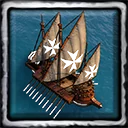
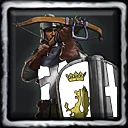
Age-up choices
What each choice costs and hands over, valued at the units' train cost. Compare every civilization's age-ups.
To the Colonial Age
 The Philosopher Prince
 800gives ≈ 500
- The Medici800gives ≈ 100
- The Inventor800
- The Logistician900
- The Governor800
To the Fortress Age
 The Gentleman Pirate1,200
 1,000gives ≈ 800
- The Adventurer1,2001,000gives ≈ 680
- The Marksman1,2001,000gives ≈ 600
- The Mercenary Contractor1,2001,000
- The Bishop1,2001,000
To the Industrial Age
 The Cavalry Marshal2,0001,200gives ≈ 1,080
- The Engineer2,0001,200gives ≈ 1,000
- The Logistician2,0001,200
- The Papal Guard2,0001,200
- The Pope2,0001,200
To the Imperial Age
 El Presidente4,0004,000gives ≈ 2,000
- The General4,0004,000
- The Inventor4,0004,000
- The Mercenary Contractor4,0004,000
- The Royalist4,0004,000
History
As the early modern period dawned, the Italian peninsula was divided between a plethora of small states: merchant republics, kingdoms, duchies, and even the Papacy. These entities, most of which were fabulously wealthy, had driven the Renaissance and dominated the trade networks of the Mediterranean. Such high stakes invited conflict, however, and when the Italian polities were not engaged in conflicts abroad, they fought each other nearly incessantly. For a long time, trade networks between Europe and the lands to the east had flourished, but this changed during the 15th century when the expanding Ottoman Empire vanquished the declining Byzantine Empire and incorporated its lands. Intense rivalry between the Ottomans and European states led to the closure of the traditional trade routes east, and so the latter sought other ways to reach the trading hubs of Asia. While the Italian states spearheaded very few of these efforts, many of their people joined the exploration efforts that sailed in all directions, charting routes around Africa and also reaching the Americas. While many other European states settled these lands, the Italian states seldom did so, being preoccupied with Mediterranean trade and rivalries with the Ottomans and with each other. Further, as the settlement of other continents proved a lucrative business, competition was high, and the small Italian states did not have the power to compete with their larger neighbors in Europe. Although they played a pivotal role in early modern events in their sphere of influence, most notably the Wars of the Holy League against the Ottoman Empire (16th-17th centuries) and the Thirty Years’ War (17th century), their decline progressed swiftly. By the time that the Napoleonic Wars began at the turn of the 19th century, their splendor was past, and they were easily conquered by the French Empire. Adversity drove ambition, however, and after the collapse of the French Empire in 1815, many residents of the Italian states saw the need for unity – a process that would consume the following six decades. Through war and diplomacy, these regions coalesced into one nation-state – largely thanks to the leadership of the so-called Four Fathers of the Fatherland: Victor Emmanuel, Camillo Benso, Giuseppe Mazzini, and most famously, Giuseppe Garibaldi. In 1871, the unification process – or Risorgimento – ended when the new Kingdom of Italy annexed the Papal States and proclaimed Rome its new capital.
From the game's History encyclopedia.
Units
Villager
Infantry



Artillery

Also available: 109 mercenaries, natives, pets and shipment-only units
 Cavalry Archer
 Covered Wagon
 Mill WagonExplorer
 Explorer's Dog
 Factory Wagon
 Fort Wagon
 Galley
 Veteran Lancer
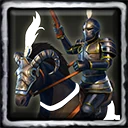 Black Rider
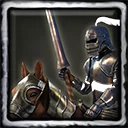 Elmetto
 Fusilier
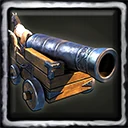 Li'l Bombard
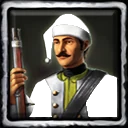 Jaeger
 Mameluke
 Ronin
Ronin Stradiot
 Minke Whale
 Militiaman
 Tupi Blackwood Archer
 Carib Blowgunner
 Outpost Wagon
 Priest
 Privateer
 Settler Wagon
 Uhlan
Uhlan Corsair Marksman
 Athos Monastery Wagon
 Redshirt
 Cassador
 SoldadoDepot Wagon
 Native Embassy Travois
 Fishing Canoe
 Fishing GroundFrontier Post Wagon
 GeneralHomestead Wagon
 Fire Thrower
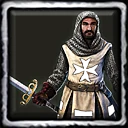 HospitallerInfrastructure Wagon
 Dragoon
 GrenadierLombard Wagon
 Spanish Musketeer
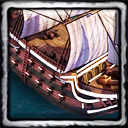 Battleship
 Bosniak
 Giant Grenadier
 Mounted Rifleman
 Pandour
 Armored Pistoleer
 Royal Horseman
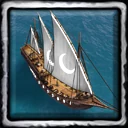 Xebec
Xebec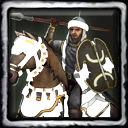 Zenata Rider
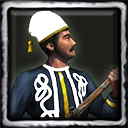 Zouave
 Schiavone
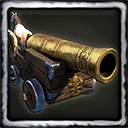 Papal Bombard
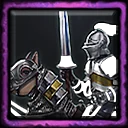 Papal Lancer
 Papal Zouave
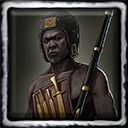 Akan Ankobia
 Boyar
Boyar Berber Camel Rider
 Evzone
 Mounted Infantry
 Berber Nomad
 Royal Dragoon
 Royal Musketeer
 Papal Guard
 Aiz the Tame Elephant
 Nili the Playful Hippo
 Sanura the Tame Leopard
 Pambuu the Tame WarthogEstate Wagon
 Quaker Gun
 Barbary Warrior
 Corsair Captain
 Gaucho
 Mounted GranaderoJagunço
 San Martin
 Revolutionary Sharpshooter
 Regular
 Crabat
 Hajduk
 Inquisitor
 State Militia
 Stealth Petard
 Leonardo's TankTavern WagonTrading Post Wagon
 Carbine Cavalry
 Advanced Hot Air BalloonRevolutionary
 Gatling Gun
 Ironclad
 SpyArsenal WagonChurch Wagon
 CulverinUhlan
 Great BombardCounter Dragoon
 Baghdad Janissary
 Fishing BoatMarket Rickshaw
 Conquistador
 War Elephant
 Old Doug the OrangutanRepentant Ronin
Buildings
 Arsenal
 250
250 Artillery Foundry250
 Barracks200
 Gate50
 Capitol300
 Dock200
 Factory400200
 Field Hospital200
 Fort500600
 House100
 Livestock Pen150
 Market100
 Mill400
 Outpost250
 Estate600
 Stable200
 Town Center500
 Trading Post200
 Wall10Wall10Wall10
 Basilica200200
 Lombard100100
 Coal Mine—
 Copper Mine—Gold Mine—
 Silver Mine—Diamond Mine—
 Torp140
 Watch Tower—
Home City cards (185)
Every card of the Venice Home City, by the first age it can be sent in. "×N" = can be sent N times; ∞ = no limit.
I Discovery Age (34)
 7 Sheep + 1 Homestead Wagon∞
 Advanced Dock×1
 Advanced Estate×1
 Advanced Market×1
 Advanced Mill×1
 Advanced Politicians×1
 Advanced Trading Post×1
 Amazonia×1
 Capitalism×1
 Chests of 300 Coin∞
 Cords of 300 Wood∞
 Crates of 300 Food∞
 Establish Ironmonger×1
 Exotic Hardwoods×1
 Feitorias×1
 Fish Market×1
 Florentine Football×1
 Furrier×1
 Guardia di Finanza×1
 Hot Air Balloons×1
 Land Grab×1
 Machiavellianism×1
 Merchant Republics×1
 Ranching×1
 Rio de Janeiro×1
 Rum Distillery×1
 Sawmills×1
 Schooners×1
 Stockyards×1
 Stonemasons×1
 TEAM Coastal Defenses×1
 TEAM Lombardy×1
 TEAM Marco Polo Voyages×1
 Town Militia×1
II Colonial Age (59)
 1 Caravel∞
 1 Galleass×1
 2 Caravels×1
 3 Priests∞
 3 Spies∞
 4 Surgeons×1
 5 Pandours∞
 5 Papal Guards∞
 6 Musketeers×16 Priests∞6 Spies×17 Papal Guards∞7 Schiavoni∞
 7 Semi-fattened Cows×17 Spies∞
 8 Pavisiers×1
 9 Phanar Allies∞
 Admiralty×1
 Bahia×1
 Bandeirantes×1
 Bonifacio×1
 Brazilian Importers×1
 Broken Lance Company×1
 Cavalry Combat×1
 Chests of 600 Coin×1Chests of 700 Coin×1
 Cigar Roller×1
 Cords of 600 Wood×1Cords of 700 Wood×1
 Crates of 600 Food×1Crates of 700 Food×1
 Croatian Company×1
 Extensive Fortifications×1
 Fencing School×1
 Frontier Defenses∞
 Improved Warships×1
 Infantry Hitpoints×1
 Maltese Company×1
 Medicine×1Monte di Pietà×1
 Native Treaties×1
 Recruit Privateers×1
 Rendering Plant×1
 Riding School×1Riding School×1
 Schiavoni Swords×1
 Sienese Financers×1
 Silversmith×1
 Sopracomito×1
 Spice Trade×1
 Statuto Albertino×1
 Sustainable Agriculture×1
 TEAM Cavalry Attack×1
 TEAM Pizza×1
 Theaters×1
 Trattoria×1
 Uffizi×1
 Venetian Arsenal×1
 Wildlife×1
III Fortress Age (47)
1 Covered Wagon×1 1 Falconet∞
 1 Frigate×1
 1 Galleass∞10 Spies×111 Pavisiers×1
 2 Falconets×12 Galleasses×1
 20 Sheep×1
 3 Papal Lancers∞
 6 Grenadiers×1
 7 Halberdiers∞
 8 Halberdiers×18 Musketeers×1
 9 Habsburg Allies×19 Musketeers×1
 9 Pavisiers∞
 Advanced Artillery×1
 Advanced Lombards×1
 Albanian Company×1
 Assassins×1
 Black Company×1Cavalry Combat×1Chests of 1,000 Coin×1Cords of 1,000 Wood×1Crates of 1,000 Food×1Fort×1
 Freemasons×1Frontier Defenses×1
 Genoese Financers×1
 German Company×1
 Gondolas×1
 Grenade Launchers×1
 Heavy Paveses×1
 Line Grenadiers×1
 Luccan Financers×1
 Mercenary Loyalty×1
 Milanese Arsenal×1
 Native Warriors×1
 Naval Gunners×1
 Papal Arsenal×1
 Refrigeration×1
 Roundel Attack×1
 Royal Mint×1
 Steel Bolts×1
 TEAM House of Savoy×1
 Textile Mill×1
IV Industrial Age (45)
 1 Battleship∞
 1 Falconet +1 Culverin∞
 1 Monitor∞
 1 Papal Bombard∞11 Halberdiers×1
 12 Bersaglieri×113 Halberdiers×115 Spies×119 Pavisiers×1
 2 Falconets +2 Culverins×1
 2 Mortars∞2 Papal Bombards×1
 25 Bourbon Allies×13 Culverins×13 Galleasses×1
 3 Mortars×14 Mortars×1
 4 Papal Zouaves∞7 Grenadiers×1
 7 Lancers∞
 8 Bersaglieri∞9 Grenadiers×1
 Advanced Balloon×1
 Alpini×1
 Castrametation×1Chests of 1,600 Coin×1Cords of 1,600 Wood×1Crates of 1,600 Food×1
 Florentine Financers×1
 French Company×1
 Garibaldini×1
 Heavy Fortifications×1
 Hire Mediterranean Mercenary Army∞
 Holy League×1
 Improved Buildings×1
 Outlaw Band×1
 Papal Company×1
 Robber Barons×1
 Roman Tactics×1
 San Martin×1
 Savoyard Company×1
 TEAM 2 Mortars×1
 TEAM Frutta di Mare×1
 TEAM Gunboat Diplomacy×1
 Usury×1
After a revolution: 75 cards of the revolution decks
 1 Fort Wagon
 10 Cassadores
 10 Pandours12 Crabats
 14 Tupi Blackwood Archers15 Berber Allies
 15 Carib Blowgunners
 16 Corsair Marksmen
 16 Revolutionaries
 18 Barbary Warriors
 2 Covered Wagons
 2 Horse Artillery
 2 Ironclads24 Akan Allies3 Falconets3 Mortars
 3 Privateers
 4 Gatling Guns
 6 Soldados
 8 Cavalry Archers
 Aïr Berbers
 American Patriotism
 Argentine Mortars
 Barbary Combat
 Blandengues
 Border Fortress
 Buenos Aires
 Bushnell's Continental Sappers
 Caballeros
 Cattle DriversCattle Drivers
 CitizenshipCitizenship
 Continental Army
 Corsair Captain
 Criollos
 Danubian Flotilla
 Danubian Principalities
 Dhimma
 Donatarios
 European Immigrants
 Fertile Lowlands
 Flying Battery
 Granaderos
 Guard of Honor
 Hajduks
 Haslet's Continental Regiment
 Hero of the Two WorldsHire Italian ElmettiHire Li'l BombardsJagunços
 Knowlton's Continental Rangers
 Knox's Continental Artillery
 Land of Washington
 Lee's Continental Light Dragoons
 Lexington Minutemen
 Loyal Warriors
 Marion's Diversions
 Military Frontier
 Minas Gerais
 Morgan's Continental Sharpshooters
 Ottoman Expeditionary Army
 Outlaw Combat
 Pennsylvania Long Rifles
 Powder Alarm
 Pułaski's Continental Cavalry
 Recruit Xebec
 Recruit Xebecs
 Rhode Island Militia
 Roșior Dragoons
 Russian Expeditionary Army
 Salé Rovers
 TEAM 4 Zenata Rider
 Wallachian Horse Archers
 Washington's Continental Grenadiers