

Asian civilization · Home City Edo
Japanese
The Japanese (civ ID Japanese, Home City Edo) in AoE3: Definitive Edition 100.19.18309 start with 1 Chests of Coin, 4 Crates of Food, 3 Cords of Wood, 1 Orchard Rickshaw, 1 Sohei Archer, 1 Sohei Archer and 6 Villager, train 17 kinds of units from their own buildings and have 145 Home City cards. Their age-up choices number 5 / 5 / 5 / 5 for the Colonial, Fortress, Industrial and Imperial ages.
This section as JSON: /raw/civilizations.json
Quick answers (4)
- What are the Japanese bonuses in AoE3?
- Civilization bonus: Villagers cannot hunt. Shrines attract animals to generate resources. Unique units: Ashigaru Musketeer, Atakebune, Daimyo, Flaming Arrow, Fune, Sohei Archer, Morutaru, Naginata Rider, Tekkousen, Samurai, Yabusame Archer and Yumi Archer. Unique buildings: Cherry Orchard is a resource for food. Dojo generates armies automatically and Shrines are Japanese homes. Wonders: Golden Pavilion, Great Buddha, The Shogunate, Torii Gates and Toshogu Shrine Descendants of the Yamato civilization, who inhabited the island of Japan and other parts of Asia in the far-east. The Japanese civilization is now under the Tokugawa Shogunate, that unified the country.
- What do the Japanese start with?
- 1 Chests of Coin, 4 Crates of Food, 3 Cords of Wood, 1 Orchard Rickshaw, 1 Sohei Archer, 1 Sohei Archer and 6 Villager.
- Which Japanese age-up gives the most?
- to the Colonial Age: Golden Pavilion (≈ 315 resources); to the Fortress Age: Golden Pavilion (≈ 630 resources); to the Industrial Age: Torii Gates (≈ 1,140 resources); to the Imperial Age: Torii Gates (≈ 2,280 resources).
- How many Home City cards do the Japanese have?
- 145, plus 0 more in revolution decks.
Bonuses
Civilization bonus: Villagers cannot hunt. Shrines attract animals to generate resources. Unique units: Ashigaru Musketeer, Atakebune, Daimyo, Flaming Arrow, Fune, Sohei Archer, Morutaru, Naginata Rider, Tekkousen, Samurai, Yabusame Archer and Yumi Archer. Unique buildings: Cherry Orchard is a resource for food. Dojo generates armies automatically and Shrines are Japanese homes. Wonders: Golden Pavilion, Great Buddha, The Shogunate, Torii Gates and Toshogu Shrine Descendants of the Yamato civilization, who inhabited the island of Japan and other parts of Asia in the far-east. The Japanese civilization is now under the Tokugawa Shogunate, that unified the country.
The game's own civilization summary (civ picker rollover).
Starting units


Units few others have
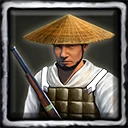
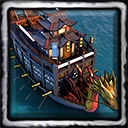
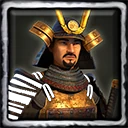
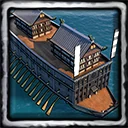
Units Japanese train from their own buildings that no more than one other civilization has.
Age-up choices
What each choice costs and hands over, valued at the units' train cost. Compare every civilization's age-ups.
To the Colonial Age
 Golden Pavilion—gives ≈ 315
- Great Buddha—gives ≈ 200
- Torii Gates—gives ≈ 190
- The Shogunate—
- Toshogu Shrine—
To the Fortress Age
 Golden Pavilion—gives ≈ 630
- Great Buddha—gives ≈ 600
- Torii Gates—gives ≈ 570
- The Shogunate—gives ≈ 350
- Toshogu Shrine—
To the Industrial Age
 Torii Gates—gives ≈ 1,140
- Golden Pavilion—gives ≈ 1,050
- Great Buddha—gives ≈ 1,000
- The Shogunate—gives ≈ 350
- Toshogu Shrine—
To the Imperial Age
 Torii Gates—gives ≈ 2,280
- Great Buddha—gives ≈ 1,800
- Golden Pavilion—gives ≈ 1,680
- The Shogunate—gives ≈ 350
- Toshogu Shrine—
History
The Sengoku, or Warring States period, lasted roughly from 1478 to 1605 and was a time of tremendous social upheaval and political strife in Japan, defined by an almost endless state of war. The centralized government of the reigning Ashikaga shogunate had begun to lose the loyalty of many daimyo, or feudal lords, across Japan. Individual provinces were beginning to turn inwards and busy themselves with local matters. This was especially true of those domains far from Kyoto, the center of power. Many factors contributed to the gradual fragmentation of the shogunate. Trade with China was growing rapidly, developing the Japanese economy and boosting the importance of money to local economies. Commercial cities began to appear across the countryside, and a great desire for local autonomy developed, touching all classes of the social hierarchy. Soon, frustrated over rising taxes and the damage done by famines and earthquakes, peasants began to revolt. As chaos began to take hold of the rural villages, unrest broke out in Kyoto, where a dispute over shogunal succession triggered the Onin War (1467–1477). The Hosokawa family and its allies clashed with the Yamana family over the right to wield Japan’s cetral authority. This conflict raged for 11 years, further weakening the role of the shogunate, and it eventually spread out to the waiting powder keg that had become the surrounding provinces. Regional daimyo suddenly rose up to take control where the central authority had none. During this time, notable clans such as the Takeda and the Imagawa were able to greatly expand their spheres of influence. This was not true of all local lords, however, as many were overtaken by their own subordinates and replaced. This was known as gekokujo, literally translated to mean “the underling conquers the overlord.” A century passed and the feudal warring continued, even as a possibility for peace grew on the horizon. Oda Nobunaga, who had emerged from obscurity to seize power over much of central Japan, seemed poised to unite the scrabbling clans into an alliance; but before he could, Nobunaga fell victim to the treachery of one of his own generals in 1582. This left the path to power open for whoever had the ambitions to take it. One of Nobunaga’s most trusted underlings, a general and former foot soldier named Toyotomi Hideyoshi, stepped in where his predecessor had left off and continued the work to unify the feuding families. Hideyoshi could never become a true shogun as he was of common birth, but he did consolidate enough power to be named an Imperial Regent by the Emperor of Japan. After several ill-fated invasions of Korea, Hideyoshi died in 1598 without leaving a capable successor to his dynasty. Again, the nation teetered precariously on the edge of chaos. It was then that the powerful daimyo of Kanto province, Tokugawa Ieyasu, chose to make his move, one he had been planning for years.
From the game's History encyclopedia.
Units
Villager
 Fishing Boat
 70
70 Villager
 100
100Infantry

Cavalry
 Naginata Rider100
 100
100 Yabusame Archer60150
Artillery
 Flaming Arrow300100
 Morutaru250100
Hero
 Sohei Archer175Sohei Archer175
Other
 Priest100
Also available: 89 mercenaries, natives, pets and shipment-only units
 Caravel
 Covered Wagon
 Factory Wagon
 Fishing Boat
 Fort Wagon
 Ninja
Ninja Ronin
Ronin Missionary
 Outpost Wagon
 Surgeon
 Uhlan
Uhlan War Hut Travois
 Orchard Rickshaw
 Castle Rickshaw
 Dock RickshawDojo Rickshaw
 Military Rickshaw
 Monastery RickshawRice Paddy Rickshaw
 Camp Builder
 Fishing Canoe
 GrenadierLivestock Pen Wagon
 Whaling Ship
 Palace Builder
 Aiz the Tame Elephant
 Nili the Playful Hippo
 Sanura the Tame Leopard
 Pambuu the Tame Warthog
 Steamer
 Carbine Cavalry
 Gatling Gun
 IroncladArsenal WagonBank WagonChurch Wagon
 Dutch Expeditionary Company
 Dutch Expeditionary Force
 Dutch Expeditionary Army
 Portuguese Expeditionary Company
 Portuguese Expeditionary Force
 Portuguese Expeditionary Army
 Spanish Expeditionary Company
 Spanish Expeditionary Force
 Spanish Expeditionary Army
 Order Besteiro
 Heavy Cannon
 Carabineer
 CulverinUhlan
 Espadachin
 Falconet
 Garrochista
 Gendarme
 Great Bombard
 Legionario
 Horse Artillery
 Legion Dragoon
 Life Guard
 MortarNinjutsu-ZukaiRedcoat
 Roger's RangerHatamoto Samurai
 Shinobi-No-Mono
 Siberian CossackBlue Guard
 Tercio
 Baghdad Janissary
 Voltigeur
 Konsha YamabushiYoung Guard
 Zweihänder
 Daimyo Kiyomasa
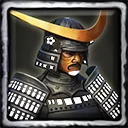 Daimyo Masamune
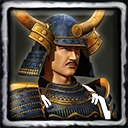 Daimyo MototadaMarket Rickshaw
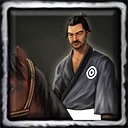 Yojimbo
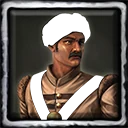 Gurkha
 War Elephant
 Kermond the Pet Monitor Lizard
 Old Doug the OrangutanRepentant YojimboShinobi
 Shogun TokugawaShrine WagonTrading Post Rickshaw
 Wokou JunkYamabushi
Buildings
 Gate50
 Factory400200
 Fort500600
 Town Center500
 Trading Post200
 Wall10Wall10Wall10
 Dock200
 Tower250
 Coal Mine—
 Copper Mine—Gold Mine—
 Silver Mine—Diamond Mine—
 Torp140
 Watch Tower—
 Arsenal250
 Bank350350
 Barracks200
 Cherry Orchard—
 Castle50250
 Church150
 Consulate200
 Dojo400200
 Monastery225
 Rice Paddy400
 Shrine125
 Stable200
 Market100
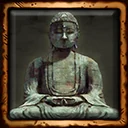 Great Buddha800Great Buddha1,2001,000Great Buddha2,0001,200Great Buddha4,0004,000
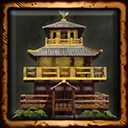 Golden Pavilion800Golden Pavilion1,2001,000Golden Pavilion2,0001,200Golden Pavilion4,0004,000
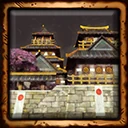 The Shogunate800The Shogunate1,2001,000The Shogunate2,0001,200The Shogunate4,0004,000
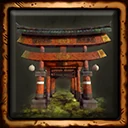 Torii Gates800Torii Gates1,2001,000Torii Gates2,0001,200Torii Gates4,0004,000
 Toshogu Shrine800Toshogu Shrine1,2001,000Toshogu Shrine2,0001,200Toshogu Shrine4,0004,000
Home City cards (145)
Every card of the Edo Home City, by the first age it can be sent in. "×N" = can be sent N times; ∞ = no limit.
I Discovery Age (32)
 1 Cherry Orchard Rickshaw×2
 2 Shrine Wagons×2
 2 Villagers×2
 3 Fishing Boats×2
 3 Monitor Lizards×2
 Advanced Dock×1
 Advanced Rice Paddy×1
 Advanced Wonders×1
 Cherry Blossom Festival×1
 Chests of 300 Coin∞
 Cords of 300 Wood∞
 Crates of 300 Food∞
 East Indiamen×1
 Enlist Irregulars×1
 Exotic Hardwoods×1
 Fish Market×2
 Food Silos×1
 Good Faith Agreements×1
 Heavenly Kami×1
 Holy Refuge×1
 Kwankoba Bazaar×1
 Mountain Warrior×1
 Reclaimed Land×1
 Rum Distillery×1
 Sawmills×2
 Seven Lucky Gods×1
 Sumptuary Laws×1
 TEAM 2 Monitor Lizards×1
 TEAM Chonindo×1
 TEAM Jujutsu×1
 Trade Empire×1
 Whale Oil×1
II Colonial Age (42)
 1 Atakebune×2
 1 Flatland Castle×1
 1 Fune×2
 2 Cherry Orchard Rickshaws×2
 2 Funes×1
 3 Missionaries×2
 3 Samurai×24 Villagers×2
 5 Ashigaru Musketeers×25 Fishing Boats×25 Shrine Wagons×2
 5 Yumi Archers×2
 Admiralty×1
 Armed Fishermen×1
 Ashigaru Musketeer Attack×1
 Atonement×1
 Azekura×2
 Chests of 600 Coin×2
 Cigar Roller×1
 Cords of 600 Wood×2
 Crates of 600 Food×2
 Daimyo Mototada×1
 Diplomatic Intrigue×1
 European Cannons×1
 Extensive Fortifications×1
 Flooded Parcel×1
 Hire Whaling Crew×2
 Improved Warships×1
 Land Reforms×1
 Native Alliance×1
 Native Learning×1
 Recruit Whaling Ships×2
 Recruit Wokou +2 Ronin×2
 Rendering Plant×1
 Samurai Attack×1
 Silversmith×2
 Sustainable Agriculture×1
 TEAM 2 Missionaries×1
 TEAM Ashikaga Castle×1
 TEAM Sushi×1
 Yumi Archer Attack×1
 Zen Diet×1
III Fortress Age (43)
 1 Hill Castle×12 Atakebune×2
 2 Flaming Arrows×2
 4 Naginata Riders∞
 4 Yabusame Archers×2
 5 Naginata Riders×25 Samurai×27 Ashigaru Musketeers×27 Villagers×28 Ashigaru Musketeers×28 Fishing Boats×29 Yumi Archers×2
 Bakufu×1
 Bloody Harvest×1Chests of 1,000 Coin×2
 Close Combat×1Cords of 1,000 Wood×2Crates of 1,000 Food×2Daimyo Kiyomasa×1
 Flaming Arrow Hitpoints×1Genbukan Dojo×1
 Hire Ninja Assassins×2
 Hire Ronin×2
 Hire Yojimbo Cavalry Archers×2
 In-Yo Rush×1
 Komo Trade×2
 Mercenary Loyalty×1
 Native Crafts×1
 Native Warrior Attack×1
 Peacetime Fishing×1
 Refrigeration×1
 Renpeikan Dojo×1
 Royal Mint×1
 Stream of Enlightenment×1
 Sword Saint×1TEAM Azuchi Momoyama Castles×1
 TEAM Odzutsu Mortars×1
 Terraced Hillsides×1
 Textile Mill×1
 Town Rickshaw×2
 Warring States×1
 Way of the Bow×1
 Yabusame Archer Attack×1
IV Industrial Age (28)
 1 Tekkousen×214 Ashigaru Musketeers×214 Yumi Archers×216 Yumi Archers×2
 2 Mountain Castles×13 Flaming Arrows×2
 3 Morutarus×24 Flaming Arrows×24 Morutarus×26 Naginata Riders∞
 6 Samurai∞6 Yabusame Archers×27 Yabusame Archers×28 Naginata Riders×28 Samurai×2
 Forty-Seven Ronin×1
 Hire Japanese Mercenary Army×2Hire Ronin Army×2
 Improved Buildings×1
 Morutaru Range×1
 Recruit Wokou +4 Ronin∞Recruit Wokou +7 Yojimbo×2
 Red Seal Ship×1Shogun Tokugawa×1
 TEAM 10 Ninja Assassins×1
 TEAM Sengoku×1
 Veteran Battery×1
 Yamashiro×1