
European civilization · Home City Paris
French
The French (civ ID French, Home City Paris) in AoE3: Definitive Edition 100.19.18309 start with 5 Coureur des Bois, 3 Crates of Food, 2 Cords of Wood, 1 Explorer and 1 Native Scout, train 22 kinds of units from their own buildings and have 166 Home City cards. Their age-up choices number 5 / 5 / 5 / 5 for the Colonial, Fortress, Industrial and Imperial ages.
This section as JSON: /raw/civilizations.json
Quick answers (4)
- What are the French bonuses in AoE3?
- Civilization bonus: Begins with a Native Scout. Trains Coureurs des Bois instead of Settlers. Royal guard units: Skirmisher (Voltigeurs), Cuirassier (Gendarmes) Unique units: Coureurs des Bois and Cuirassier Descendants of the Franks who inhabited regions in France. They held large areas in the New World until the late 1700s. They famously supported the American revolution after the Battle of Saratoga in 1777.
- What do the French start with?
- 5 Coureur des Bois, 3 Crates of Food, 2 Cords of Wood, 1 Explorer and 1 Native Scout.
- Which French age-up gives the most?
- to the Colonial Age: The Naturalist (≈ 500 resources); to the Fortress Age: The Gentleman Pirate (≈ 800 resources); to the Industrial Age: The Engineer (≈ 1,000 resources); to the Imperial Age: El Presidente (≈ 2,000 resources).
- How many Home City cards do the French have?
- 166, plus 81 more in revolution decks.
Bonuses
Civilization bonus: Begins with a Native Scout. Trains Coureurs des Bois instead of Settlers. Royal guard units: Skirmisher (Voltigeurs), Cuirassier (Gendarmes) Unique units: Coureurs des Bois and Cuirassier Descendants of the Franks who inhabited regions in France. They held large areas in the New World until the late 1700s. They famously supported the American revolution after the Battle of Saratoga in 1777.
The game's own civilization summary (civ picker rollover).
Starting units


Units few others have
Units French train from their own buildings that no more than one other civilization has.
Age-up choices
What each choice costs and hands over, valued at the units' train cost. Compare every civilization's age-ups.
To the Colonial Age
 The Naturalist
 800gives ≈ 500
- The Quartermaster800gives ≈ 400
- The Inventor800
- The Logistician900
- The Governor800
To the Fortress Age
 The Gentleman Pirate1,200
 1,000gives ≈ 800
- The Marksman1,2001,000gives ≈ 690
- The Mercenary Contractor1,2001,000
- The Bishop1,2001,000
- The Exiled Prince1,2001,000
To the Industrial Age
 The Engineer2,0001,200gives ≈ 1,000
- The King's Musketeer2,0001,200gives ≈ 1,000
- The Tycoon2,0001,200gives ≈ 1,000
- The Cavalry Marshal2,0001,200gives ≈ 900
- The Papal Guard2,0001,200
To the Imperial Age
 El Presidente4,0004,000gives ≈ 2,000
- The General4,0004,000gives ≈ 1,600
- The Knight4,0004,000
- The Mercenary Contractor4,0004,000
- The Royalist4,0004,000
History
France began the age of exploration as one of the more powerful nations in Europe economically, militarily, and geographically. Initially they trailed the Spanish and Portuguese in the quest for overseas trade and empire, but made significant progress in the seventeenth and eighteenth centuries. They were exploring and attempting to settle North America before the British, attracted by the fishing off Newfoundland, fur trading, and their search for a northwest passage around the Americas to the Pacific Ocean and Asia. A sixteenth century settlement in Florida was wiped out by the Spanish. Several attempts to settle in Nova Scotia and along the St. Lawrence River finally resulted in a permanent settlement in Quebec. From there intrepid explorers, including Champlain, Marquette, and many others, worked their way through the Great Lakes and down the Mississippi to its mouth. They established better relations with the Native Americans than any other European nation, mainly because they encouraged fur trading and were less interested in permanent settlement. French trappers and traders came to America in relatively small numbers to make a fortune in furs, and then returned home. They eventually built a string of trading posts and forts along the interior trade route at New Orleans, St. Louis, Mackinac Island, Detroit, and Fort Duquesne (modern Pittsburgh). French involvement in Europe, India, and the Caribbean meant that colonizing efforts in Canada were not strongly or systematically supported. The efforts of the smaller French population to keep the rapidly growing British bottled up along the Atlantic seaboard could not be sustained. When war came in the eighteenth century, Canada was lost in battle and traded at the negotiation table for some spice islands in Indonesia. The French retained their control of the Mississippi and Missouri River watersheds until the early nineteenth century, when Napoleon sold France's vast holdings to the fledgling United States to support his wars in Europe.
From the game's History encyclopedia.
Units
Villager
Infantry






Cavalry

Artillery



Also available: 95 mercenaries, natives, pets and shipment-only units
 Heavy Cannon
 Cree Coureur des Bois
 Covered Wagon
 Mill Wagon
 Explorer
 Explorer's Dog
 Factory Wagon
 Fort Wagon
 Grenadier
 Black Rider
 Elmetto
 Fusilier
 Li'l Bombard
 Highlander
 Jaeger
 Landsknecht
 Mameluke
 Ronin
Ronin Swiss Pikeman
 Militiaman
 Nootka Clubman
 Huron Mantlet
 Carib BlowgunnerHuron Mantlet
 Cherokee Rifleman
 Cree Tracker
 Native Scout
 Outpost Wagon
 Honcho the Pet Grizzly
 Privateer
 Pirate
 Settler
 Settler Wagon
 UhlanDepot Wagon
 Native Embassy Travois
 GeneralHomestead Wagon
 DragoonGrenadier
 Dahomey Amazon
 Battleship
 Bosniak
 Irish Brigadier
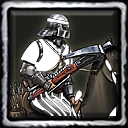 Cranequinier
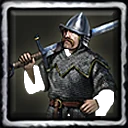 Gallowglass
 Gatling Camel
 Giant Grenadier
 Mounted Rifleman
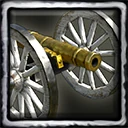 Napoleon Gun
 Armored Pistoleer
 Royal Horseman
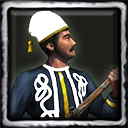 ZouaveMilitary Wagon
 Akan Tufohen
 Akan Ankobia
 Bagpiper
 Clansman
 Drummer
 Lenape Warrior
 Lowlander
 Lowland Dragoon
 Royal Dragoon
 Royal Musketeer
 Yoruba Oyo Legionary
 Yoruba Eso Rider
 Ordinance Rifleman
 Whaling Ship
 Aiz the Tame Elephant
 Nili the Playful Hippo
 Sanura the Tame Leopard
 Pambuu the Tame WarthogEstate WagonGold Prospector Wagon
 Quaker Gun
 Revolutionary Sharpshooter
 Regular
 Eclaireur
 Militia Officer
 State Militia
 Stealth Petard
 Carbine Cavalry
 Revolutionary
 Gatling Gun
 Ironclad
 War CanoeArsenal Wagon
 CulverinUhlanYoung Guard
 Market Rickshaw
 War Elephant
 Old Doug the Orangutan
 Duber the Pet MonkeyRepentant Ronin
Buildings
 Arsenal
 250
250 Artillery Foundry250
 Barracks200
 Gate50
 Capitol300
 Church150
 Dock200
 Factory400200
 Field Hospital200
 Fort500600
 House100
 Livestock Pen150
 Market100
 Mill400
 Outpost250
 Estate600
 Stable200
 Town Center500
 Trading Post200
 Wall10Wall10Wall10
 Coal Mine—
 Copper Mine—Gold Mine—
 Silver Mine—Diamond Mine—
 Tavern200
 Torp140
 Watch Tower—
Home City cards (166)
Every card of the Paris Home City, by the first age it can be sent in. "×N" = can be sent N times; ∞ = no limit.
I Discovery Age (34)
 2 Coureurs∞
 3 Coureurs×1
 7 Sheep + 1 Homestead Wagon∞
 Advanced Dock×1
 Advanced Estate×1
 Advanced Market×1
 Advanced Mill×1
 Advanced Trading Post×1
 Ancien Régime×1
 Chests of 300 Coin∞
 Colbertism×1
 Cords of 300 Wood∞
 Crates of 300 Food∞
 Distributivism×1
 Economic Theory×1
 Exotic Hardwoods×1
 Fish Market×1
 Fur Trade×1
 Furrier×1
 Land Grab×1
 Master Surgeons×1
 Native Lore×1
 Northwest Passage×1
 Pioneers×1
 Ranching×1
 Rum Distillery×1
 Stockyards×1
 Stonemasons×1
 TEAM Coastal Defenses×1
 TEAM French Auxiliaries Combat×1
 TEAM House of Bonaparte×1
 TEAM Louvre×1
 TEAM Sawmills×1
 Town Militia×1
II Colonial Age (46)
 1 Caravel∞
 1 Galleon×1
 2 Caravels×1
 3 Hussars×14 Coureurs×17 Huron Allies×1
 7 Semi-fattened Cows×1
 8 Crossbowmen×1
 Admiralty×1
 Advanced Arsenal×1
 Cent-Suisses×1
 Chests of 600 Coin×1Chests of 700 Coin×1
 Cigar Roller×1
 Cords of 600 Wood×1Cords of 700 Wood×1
 Crates of 500 Food, 500 Wood, and 500 Coin∞
 Crates of 600 Food×1Crates of 700 Food×1
 Edict of Nantes×1
 Engineering School×1
 Extensive Fortifications×1
 Frontier Defenses∞
 Hand Cavalry Hitpoints×1
 Hire Cranequiniers×1
 Hire Gallowglasses×1
 Hire Irish Brigadiers×1
 Hire Whaling Crew×1
 Improved Warships×1
 Native Treaties×1
 Native Warrior Combat×1
 Ranged Infantry Hitpoints×1
 Recruit Privateers×1Recruit Whaling Ships×1
 Rendering Plant×1
 Riding School×1
 Royal Fencing School×1
 Silversmith×1
 Spice Trade×1
 Sustainable Agriculture×1
 TEAM 2 Surgeons×1
 TEAM Hand Cavalry Attack×1
 TEAM Quiche×1
 Theaters×1
 Voyageur×1
 Wilderness Warfare×1
III Fortress Age (40)
1 Covered Wagon×1 1 Falconet∞
 1 Frigate×1
 10 Crossbowmen∞
 10 Pikemen∞
 10 Stuart Allies×1
 12 Skirmishers∞
 15 Sheep + 1 Homestead Wagon×1
 2 Cuirassiers×1
 2 Falconets×13 Cuirassiers×1
 4 Dragoons×14 Hussars×14 War Canoes∞5 Dragoons×1
 7 Skirmishers×18 Skirmishers×1
 Advanced Artillery×1
 Assassins×1
 Cavalry Combat×1Chests of 1,000 Coin×1Cords of 1,000 Wood×1Crates of 1,000 Food×1Fort×1
 French Royal Army×1
 Hire Armored Pistoleers×1
 Hire German Black Riders×1
 Hire Giant Grenadiers×1
 Hire Hessian Jaegers×1Hire Landsknecht Mercenaries×1
 Hire Swiss Pikemen×1
 Mercenary Loyalty×1
 Native Warriors×1
 Naval Gunners×1Recruit Privateer Fleet×1
 Refrigeration×1
 Royal Mint×1
 TEAM Senegalese Riflemen×1
 Textile Mill×1
 Tirailleurs×1
IV Industrial Age (46)
 1 Battleship∞
 1 Monitor∞10 Coureurs×1
 10 Huron Allies∞12 Skirmishers×114 Skirmishers×12 Falconets∞2 Heavy Cannon×1
 2 Mortars∞
 22 Lenape Allies×124 Akan Allies×124 Crossbowmen×1
 24 Pikemen×1
 24 Stuart Allies×1
 25 Bourbon Allies×13 Falconets×1
 3 Mortars×1
 4 Cuirassiers∞4 Culverins×15 Cuirassiers×16 Cuirassiers×16 Dragoons×17 Hussars×18 Dragoons×19 Skirmishers×1
 Aerostatic Corps×1
 Blood Brothers×1
 Canadian Loyalists×2
 Castrametation×1Cords of 1,600 Wood×1Factory×1
 Gribeauval System×1
 Heavy Fortifications×1
 Hire French Fusiliers×1
 Hire Holy Roman Army∞Hire Li'l Bombards×1
 Hire Mediterranean Mercenary Army∞
 Hire Royal Horsemen×1
 Hire Zouaves×1
 Imperial Old Guard×1
 Improved Buildings×1
 Richelieu's Regiment×1
 Robber Barons×1
 Thoroughbreds×1
 Valmy×1Vauban Fortress×1
After a revolution: 81 cards of the revolution decks
 1 Fort Wagon
 1 Heavy Cannon
 14 Blackwatch Highlanders
 15 Carib Blowgunners
 15 Elk
 16 Musketeers
 16 Revolutionaries16 Revolutionaries
 2 Covered Wagons
 2 Horse Artillery
 2 Ironclads3 Falconets
 3 Privateers
 4 Gatling Guns
 4 Hanover Allies
 7 GrizzliesAerostatic Corps
 African Roots
 American PatriotismBlood Brothers
 Brethren of the Coast
 Bushnell's Continental Sappers
 Cantinières
 Citizenship
 Client States
 Continental Army
 Continental Blockade
 Cult of the Supreme Being
 European ImmigrantsFactory
 Fencibles
 Fertile Lowlands
 Flying Battery
 French Royal Army
 Génie TroopsGrand Battery
 Grande Armée
 Guillotine
 Haslet's Continental Regiment
 Hero of the Two Worlds
 Hire Bosniaks
 Hire Mounted Riflemen
 Horse Hunters
 Hudson Bay Company
 Hundred Days
 Knowlton's Continental Rangers
 Knox's Continental Artillery
 Land of Washington
 Lee's Continental Light Dragoons
 Letter of Marque
 Lexington Minutemen
 Louverture Liberation
 Marion's DiversionsMétis VoyageursMilitia Officer
 Morgan's Continental Sharpshooters
 Napoleonic Era
 Napoleonic Warfare
 National Guard
 Native American AlliesNaval Gunners
 Nova Scotia Gaels
 Pennsylvania Long Rifles
 Permanent Active Militia
 Pickets
 Powder Alarm
 Pułaski's Continental Cavalry
 Quebec
 Reign of Robespierre
 Rhode Island MilitiaRobber Barons
 Royal Dahomets
 Rustam's Regiment
 Sevites
 Sister RepublicsSpice Trade
 Storming of the Bastille
 TEAM Great Buffalo Hunt
 TEAM Native Weapon Trade
 Vodou Ceremonies
 Washington's Continental Grenadiers