
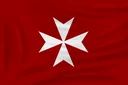
European civilization · Home City Valletta
Maltese
The Maltese (civ ID DEMaltese, Home City Valletta) in AoE3: Definitive Edition 100.19.18309 start with 1 Chests of Coin, 4 Crates of Food, 2 Cords of Wood, 6 Settler and 1 Grand Master, train 18 kinds of units from their own buildings and have 176 Home City cards. Their age-up choices number 5 / 5 / 5 / 5 for the Colonial, Fortress, Industrial and Imperial ages.
This section as JSON: /raw/civilizations.json
Quick answers (4)
- What are the Maltese bonuses in AoE3?
- Civilization bonus: Maltese units gain additional hitpoints with each shipment and heal over time when idle. Royal Guard Units: Crossbowman (Arbalesters) and Culverin (Basilisks) Unique Units: Fire Thrower, Grand Master, Hospitaller, Sentinel Unique Buildings: Hospital, Fixed Gun, Depot, Commandery One of the Mediterranean’s epitomes of a melting pot, Malta was strategically and financially important, and thus most of the surrounding powers coveted it, becoming a stronghold of the Knights Hospitaller.
- What do the Maltese start with?
- 1 Chests of Coin, 4 Crates of Food, 2 Cords of Wood, 6 Settler and 1 Grand Master.
- Which Maltese age-up gives the most?
- to the Colonial Age: The Naturalist (≈ 500 resources); to the Fortress Age: The Sergeant at Arms (≈ 800 resources); to the Industrial Age: The Engineer (≈ 1,000 resources); to the Imperial Age: El Presidente (≈ 2,000 resources).
- How many Home City cards do the Maltese have?
- 176, plus 54 more in revolution decks.
Bonuses
Civilization bonus: Maltese units gain additional hitpoints with each shipment and heal over time when idle. Royal Guard Units: Crossbowman (Arbalesters) and Culverin (Basilisks) Unique Units: Fire Thrower, Grand Master, Hospitaller, Sentinel Unique Buildings: Hospital, Fixed Gun, Depot, Commandery One of the Mediterranean’s epitomes of a melting pot, Malta was strategically and financially important, and thus most of the surrounding powers coveted it, becoming a stronghold of the Knights Hospitaller.
The game's own civilization summary (civ picker rollover).
Starting units
- 1×
 Chests of Coin
 - 4×
 Crates of Food
 - 2×
 Cords of Wood
 - 6×
 Settler
 - 1×
 Grand Master
Units few others have
Units Maltese train from their own buildings that no more than one other civilization has.
Age-up choices
What each choice costs and hands over, valued at the units' train cost. Compare every civilization's age-ups.
To the Colonial Age
 The Naturalist
 800gives ≈ 500
- The Quartermaster800gives ≈ 400
- The Inventor800
- The Logistician900
- The Governor800
To the Fortress Age
 The Sergeant at Arms1,200
 1,000gives ≈ 800
- The Admiral of the Ocean Sea1,2001,000gives ≈ 700
- The Adventurer1,2001,000gives ≈ 640
- The Mercenary Contractor1,2001,000
- The Bishop1,2001,000
To the Industrial Age
 The Engineer2,0001,200gives ≈ 1,000
- The War Minister2,0001,200gives ≈ 900
- The Logistician2,0001,200
- The Papal Guard2,0001,200
- The Pope2,0001,200
To the Imperial Age
 El Presidente4,0004,000gives ≈ 2,000
- The General4,0004,000gives ≈ 1,600
- The Knight4,0004,000
- The Mercenary Contractor4,0004,000
- The Scottish Marshal4,0004,000
History
One of the Mediterranean’s epitomes of a melting pot, early modern Malta, though initially under the rule of the Aragonese crown, was home to a diverse population of Muslims, Christians, and Jews of Maltese, North African, mainland European, and eastern Mediterranean heritages. Enjoying a prime position at a crossroads of Mediterranean trade, Malta was strategically and financially important, and thus most of the surrounding powers coveted it. Sensing its importance, the Holy Roman Empire leased the island in 1530 to the Knights Hospitaller, which had been rapidly losing its eastern Mediterranean territories and needed a new stronghold. The Knights wasted no time in making use of their new possession. Perpetually at war with the Ottoman Empire, they used Malta as a base to raid Ottoman trade routes and turned it into a formidable fortified bastion. These renovations were to prove crucial, as the Ottomans launched a campaign in 1565 to conquer the island and expel the Knights. This battle, known to posterity as the Siege of Malta, became one of the most storied in early modern history. Vastly outnumbered and outgunned, the Knights, under the steadfast leadership of Grand Master Jean Parisot de la Valette, repelled the Ottomans. The battle saw the use of innovative tactics on the part of the defense: on one occasion, the Knights hid artillery in their walls and then used it to blast apart a siege tower that Ottoman Janissaries were using to take potshots at defenders; on others, the Knights hurled incendiary wooden hoops at advancing Janissaries, starting wildfires that halted their advance. The rushing Ottoman tide, formerly deemed nigh-invincible, had been halted. Six years later, in 1571, a coalition of European states known as the Holy League annihilated the Ottoman navy at Lepanto, ending Ottoman thrusts into the western Mediterranean for a time. The Knights, redubbed the Knights of Malta, had reached the apex of their power, and went into swift decline as the rise of powerful modernizing nation-states rendered archaic military orders obsolete. Although the Knights retained control of Malta, its strategic and economic importance waned during the age of exploration and settlement abroad. By 1798, when Napoleon Bonaparte, driven by Alexandrian delusions of grandeur, had embarked on a campaign east towards Egypt, it took a mere ruse to topple the once-mighty Knights and seize Malta. Seized soon thereafter by the British navy, it remained in British hands well into the 20th century.
From the game's History encyclopedia.
Units
Villager
 Fishing Boat
 70Settler100
Infantry
Ship


Also available: 88 mercenaries, natives, pets and shipment-only units
 Bank Wagon
 Heavy Cannon
 Covered Wagon
 Lamb of the Creator: Heroic sheep scout that cannot attack
 Mill Wagon
 Explorer's Dog
 Factory Wagon
 Fort Wagon
 Galley
 Hussar
 Black Rider
 Elmetto
 Li'l Bombard
 Jaeger
 Landsknecht
 Mameluke
 Ronin
Ronin Militiaman
 Outpost Wagon
 Privateer
 Fire Ship
 Settler Wagon
 Uhlan
Uhlan Corsair MarksmanArtillery Foundry WagonCommandery Wagon
 Cassador
 Longbowman
 OprichnikFrontier Post WagonGrand MasterHomestead Wagon
 LandwehrFire ShipFixed Gun Wagon
 Battleship
 Irish Brigadier
 Cannoneer
 Cranequinier
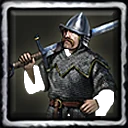 Gallowglass
 Giant Grenadier
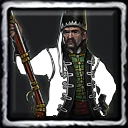 Pandour
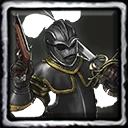 Armored Pistoleer
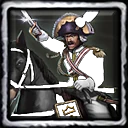 Royal Horseman
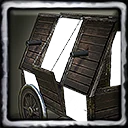 Fortified Wagon
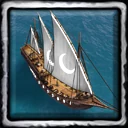 Xebec
Xebec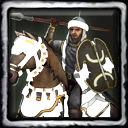 Zenata Rider
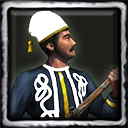 Zouave
 Hungarian Grenadier
 Boyar
Boyar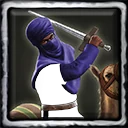 Berber Camel Rider
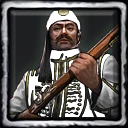 Evzone
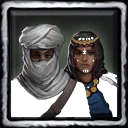 Berber Nomad
 Royal Musketeer
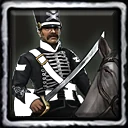 Totenkopf Hussar
 Ordinance Rifleman
 Aiz the Tame Elephant
 Nili the Playful Hippo
 Sanura the Tame Leopard
 Pambuu the Tame WarthogEstate Wagon
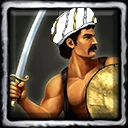 Barbary Warrior
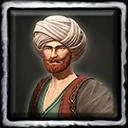 Corsair Captain
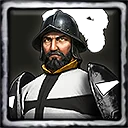 High Master
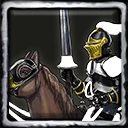 Knight Brother
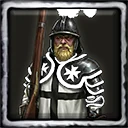 Order Musketeer
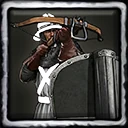 Order Crossbowman
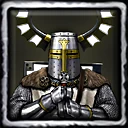 Teutonic Knight
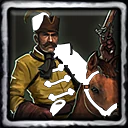 Crabat
 Hajduk
 InquisitorTrading Post Wagon
 Advanced Hot Air Balloon
 Revolutionary
 Gatling Gun
 IroncladArsenal WagonChurch Wagon
 Garrochista
 Gendarme
 Great Bombard
 Legion DragoonLife Guard
 Baghdad JanissaryMarket Rickshaw
 War Elephant
 Old Doug the OrangutanRepentant Ronin
Buildings
 Arsenal250
 Artillery Foundry250
 Gate50
 Capitol300
 Church150
 Dock200
 Factory400200
 Field Hospital200
 Fort500600
 House100
 Livestock Pen150
 Market100
 Mill400
 Outpost250
 Estate600
 Town Center500
 Trading Post200
 Wall10Wall10Wall10
 Commandery100250
 Depot6060
 Hospital100
 Coal Mine—
 Copper Mine—Gold Mine—
 Silver Mine—Diamond Mine—
 Tavern200
 Torp140
 Watch Tower—
Home City cards (176)
Every card of the Valletta Home City, by the first age it can be sent in. "×N" = can be sent N times; ∞ = no limit.
I Discovery Age (37)
 2 Settlers∞3 Settlers×1
 7 Sheep + 1 Homestead Wagon∞
 Advanced Commanderies×1
 Advanced Dock×1
 Advanced Estate×1
 Advanced Market×1
 Advanced Mill×1
 Bailiff×1
 Barrakka Gardens∞Carmelite Churches×1
 Chests of 300 Coin∞
 Cords of 300 Wood∞
 Crates of 300 Food∞
 Distributivism×1
 Establish Ironmonger×1
 Exotic Hardwoods×1
 Fish Market×1
 Furrier×1
 German Tongue×1
 Greek Fire×1
 Hot Air Balloons×1
 Land Grab×1
 Merchant Republics×1
 Pioneers×1
 Ranching×1
 Rum Distillery×1
 Sawmills×1
 Schooners×1
 Speronaras×1
 Stockyards×1
 Stonemasons×1
 TEAM Coastal Defenses×1
 TEAM Frugal Constructions×1
 TEAM Improved Warships×1
 TEAM Knights of the Round Table×1
 Town Militia×1
II Colonial Age (52)
 1 Galleon×1
 1 Order Galley∞2 Fireships×1
 2 Order Galleys×1
 3 Hospitallers×1
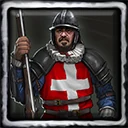 5 Sentinels×1
 6 Spies×1
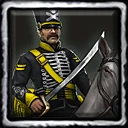 7 Hanover Allies×1
 7 Semi-fattened Cows×1
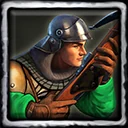 8 Crossbowmen×1
 8 Pikemen×1
 9 Phanar Allies∞
 Admiralty×1
 Advanced Arsenal×1
 Archaic Soldier Attack×1
 Archaic Soldier Hitpoints×1
 Auberges×1
 British Tongue×1
 Cavalry Combat×1
 Chests of 600 Coin×1Chests of 700 Coin×1
 Cigar Roller×1
 Cords of 600 Wood×1Cords of 700 Wood×1
 Corso Galleys×1
 Crates of 400 Food, 400 Wood, and 400 Coin∞
 Crates of 600 Food×1Crates of 700 Food×1
 De Redin Towers×1
 Extensive Fortifications×1
 Flame Throwers×1
 Fort Construction×1
 Frontier Defenses∞
 Gunpowder Mills×1
 Hire Cranequiniers×1
 Hire Gallowglasses×1
 Hire Irish Brigadiers×1
 Hospitality×1
 Knights of Bodrum×1
 Medicine×1
 Offshore Support×1
 Papal Bull×1
 Recruit Privateers×1
 Rendering Plant×1
 Riding School×1
 Silversmith×1
 Spice Trade×1
 Sustainable Agriculture×1
 Theaters×1
 Trip To Jerusalem×1
 Wignacourt Constructions×1
 Witch Hammer×1
III Fortress Age (46)
1 Covered Wagon×1 1 Culverin∞
 1 Falconet∞
 1 Falconet +1 Mortar×1
 1 Fixed Gun Wagon×1
 10 Crossbowmen∞
 10 Pikemen∞10 Spies×112 Crossbowmen×112 Pikemen×1
 15 Sheep + 1 Homestead Wagon×12 Order Galleys×15 Hospitallers×1
 6 Petards×1
 7 Phanar Allies×1
 8 Fire Throwers×18 Sentinels×19 Fire Throwers×19 Sentinels×1
 Advanced Artillery×1
 Archaic Soldier Combat×1
 Assassins×1Chests of 1,000 Coin×1Cords of 1,000 Wood×1Crates of 1,000 Food×1
 Fire Towers×1Fort×1
 Grenade Launchers×1
 Hire Armored Pistoleers×1
 Hire Giant Grenadiers×1
 Hire Pandours×1
 Knights of Rhodes×1
 Mercenary Loyalty×1
 Native Warriors×1
 Naval Gunners×1
 Portuguese Tongue×1
 Refrigeration×1
 Royal Mint×1
 Sovereign Order of Malta×1
 Spanish Tongue×1
 Squires×1
 Steel Bolts×1
 Textile Mill×1
 Vittoriosa×1
 Wall Guns×1
 Xebecs of the Order×1
IV Industrial Age (41)
 1 Battleship∞13 Fire Throwers×115 Spies×116 Sentinels×12 Falconets∞2 Fixed Gun Wagons×12 Fort Wagons×1
 2 Mortars∞2 Order Galleys∞20 Crossbowmen×120 Pikemen×124 Crossbowmen×124 Pikemen×1
 25 Bourbon Allies×1
 3 Culverins×1
 3 Falconets×1
 3 Mortars×14 Falconets×14 Mortars×14 Order Galleys×1
 8 Fire Throwers∞8 Hospitallers×1
 Advanced Balloon×1Crates of 1,600 Food×1
 Dignitaries×1Factory×1
 Flintlock Rockets×1
 French Tongue×1
 Heavy Fortifications×1
 Hire Mediterranean Mercenary Army∞
 Hire Royal Horsemen×1
 Knights of Malta×1
 Morgan's Flagship×1
 Rockets×1
 Russian Tongue×1
 Shipping Supplies∞
 Sicilian Supply×1
 TEAM 2 Mortars×1
 TEAM Gunboat Diplomacy×1
 TEAM Improved Buildings×1
 TEAM Saluting Battery×1
After a revolution: 54 cards of the revolution decks
 1 Fort Wagon10 Pandours12 Crabats
 12 Crossbowmen15 Berber Allies
 16 Corsair Marksmen
 16 Revolutionaries
 18 Barbary Warriors
 2 Fortified Wagons
 2 Ironclads3 Falconets3 Falconets
 3 Privateers
 4 Gatling Guns
 6 Grenadiers
 Adler von Lübeck
 Aïr Berbers
 Baltic Crusade
 Barbary Combat
 Border Fortress
 CitizenshipCitizenship
 Corsair Captain
 Danubian Flotilla
 Dhimma
 Hajduks
 Half-Brothers
 Hire Cranequiniers
 Honvédség
 Hungarian Grenadiers
 Knighthood
 Kontors
 Kovats' Legion
 Loyal Warriors
 Magyar Hussars
 Mercenary Camps
 Military Frontier
 Monastic Granges
 Ottoman Expeditionary Army
 Outlaw CombatOutlaw Combat
 Peerage
 Recruit Xebec
 Recruit Xebecs
 Riga Blackheads
 Salé RoversSquiresSteel Bolts
 Sword-Brothers
 TEAM 4 Zenata Rider
 TEAM Teutonic Town Center
 Teutonic Knights
 Teutonic Order CastlesTrip To Jerusalem