
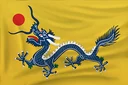
Asian civilization · Home City Beijing
Chinese
The Chinese (civ ID Chinese, Home City Beijing) in AoE3: Definitive Edition 100.19.18309 start with 2 Crates of Food, 3 Cords of Wood, 1 Goat, 1 Shaolin Master, 1 Disciple and 6 Villager, train 18 kinds of units from their own buildings and have 150 Home City cards. Their age-up choices number 5 / 5 / 5 / 5 for the Colonial, Fortress, Industrial and Imperial ages.
This section as JSON: /raw/civilizations.json
Quick answers (4)
- What are the Chinese bonuses in AoE3?
- Civilization bonus: Can reach population of 220. Trains banner armies in War Academy. Unique units: Arquebusier, Changdao Swordsmen, Chu Ko Nu, Disciple, Fire Junk, Flamethrower, Flying Crow, Fuchuan, Hand Mortar, Iron Flail, Keshik, Meteor Hammer, Qiang Pikemen, Shaolin Master, Steppe Rider and War Junk. Unique buildings: War Academy is a combination of barracks and stables. Village supports 20 population and also fattens livestock. Wonders: Confucian Academy, Porcelain Tower, Summer Palace, Temple of Heaven and White Pagoda The Qing dynasty was known to be the 5th largest empire of world history. The Chinese had organized “banners”, military social units that included Manchu, Han and Mongol units.
- What do the Chinese start with?
- 2 Crates of Food, 3 Cords of Wood, 1 Goat, 1 Shaolin Master, 1 Disciple and 6 Villager.
- Which Chinese age-up gives the most?
- to the Colonial Age: Confucian Academy (≈ 340 resources); to the Fortress Age: Summer Palace (≈ 800 resources); to the Industrial Age: Summer Palace (≈ 1,500 resources); to the Imperial Age: Summer Palace (≈ 2,000 resources).
- How many Home City cards do the Chinese have?
- 150, plus 0 more in revolution decks.
Bonuses
Civilization bonus: Can reach population of 220. Trains banner armies in War Academy. Unique units: Arquebusier, Changdao Swordsmen, Chu Ko Nu, Disciple, Fire Junk, Flamethrower, Flying Crow, Fuchuan, Hand Mortar, Iron Flail, Keshik, Meteor Hammer, Qiang Pikemen, Shaolin Master, Steppe Rider and War Junk. Unique buildings: War Academy is a combination of barracks and stables. Village supports 20 population and also fattens livestock. Wonders: Confucian Academy, Porcelain Tower, Summer Palace, Temple of Heaven and White Pagoda The Qing dynasty was known to be the 5th largest empire of world history. The Chinese had organized “banners”, military social units that included Manchu, Han and Mongol units.
The game's own civilization summary (civ picker rollover).
Starting units
- 2×
 Crates of Food
 - 3×
 Cords of Wood
 - 1×
 Goat
Goat - 1×
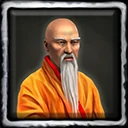 Shaolin Master
 - 1×
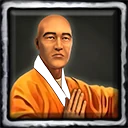 Disciple
 - 6×
 Villager
Units few others have
Units Chinese train from their own buildings that no more than one other civilization has.
Age-up choices
What each choice costs and hands over, valued at the units' train cost. Compare every civilization's age-ups.
To the Colonial Age
 Confucian Academy—gives ≈ 340
- White Pagoda—gives ≈ 320
- Summer Palace—gives ≈ 300
- Temple of Heaven—gives ≈ 300
- Porcelain Tower—
To the Fortress Age
 Summer Palace—gives ≈ 800
- Confucian Academy—gives ≈ 680
- White Pagoda—gives ≈ 480
- Porcelain Tower—
- Temple of Heaven—
To the Industrial Age
 Summer Palace—gives ≈ 1,500
- Confucian Academy—gives ≈ 1,020
- White Pagoda—gives ≈ 800
- Porcelain Tower—
- Temple of Heaven—
To the Imperial Age
 Summer Palace—gives ≈ 2,000
- Confucian Academy—gives ≈ 1,785
- White Pagoda—gives ≈ 1,280
- Porcelain Tower—
- Temple of Heaven—
History
The Ming Dynasty, beginning in 1368 and continuing until 1644, was a period of great stability in China, but also of tightening authority under an autocratic leadership. Its founder was a simple peasant, Zhu Yuanzhanga, a man who spent his formative years in a Buddhist monastery only to abandon those views for a form of neo-Confucianism and a growing mistrust of foreign influence. In the waning years of the Mongol Yuan Dynasty, famine, unrest, and bitterness plagued China’s native Han populace, and tempers had reached a breaking point. In the eyes of the people, the once mighty Yuan Dynasty was little more than an illegitimate foreign empire lording over them from afar. Leading a peasant revolt against the Mongols, Zhu Yuanzhanga forced them out of Dadu, present day Beijing, and unified China under him. Taking the title “Hongwu,” meaning “vast military,” the first emperor of the Ming established his capital in Nanjing and focused his attention on centralizing power, abolishing the office of prime minister and developing a warrior class that ranked higher than any class of civil servant. He also turned his attention to economic recovery and improving peasant life, lowering land taxes, stocking granaries to guard against famine, and maintaining the great rivers of China, the Yellow and the Yangtze. Predictably, his Confucian point of view led him to support the creation of local, agricultural based communities, diminishing the importance of trade with the outside world, and lowering the prestige of merchants as a class. Although his policies benefited the people, encouraging a sharp jump in population due to agricultural reforms, the Hongwu Emperor was often ruled by his own paranoia and ignorance. He constantly feared rebellions and coups, or an invasion by the former Mongol rulers. These suspicions caused him to declare it a capital offense for any advisors to criticize his ideas. Not understanding inflation, he issued paper currency in such large amounts that by 1425 the money was worth 1/70 of its original value, causing a return to copper coins. The second ruler of the Ming Dynasty, the Jianwen Emperor, held power for a short four-year reign (1398-1402) before being toppled by his uncle in a coup that ushered in the next great age of China. Zhu Di, the Yongle Emperor, ruled from 1404 to 1424, often called the “Second Founding” of the Ming. “Yongle” means “perpetually jubilant.” During this two-decade period, the capital of China was moved from Nanjing to Beijing, where the newly built Forbidden City became the nucleus of Chinese power and would remain so for the next 500 years. To preserve Chinese culture and literature, the Yongle Emperor commissioned the writing of the "Yongle Encylopedia", one of history’s greatest achievements. Arguably, the most enduring and influential event of the Yongle period was the emperor’s sponsorship of the fabled treasure fleets, China’s only major attempts at seafaring exploration. The seven treasure expeditions began in 1404 and ended in 1424, the year of the emperor’s death. Commanded by the eunuch admiral, Zheng He, the voyages helped to strengthen trade with China’s diplomatic partners in Southeast Asia, and opened new relationships with lands as far west as the coast of Mozambique and Madagascar; and, if some theories are to be believed, the fleets may have even discovered the New World years before Columbus even set sail in search of his route to the Orient.
From the game's History encyclopedia.
Units
Villager
 Fishing Boat
 70Villager
 100
100Infantry
 Flamethrower
 170170
Artillery
 Hand Mortar5090
Hero
Other
 Surgeon225
 Black Flag Army380360
 Forbidden Army480360
 Imperial Army480255
 Ming Army345120
 Mongolian Army230170
 Old Han Army255180
 Standard Army255170
 Territorial Army285255
Also available: 79 mercenaries, natives, pets and shipment-only units
 Covered Wagon
 Factory Wagon
 Fort Wagon
 Manchu
 Uhlan
Uhlan Castle Rickshaw
 Dock Rickshaw
 Monastery Rickshaw
 Wagner the Pet White Tiger
 Rice Paddy RickshawVillage Rickshaw
 Counter Jaeger
 Whaling Ship
 Aiz the Tame Elephant
 Nili the Playful Hippo
 Sanura the Tame Leopard
 Pambuu the Tame Warthog
 Petard
 Spy
Spy Arquebusier
 Blockhouse Wagon
 Changdao Swordsman
 Chu Ko Nu
 British Expeditionary Company
 British Expeditionary Force
 British Expeditionary Army
 French Expeditionary Company
 French Expeditionary Force
 French Expeditionary Army
 German Expeditionary Company
 German Expeditionary Force
 German Expeditionary Army
 Russian Expeditionary Company
 Russian Expeditionary Force
 Russian Expeditionary Army
 Order Besteiro
 Heavy Cannon
 Carabineer
 CulverinUhlan
 Espadachin
 Falconet
 Gendarme
 Great Bombard
 Legionario
 Horse Artillery
 Legion Dragoon
 Life Guard
 Mortar
 Prussian Needle GunnerRedcoat
 Roger's Ranger
 Siberian CossackBlue Guard
 Tercio
 Baghdad JanissaryVoltigeur
 Young Guard
 Zweihänder
 Flying Crow
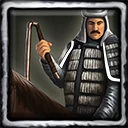 Iron Flail
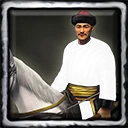 KeshikMarket Rickshaw
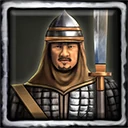 Iron Troop
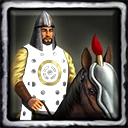 Meteor Hammer
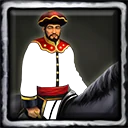 Mongol ScoutShaolin MasterDisciple
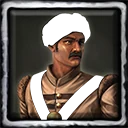 Gurkha
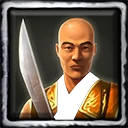 Rattan Shield
 War Elephant
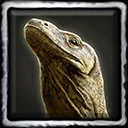 Kermond the Pet Monitor Lizard
 Old Doug the Orangutan
 Qiang PikemanRepentant Iron TroopConsulate Rickshaw
 Steppe RiderTrading Post Rickshaw
 Wokou Junk
Buildings
 Gate50
 Factory400200
 Field Hospital200
 Fort500600
 Town Center500
 Trading Post200
 Wall10Wall10Wall10
 Dock200
 Tower250
 Coal Mine—
 Copper Mine—Gold Mine—
 Silver Mine—Diamond Mine—
 Torp140
 Watch Tower—
 Castle50250
 Consulate200
 Monastery225
 Rice Paddy400
 Market100
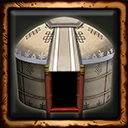 Village180
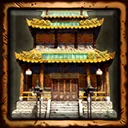 Confucian Academy800Confucian Academy1,2001,000Confucian Academy2,0001,200Confucian Academy4,0004,000
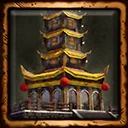 Porcelain Tower800Porcelain Tower1,2001,000Porcelain Tower2,0001,200Porcelain Tower4,0004,000
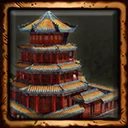 Summer Palace800Summer Palace1,2001,000Summer Palace2,0001,200Summer Palace4,0004,000
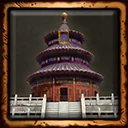 Temple of Heaven800Temple of Heaven1,2001,000Temple of Heaven2,0001,200Temple of Heaven4,0004,000
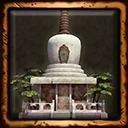 White Pagoda800White Pagoda1,2001,000White Pagoda2,0001,200White Pagoda4,0004,000
 War Academy200
Home City cards (150)
Every card of the Beijing Home City, by the first age it can be sent in. "×N" = can be sent N times; ∞ = no limit.
I Discovery Age (34)
5 Disciples×1 Advanced Dock×1
 Advanced Rice Paddy×1
 Advanced Wonders×1
 Boxer Rebellion×1
 Chests of 300 Coin∞
 Commodities Market×1
 Cords of 300 Wood∞
 Crates of 300 Food∞
 Dowager Empress×1
 East Indiamen×1
 Exotic Hardwoods×1
 Fish Market×1
 Food Silos×1
 Fulling Mills×1
 Furrier×1
 Good Faith Agreements×1
 Holy Refuge×1
 Land Grab×1
 Northern Refugees×1
 Pioneers×1
 Rural Village×1
 Sawmills×1
 Stockyards×1
 Sumptuary Laws×1
 Tea Export×1
 TEAM Art of War×1
 TEAM Improved Warships×1
 TEAM Ming Mongols×1
 TEAM Provincial Administration×1
 Trade Empire×1
 Water Buffalo Ranching×1
 Year of the Goat×1
 Year of the Tiger×1
II Colonial Age (40)
 1 Flamethrower + 1 Castle Rickshaw×1
 1 War Junk×1
 2 Fire Junks×12 War Junks×1
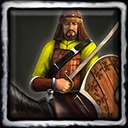 7 Steppe Riders×1
 8 Chu Ko Nus×1
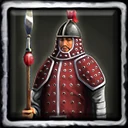 9 Qiang Pikemen×1
 Admiralty×1
 Atonement×1
 Banner School×1
 Chests of 600 Coin×1Chests of 700 Coin×1
 Cigar Roller×1
 Cords of 600 Wood×1Cords of 700 Wood×1
 Crates of 600 Food×1Crates of 700 Food×1
 Diplomatic Intrigue×1
 European Cannons×1
 Extensive Fortifications×1Hire 10 Rattan Shields×1
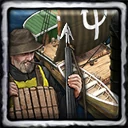 Hire Whaling Crew×1
 Land Reforms×1
 Mandarin Duck Squad×1
 Mongolian Scourge×1
 Native Learning×1
 New Army×1Recruit Wokou +3 Wokou Horsemen×1
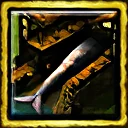 Rendering Plant×1
 Siege Attack×1
 Siege Hitpoints×1
 Silversmith×1
 Snatch the Pebble×1
 Spice Trade×1
 Standard Army Hitpoints×1
 Sustainable Agriculture×1
 TEAM Engineering School×1
 TEAM Yongle Infrastructure×1
 Urban Village×1
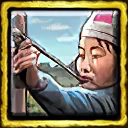 Village Defenses×1
III Fortress Age (43)
1 Flying Crow×1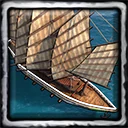 1 Fuchuan×1
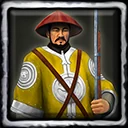 10 Arquebusiers×1
 10 Changdao Swordsmen×1
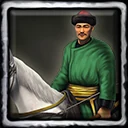 10 Keshiks×110 Steppe Riders×113 Chu Ko Nus×114 Qiang Pikemen×12 Flamethrowers + 1 Castle Rickshaw×1
 4 Iron Flails×1
 5 Meteor Hammers×17 Hand Mortars×1
 8 Keshiks∞
 Acupuncture×1
 Beiyang Army×1Chests of 1,000 Coin×1
 Confucius' Gift×1Cords of 1,000 Wood×1Crates of 1,000 Food×1
 Double-Faced Armor×1
 Fire Junk Attack×1
 Great Wall×1
 Hire Manchurian Cavalry Archers×1Hire Ming Iron Troops×1
 Iron Cap Princes' Army×1
 Mercenary Loyalty×1
 Native Crafts×1
 Native Warrior Attack×1
 Native Warrior Hitpoints×1
 Refrigeration×1
 Repelling Volley×1
 Royal Mint×1
 Saiga Herd×1
 Siege Combat×1
 TEAM Burning Sea×1
 TEAM Imperial Manchu Vanguard×1
 TEAM Wankouchong×1
 Territorial Army Combat×1
 Textile Mill×1Town Rickshaw×1
 Western Refugees×1
 Year of the Dragon×1
 Year of the Ox×1
IV Industrial Age (33)
11 Hand Mortars×115 Keshiks×116 Steppe Riders×117 Arquebusiers×117 Changdao Swordsmen×1 2 Flying Crows∞21 Chu Ko Nus×121 Qiang Pikemen×14 Flamethrowers + 1 Castle Rickshaw×1
 6 Meteor Hammers∞7 Iron Flails×18 Meteor Hammers×1Chests of 1,600 Coin×1
 Chinese Imperial Navy×1Cords of 1,600 Wood×1Crates of 1,600 Food×1
 Emperor's Army×1
 Ever Victorious Army×1
 Fire Dragon Manual×1
 Great Migration×1
 Hire 10 Rattan Shields∞Hire 26 Rattan Shields×1
 Hire Mandarin Mercenary Army×1
 Improved Buildings×1
 Koxinga×1
 Manchu Combat×1
 Old Dynasty Reforms×1
 Recruit Wokou +10 Petards∞Recruit Wokou +5 Horse Artillery×1
 TEAM Expeditionary Fuchuan×1
 Town Rickshaw +5 Villagers×1
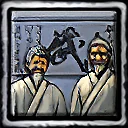 Walk the Rice Paper×1
 Western Reforms×1